

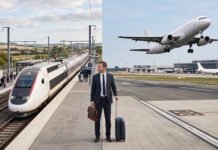












A world that is less and less safe. This fact was not lost on anyone, least of all the 1,300 business decision-makers surveyed by Ipsos for the International SOS "Travel Risk Outlook 2020" study. Among these professionals, 68 % predicted a increasing security threatsThis represents an increase of 23 points on the previous year. At the same time, 52 % of those surveyed feared geopolitical unrest (up 20 points) or civil unrest (up 14 points), or even kidnapping, incidents feared by 29 % of professionals. When questioned at the end of 2019, no one had anticipated the threat of a virus starting in Asia and spreading across the planet...
While the coronavirus will undoubtedly limit business travel for some time to come, and therefore the risks associated with it, the current crisis has put the spotlight back on the importance of the duty to protect employees in the face of the many and varied risks to which they are exposed. "No company wants to see its name tarnished by a crisis where it can be accused of negligence.estimates Grégoire PintonGardaWorld's Global Head of Traveller Security Services. Awareness of risk is growing in both European and North American societies. Past events, whether in Iraq, Burkina Faso or Latin America, only serve to reinforce this feeling."
These concerns are based on tangible facts - you only have to open the pages of a newspaper or watch television to realise this - but, according to Émile Pérez, Director of Security and Economic Intelligence for the EDF Group, they need to be put into perspective: "The world is not necessarily more dangerous than before. I would even say that the opposite is true. But with information circulating faster, the feeling of insecurity has increased. Above all, our tolerance of violence has been greatly reduced. Fortunately, it has become unbearable."
Every year for the past six years, the Club des directeurs de sécurité et de sûreté des entreprises (CDSE) has studied the perception of risk among 300 French company directors. Its 2020 barometer tempers this climate of anxiety. While 16% of % consider international insecurity to be a major threat, almost half of executives say they have no exposure in this area. Terrorism (17%) has now been overtaken by transport accidents (40 %). in the mapping of risks incurred, ahead of health risks (13 %). "We can see that companies have a more realistic perception of risk, in the sense that the main problems are, in the vast majority of cases, everyday problems such as car accidents, theft and even assault.says Émile Pérez. As companies have put in place procedures to better protect their employees, they have better control over risks and are able to analyse them in greater detail.."
According to the business travel agency CWT, in its Connected Traveler study, 46 % of professionals say they are worried about their security, even though 67 % of business travellers believe that their trips are more secure than in the past.
And Xavier CarnThe same conclusion can be drawn by International SOS & Control Risks' EMEA Vice-President for Security: "Companies have taken risk into account through travel policies that provide a vision of their exposure to danger. At the same time, they are giving themselves the means to limit the occurrence of incidents."In survey after survey, safety emerged as the most important issue. priority number 1. At 89.3 %, the subject is placed well ahead of improving travel policy (76.8 %) and spending savings (71.4 %) in the top 3 priorities identified by the CWT agency's "Perspectives France 2019" study.
This development is part of a restrictive legal framework, as companies have a duty to ensure the safety of their employees, failing which they may be held liable. civil and even criminal liability, as well as that of their managers. With the conviction of the Direction de constructions navales (DCN) for "inexcusable misconduct" following the fatal attack on eleven of its employees in Karachi in 2002, France has set a precedent in terms of "duty of care". "This requirement has since become a legal obligation in many countries." says Grégoire Pinton.
While large listed companies are obviously sensitive to this argument, SMEs and SMIs with an international presence are also, and increasingly so. "Our CEO believes that safety is an essential element for growth of the company"explains Arnaud Kalika, head of security and strategic intelligence at Meridiam. This company, which develops projects in the fields of mobility, energy transition and public infrastructure, initially had just fifteen or so frequent flyers, some of whom were among Air France's top 20 customers. "Today, we have over 200 employees. The number of travellers and expatriates has risen sharply with our expansion in Europe and the Americas, as well as in Turkey, Jordan and Africa."he continues.
On this continent, for example, Meridiam is participating in the construction of the new Ouagadougou Donsin airport in Burkina Faso. Although the company has become accustomed to carrying out security audits of the homes of its future expatriates, this destination exposed to jihadist terrorism is even more sensitive. "So I went to the site with an expert to check everything. From A to Z. From the fire risk to the presence of water supplies and the strength of the locks."explains Arnaud Kalika.
Of course, this type of mission comes at a price. For example, when a convoy has to be organised to secure a trip, at 600 euros per day per person - or even more if the escort is armed - or when the child of an expatriate executive has to be repatriated. "My job only generates expenses for my company, but it's security for both it and our travellers. Meridiam considers that I contribute a certain amount of added valuesays Arnaud Kalika, who also chairs the CDSE's International Commission. The CDSE is seeking to highlight the benefits of this function."
Generation Z is more sensitive to the subject of security. In 2019, 41 % of business travellers in this age group cut back on travel due to political unrest or health risks, according to SAP Concur.
A role that could become increasingly essential. In addition to the unfortunately 'classic' threats - terrorism, geopolitical unrest, crime - there are also more and more problems of a climatic or health nature. For example, natural disasters (51 %) and epidemics (31 %) were regularly cited in the "2020 travel risk outlook"This was the case even before the Covid-19 epidemic.
This is probably just the beginning, according to specialists. In its study, International SOS also pointed to a number of subjects that are still poorly understood by companies as part of their duty to protect their employees; grey areas that concern cybersecurity in particular, but also certain categories of travellers. In fact, a quarter of companies (26 %) have taken specific measures to protect female business travellers, and only one in ten has taken an interest in the problems faced by the LGBT community. All of which means that the profiles of travellers are potentially more exposed.
In a 2018 survey conducted by the Global Business Travel Association (GBTA) in partnership with insurance company AIG, 71 % of business travellers women surveyed felt that they faced a greater risk than their male counterparts, ranging from harassment and sexual assault to a feeling of insecurity in some countries. As for LGBT communityAccording to SAP Concur, 96 % hide their sexual orientation in order to protect their safety when travelling on business. "In certain countries in West Africa and the Middle East, we have seen several cases of harassment of LGBT travellers, and we need to be aware of this."says Xavier Carn.
While specific training modules for these categories of traveller are in full development, SAP Concur has upgraded its TripIt application accordingly. In partnership with GeoSure, a specialist in risk assessment, the booking software publisher has added to the neighbourhood risk score" functionality specific tabs on threats to women travellers and the LGBT community. "Companies have a duty to protectBut it's also about diversity and inclusion," says Grégoire Pinton. Regardless of your sexual orientation or whether you are a man or a woman, you must be protected in the same way"..
Dossier - Passenger safety
- Security: companies face up to their duties
Security and Covid-19: going from nothing to everything
Assistance and protection for travellers: crisis measures
Safety advice
Interview: Émile Pérez, Director of Security and Business Intelligence, EDF Group
Business travellers, ideal targets for cybercriminals