











The Corsicans are in the habit of saying that their roads were made by indecisive mules. And, given the meandering, hairpin bends and rollercoaster effects, we readily believe them. We're so bogged down that we're tempted to add to it by wondering whether the mules in question might not, as Françoise Xenakis puts it so wittily, have had a bit too much to drink. To the left, to the right... It's terrible, so terrible that, at the risk of gagging, you forget the landscape - even if you're a back-seat passenger in a very comfortable 4×4 - to keep only the road and nothing else in its line...
The Corsicans are in the habit of saying that their roads were made by indecisive mules. And, given the meandering, hairpin bends and rollercoaster effects, we readily believe them. We're so bogged down that we're tempted to add to it by wondering whether the mules in question might not, as Françoise Xenakis puts it so wittily, have had a bit too much to drink. To the left, to the right... It's terrible, so terrible that, at the risk of gagging, you forget about the landscape - even if you're a back-seat passenger in a very comfortable 4×4 - to keep only the road and nothing else in your sights. But that's all right, you'll have plenty of time to admire this marvellous landscape a little later, when you've left the asphalt - which is fine, by the way - to venture out onto the large stones of a virgin track.
1 - The Filitosa site The megalithic civilisation that developed on the island, that of the first shepherds and farmers, is recounted through its megalithic statues with a human face. Alain Parinet
2 - Does it go back to the time when Pisa had authority over Corsica (1077-1284) or does it date from the Genoese period, master of the island for five centuries until 1768? Whatever the case, regardless of the quarrels between historians, the Spin'a Cavallu - the 'horse's back' - is a symbol of the island's history.
lives its life as a small bridge, nestling for ages in a bucolic landscape. Alain Parinet
3 - All along the coast of CorsicaThe Genoese towers form an entire system
to protect the island against invasions by the barbarians. Alain Parinet
So you head off into the scrubland above Ajaccio, the famous Corsican scrubland that has given rise to crazy stories, incredible adventures and even great fantasies. You get a better idea of what's going on when you stumble through the murderous thorn trees, the plant walls that have nothing to envy a tropical jungle, the absolute "no trespassing" of plants. You realise that the scrubland is more than just part of the island's geography: it's its grammar, its backbone, a deep-rooted soul that has the delicacy of being laid out on three very distinct levels. Firstly, on the seafront, with the 'low' scrubland, which you can smell from afar and which doesn't spare the scent of myrtle; then the 'intermediate scrubland' with its thorny and resinous trees, a paradise for cows and pigs; and finally the 'high scrubland', a little airier, mainly made up of holm oaks and chestnut trees.
Calves, cows, pigs

Right now, we must be in the middle of the scrubland, because we've just come across a cow, living her life as a cow right in the middle of the road. As we'll see later, this is not an uncommon occurrence, even on winding roads where accidents involving cows are fairly regular. And pigs too, because they do the same and don't hesitate to poke their noses under the roadside chestnut trees to gorge themselves on their fallen leaves and fruit. They are neither wild nor abandoned. They all have owners, but live in a traditional freedom that was certainly more suited to the days of carts and carriages. Especially as the islanders have the annoying habit of having their foot heavy on the accelerator. The authorities, who are trying to bring some order to the situation, are having only relative success.
And then the 4×4 arrives at the top of a hill, stops on a sort of median strip and cuts its engine. The silence is sudden, absolute, sublime, magnified even further by the buzzing of insects on the prowl and, above all, by the bustle of overdue bees hurrying to get the last pollen before the bad season. From up here, you can see all the greens of the scrubland, which basically stops only at the edge of the beach. You can see the sea in the distance, but also, below, the artificial lake of Tolla, glistening in the sun's rays. And high villages clustered around their bell towers, round-tiled roofs, remote sheepfolds, dotted ribbons of asphalt, intersected as they are by the canopy of holm oaks and maritime pines...
Mountain people by nature

Corsica is a mountain. A big mountain pushed into the sea, and which at the same time produces a culture much closer to that of the inhabitants of the high continental mountains than to that of the Greek islands, for example. We're tough in Corsica. They don't take kindly to it, and even if they are very welcoming, warm, Mediterranean in a way, they don't easily allow strangers into the intimacy of their families.
The morning is drawing to a close. Laurent, the expert guide at the wheel of the off-road vehicle, pulls out all the stops and offers a bite to eat. On the menu: cold meats - coppa, prisuttu or lonzu - and sheep's and goat's cheeses, all accompanied by fresh figs and washed down with a superb local white wine - Corsican whites are far too little known. Corsica produces no fewer than six varieties of honey, classified according to region, altitude and harvesting season. This in situ tasting on a red-checked tablecloth will give participants in an incentive group a foretaste of what they can find to bring back from their stay, with shops selling local products elbow-to-elbow in every village. Especially in high season, but sometimes all year round, especially in the larger towns.
1 and 2 - The scents of myrtle, rockrose and arbutus that waft through the lower levels of the Corsican maquis are followed by laricio pines, cedars and chestnut trees. An enchanting mountain, criss-crossed by refreshing rivers. Alain Parinet
3 and 4 - Whether it's for the infinite beauty of the landscape or more likely a historical tendency to turn away from the invaders who came by sea, the Corsican soul breathes essentially in the highlands. Alain Parinet

Then it's back to Ajaccio and the reunion with a completely different world, that of the sea, which historically has never been of much interest to the Corsican people, who preferred the safety and even inaccessibility of the heights. And with good reason: pirate attacks were almost a regular occurrence on the island, as were the raids by the barbarians, who were in great demand for young, strong and beautiful slaves to take to the other side of the Mediterranean. Hence, in the traditional gastronomy, mountain-inspired dishes, hearty fare, sauces and very little fish. Things changed radically in the mid-twentieth century, however, when Corsicans, like everyone else, rediscovered the hedonistic pleasures of the marine world, along with the financial benefits brought by the tourism industry. Without, however, sinking into the excesses of nasty concreting that ruined eternal landscapes elsewhere.
Corsicans love their nature
1 - Bastelica, Zonza, Sartène South Corsica: its mountains are home to villages full of character. Alain Parinet
2 - In the Gulf of AjaccioThe Sanguinaires islands glow red at sunset. However, this is not the origin of their name, which comes from the Latin "Sagonares Insulae". Alain Parinet
3 - Near BonifacioThe chapel of Santa Reparata predates the Pisan occupation, which brought with it its own interpretation of Romanesque architecture. Alain Parinet
4 - "As long as we have chestnuts, we'll have bread".This is what Pascal Paoli, the historic figure of Corsican identity, used to say, testifying to their importance in everyday Corsican life. Alain Parinet
As a result, the destination remains very unspoilt, wild at times, including on the seafront where solitary coves follow one another almost endlessly. Of course, there are also large sandy beaches that are a little more urbanised, with all the hotels and restaurants you could wish for, but they never reach the absolute horror that you find on other shores that are truly violent. The Corsicans love their nature and it shows. Good for them, it's in keeping with the spirit of these times, which are hardly conducive to sojourns in the sun in exported hutches. Rural tourism is booming, boutique hotels are springing up in walls that are more than a hundred years old, and contemporary private houses - rich houses, no doubt - are blending into the landscape, with a few exceptions.
In general, when we receive groups for seminars at our hotel, we always offer them a day or half-day of sea and mountain activities, in addition to the essential business meetings and gourmet meals at the hotel or in typical inns," says Émilie Balard, Sales and Revenue Manager at the Radisson Blu Ajaccio Bay. First of all, a morning hike in a 4 x 4 through the scrubland, then stops in some remarkable villages such as Bastelica, and finally an afternoon spent on the sea starting from the pontoon at Porticcio, the little seaside resort just three minutes from our hotel. Water sports, then, swimming and snorkelling, marine treasure hunts, but also an excursion by speedboat around the Sanguinaires Islands".
The red ochre of sanguinaires

Set course for the Sanguinaires Islands. Four mythical islets bathed in turquoise water, four large pebbles glowing red at sunset, scattered at the end of the bay of Ajaccio, a stone's throw from the coast, two kilometres for the furthest. Today, the sea is oily. It therefore allows you to moor in a cove that has been vaguely converted into the port of Grande Sanguinaire, which is not that big since it is only 1,200 m long and 300 m wide.
It's mainly because of the eclipse lighthouse, which has a range of 56 km, that you'll set foot on the ground and struggle up a fairly steep slope until you lose your breath. It's a very pretty lighthouse indeed, an all-white building that pushes itself up the hill a little, playing a literary score. And what a score it is, since it was here in 1863 that Alphonse Daudet wrote a few Letters from my Windmill. Then it's back along the beautiful beaches to the west of Ajaccio, a marine cemetery curiously integrated into the recent urban landscape and, on a small peninsula, a very simple house that was once the summer home of Tino Rossi.
The following day, it's a completely different adventure for the winners of a reward trip - those taking part in a two- or three-day seminar don't have enough time of their own - with a road trip through the mountains of southern Corsica, stopping off at villages, towns and sites that tell the story of the history and culture of what is undoubtedly one of the most beautiful islands in the world.
And while we're on the subject of culture, let's start with the Neolithic and the Filitosa site, a collection of megaliths and buildings erected 4,000 years ago. It is in fact the largest centre of Corsican and even Mediterranean statuary art. Megaliths, faces that appear or disappear depending on the angle of the sun's rays, standing stones facing the cosmos that look as if they were sculpted by twentieth-century artists, mysterious alignments scattered across a delightful countryside, guides who tell the story of the daily life of the people of the time and, in any case, a bucolic walk of around an hour between mountains and wonders.
1 - Near Porto-VecchioPalombaggia is a wonderful beach with crystal-clear waters, a little paradise lazily shaded by umbrella pines. Alain Parinet
2 and 5- For the last twenty yearsOlive-growing has been given a new lease of life, strengthening Corsica's agricultural heritage of citrus fruits and honey, wines and charcuterie. Alain Parinet
3 - It was in Fozzano that Mérimée met Colomba Carabelii. It was this meeting that inspired his famous short story set in Corsica © Alain Parinet
4 - Perched on its promontoryBonifacio looks like it's ready to set sail like a ship for the sea. Its narrow streets have retained the medieval aspect of its origins. Alain Parinet
High-lying villages
And so it is with almost all the villages in this corner of southern Corsica, identical in their grey stone and yet all unique, all perched on promontories or mountains, and almost all dominated by an even higher mountain. Then there's Sartène, with its shady square lined with cafés where you can keep an absent-minded eye out for squabbling children; then there's Sainte-Lucie-de-Tallano and its excellent olive oil; then there's Levie and its traditional cutlery; then there's Zonza and its high-mountain resort feel, with all the right restaurants and inns, including one,
The Mouflon d'Or, still in operation, is a landmark in Corsican life, having been requisitioned in 1952 to welcome Mohamed V, the Sultan of Morocco in exile.
There are so many villages. And so many landscapes! Torrents that have the good taste to make refreshing natural pools, forests of chestnut, pine and cedar, but above all the formidable Bavella peaks, the high point of the high valleys of the Alta Rocca. The result is fairy chimneys towering high into the sky, peaks by the hundreds and points so sharp you'd think you were an army of lancers before battle. And the colours... browns, pinks, mauves, underlined by deep navy blues. It's one of the favourite spots for hikers who set off to conquer them from the Col de Bavella, at an altitude of 1,218 metres.
It is from this pass that you will descend to the east coast of the island. Over Solenzara, Porto-Vecchio and Bonifacio, over a sea as blue as only the Mediterranean can be, over landscapes of extreme benevolence, rocks skimming the sea just to look pretty, insistent and wonderful smells of myrtle, almost transparent blues and a few villas of the wealthy whose roofs are barely visible, so much so that they are drowned in greenery and oleanders. That's the way it is between Porto Vecchio and Bonifacio, which ends the trip as an urban firework display perched on its rocky outcrop above the sea. In fact, it's the only imbalance the Corsican landscape has to offer.
Identity card
Ajaccio, Porto-Vecchio and Bonifacio by the sea, Bastelica and Sartène in the mountains: the towns and villages are never far apart. But, given the number of switchbacks, it's time that counts. Expect an average speed of 40 km/h.
Best season
As far as groups are concerned, it's almost always the shoulder seasons that are favoured. And that's just as well, as the bulk of tourism is spread out over the mainland, beaches are affordable, tourist sites are no longer crowded, and Corsicans are back to their serene selves.
Group size
Corsica is perfectly equipped to welcome groups of all sizes. Particularly on its coasts, in Ajaccio and Porto Vecchio.
How to get there
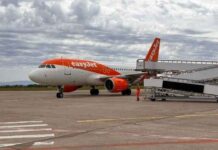
Ajaccio airport is linked to Paris all year round by Air France and Air Corsica in partnership. This winter, the two airlines are offering three direct flights from Orly and two from CDG. Other carriers such as easyJet and XL Airways offer seasonal services to Ajaccio. Hop! and Volotea offer flights to Ajaccio from a number of French cities.
For more information
Ajaccio Tourist Office
3, bd du Roi-Jérôme
Tel.: 04 95 51 53 03
Internet : www.ajaccio-tourisme.com
Porto-Vecchio Tourist Office
rue du Général Leclerc.
Tel.: 04 95 70 09 58
Internet : www.ot-portovecchio.com
Not to be missed
A walk around the Sanguinaires islands, a 4×4 or a hike through the maquis, the neolithic site of Filitosa, the maze of streets in Sartène, the Aiguilles de Bavella in the "high" mountains, the old town of Bonifacio, passing from village to village and stopping at the terrace of a bistro at pastis time. But don't forget the pleasures of the sea, and above all the pleasure of doing nothing at all.
Hotel
Radisson Blu Resort & Spa Ajaccio Bay

There can be no doubt that Corsican architect Christian Blanc had MICE groups in mind when he designed this Radisson Blu in 2012. Everything has been designed with them in mind: generous public areas, fully-equipped meeting and sub-committee rooms overlooking the sea, and ultra-spacious rooms, all with private terraces. Clinging to a hillside, the hotel's sleek design stretches the length of the dream beach. And it's no doubt to reinforce the illusion of a ship at anchor that the whole has been accessorised with white rails and sails covering the terraces surrounding a large swimming pool that comes alive in the evening, when the sun comes out.
pool parties. just a few kilometres from Ajaccio and the airport. 170 rooms and suites. 900 m2 spa, restaurant, two bars, 400 m2 meeting space.
Agosta Plage. 20 166 Porticcio.
Tel.: 04 95 77 97 97
Email : info.porticcio@radissonblu.com
Internet: www.radissonblu.fr
Moby Dick

You would never, ever think that this Moby Dick - a curious name for a hotel in Corsica - was built in the 70s. Everything was redone in 2011, and so well that all that remains are the original exterior walls. And even then, they have been covered in wood with a patina of age and sea air to blend in better with the landscape. The result is stunning. Uncluttered volumes, soft greys and a few duck blues, blond wood, contemporary furniture and bedrooms all with semi-open loggias behind blinds that isolate them from the outside world. When it comes to public areas, no expense has been spared. A very large restaurant and, above all, a wooden terrace on the edge of the beach. Because there is a beach. With all the deckchairs and water sports activities you need. As the hotel is totally isolated on a strip of sand, it overlooks the beach on one side and a lagoon on the other, inhabited by herons, egrets, green-necked ducks... A very busy fauna, from sunrise to sunset, frolicking in this perfectly stocked fish market. 44 rooms.
Plage de Santa Giulia, 20538 Porto-Vecchio
Tel.: 04 95 70 71 00
Email : mice@sud-corse.fr
Internet : www.sud-corse.com
Restaurants
A Bandita
Set in the heart of the maquis, among the large, round rocks that make up its décor, it features a lounge, a bar, a dance floor and, above all, a casual restaurant serving Corsican cuisine, but not just that. The backdrop for cocktails is the sumptuous sunset over the no less sumptuous bay.
of Ajaccio. When night falls, polyphonic music or pop rock bands. Your choice.
20138 Coti-Chiavari
Tel.: 06 13 41 42 15
In Baracca

The most beautiful location on the most beautiful mountain: impossible.
Straddling the Gradella pass, in a sun-drenched clearing, at the junction of two charming country roads. To the left, the sea, to the right, the sea too. On a clear day, you can even see Sardinia, so the view is breathtaking. The hostel blends into
the landscape, piles up its old wooden logs, makes its floor resonate under the heavy footsteps of a few tired hikers, and opens out, on the valley side, onto a balcony terrace overgrown with trellis. With its simple wooden tables and chairs, the inn is exactly what you'd expect from a Corsican mountain halt. The menu is a perfect match, offering local specialities, including a charcuterie to die for.
Gradella Pass, 20 166 Cognocoli Monticchi
Tel.: 04 95 71 85 81
Agency
Ollandini
1, rue Paul Colonna d'Istria - CS 10304 - 20181 Ajaccio Cedex 1
Tel.: 04 95 23 92 45 or 06 21 01 54 85
Email : infos@corsicaevents.com
Internet : www.corsicaevents.com
Facebook: www.facebook.com/CorsicaEvents
Practical guides
Guide Vert Michelin, Le Routard, Petît fûté, Guides bleus, Lonely Planet
Also in this dossier: Interview with : Anne-Catherine Mariani, Mice Market Manager, Ollandini