













Why launch a Business 1st class on 10 December?
Andreas Bergmann - After drawing up a portrait of tomorrow's consumer, TGV Lyria has decided to anticipate market developments. The two-class model no longer correspondedbecause needs have grown. The move to three classes means we can better cater for all customer segments: Standard, offering most passengers all the advantages of the TGV from 29 euros, Standard 1st from 49 euros for democratising access to 1st class and finally the Business Première for our most demanding customers. This project has been validated by surveys of our customers and prospective customers.
How do you intend to fill this 1st Business Line when companies are controlling their travel budgets?
A. B. - Business 1st is designed for passengers looking for freedom, safety and reliability. First of all, they will benefit from total flexibility with guaranteed seats on all TGVs of the day. This is important for business passengers making the round trip during the day with unpredictable schedules for the return journey, depending on the length of their meeting. At 191 euros for the Paris-Genevawhich is the same as the former 1st class Flex, we are including exclusive services such as a privatized car, a hot meal served instead, newspapers, theaccess to the exhibition at Paris-Lyon station and the booking a taxi. I'm sure that business passengers who try out Business 1st will no longer want to travel in other classes. We are also targeting certain leisure customers who are used to a high level of service or who want to treat themselves to a tourist getaway.
"The move to three classes on 10 December will enable us to better meet the travel expectations of our various customers, especially business travellers.
Why not offer Business 1st on all your routes?
A. B. - Certain thresholds need to be reached. From 10 DecemberThis class will initially be offered from Sunday to Friday - and therefore not on Saturdays - between Paris, Geneva, Basel and Zurich. This will cover 60 % of our offer for business travellers. Services to Lausanne and Bern will depend on customer feedback and sales on the other routes.
What other projects are planned as part of the overhaul of the TGV Lyria product?
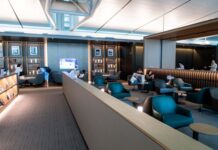
A. B. - TGV Lyria has entrusted its in-flight catering to LSG Group. This will result in a lower prices while maintaining quality with the introduction of original dishes featuring local produce. In this way, we will maintain our quality standards at the highest level. However, Lyria is still looking for a solution to the issue of lounges in Swiss stations. Above all, the SNCF and CFF to invest 500 million euros in a new fleet of high-speed trains by 2020. We are working in partnership with the Ecole Polytechnique de Lausanne to calibrate the ideal fleet based on estimates of future traffic. TGV Lyria currently operates 21 trainsets, including 2 TGV Duplexes on hire. The final decision must be taken by the Board of Directors by June 2018.
With regard to your results, are TGV Lyria's figures positive in 2017?
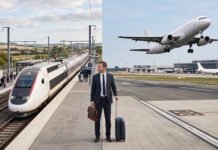
A. B. - We are seeing a rebound in traffic, which is very good news. TGV Lyria is benefiting from the reforms undertaken two years ago, when we decided to allocate all our resources to our main routes, i.e. Geneva, Lausanne, Basel and Zurich. A a more aggressive pricing policy has been launched. We are also seeing a recovery in sales on international markets, with the image of Paris having returned to positive territory. The traffic growth amounted to 11 % on the Paris-Geneva route compared with 2016. We have regained three points of market share on this route, while TGV Lyria is in head-on competition with both scheduled and low-cost airlines, as well as car-sharing. Depending on the route, our market share varies between 60 % and 65 %. Lyria has no shortage of assets, with a centre-to-centre link, a reduced ecological footprint, optimised working time during the journey, punctuality of 92 %, ticket flexibility, etc. According to a BVA survey, 93 % of our customers are satisfied, or even very satisfied.
Key datesHolder of a Bachelor's degree from the Ecole Hôtelière de Lausanne and a diploma from the Advanced Management Programme of the Institut Européen d'Administration des Affaires (INSEAD).
Andreas Bergmann is also a member of the Board of Railteam, the alliance of Europe's leading high-speed rail operators. |