
















How much does SNCF Gares & Connexions invest each year? What are your preferred station locations?
Stéphane Lerendu - Investments are of the order of one billion euros per year, financed to the tune of 60% by our external revenues and 40% by the State and local authorities. Commercial fees generated 350 million euros in 2024, i.e. an increase of 40% since 2019. Shops are an attractive feature that generate traffic in our stations. We are focusing first and foremost on travel retail, i.e. the sale of drinks and sandwiches, or catering services with seats to make travel more comfortable... The mix of services comes next, with food shops, analysis laboratories, bicycle repair shops, and also coworking spaces, as in the Lyon and Saint-Lazare stations. The aim is to make stations more business-likeThese are mobility hubs where travellers can meet up to work.
What progress has been made on the expansion of Lyon Part-Dieu station and other major provincial cities?
S. L. - At the end of the year, SNCF Gares & Connexions will complete the vast undertaking Lyon Part-Dieu after ten years of work at a cost of over €300m. Passengers will be able to take advantage of new entrances, a 210-metre long concourse, a tree-lined square topped by a canopy, a 1,300-space cycle park, etc. We will now be looking at what we can do to modernise Perrache station as part of the redevelopment of the Interchange Centre, which has just begun and which is the responsibility of the Metropolitan Authority. Work is also planned between now and 2030 in Bordeaux in order to redesign traffic flows and create a multimodal hub on the forecourt. Crossing the tracks will also be improved with a footbridge linking the historic building and the Belcier hall, providing access to the bus station that is due to be built nearby. In Strasbourg, a multimodal interchange is to be created and the station is to be opened up to the west.

Do you have any other projects in the region?
S. L. - SNCF Gares & Connexions is also working to support local authorities and mobility organising authorities (AOM) in their metropolitan regional express services (SERM) projects. Twenty-four cities have been awarded the labelWe are committed to developing public transport networks with high levels of intermodality and frequency. Given our expertise, SNCF Gares & Connexions carries out prospective studies, maps, lists needs and identifies priority investments to be made in each station or stop. In particular, this concerns traffic flow, the sizing of platforms and intermodal connections according to the traffic envisaged for these SERMs.
Are there still any plans to build new stations in France?
S. L. - Several projects are in the pipeline. The first involve the creation of new stations on the Provence Alpes Côté d'Azur line. Permission has been granted for Nice Aéroport station, which will be built on the site of the existing Saint-Augustin station, at a cost of €130m. It will feature a large shade structure, a true bioclimatic hall with 2,000 m² of photovoltaic panels and 4,000 m² of garden, which will act as a cool island in summer. It is scheduled to open in October 2029, just before the 2030 Winter Olympics. The station will be able to handle five million passengers a year, rising to 10 million by 2035. Design studies were then launched for the extension of the Marseille Saint-Charles which will be completely long and underground, so that TGV trains can continue their journey to Nice. It will also make the line's timetables more reliable, particularly for daily trains, as these improvements are one of the elements in the introduction of a regional express service within the Aix-Marseille Provence metropolitan area. Ten years of work are planned, and construction of the station, for which the architectural design has been approved, is not due to start until 2029, with inauguration scheduled for 2035. In the same timeframe, three TGV stations will be built from scratch at Agen, Montauban and Mont-de-Marsan on the new South-West line linking Bordeaux and Dax on the one hand, and Bordeaux and Toulouse on the other.


Are Paris stations still a priority for you after all the work that has already been carried out in the capital?
S. L. - More than ever. The most important project currently concerns Austerlitz station with the development of a shopping and restaurant area under the Great Hall. Then, in September, we are going to start redeveloping the Gare de Lyon on the rue de Bercy side to create a real concourse housing services and shops and offering a wide range of services. new access to the metro, in particular line 14. There are also plans to plant the courtyard above, running as far as the Ministry of Finance, to create a real planted promenade. Some development work is also planned at Gare de Paris Est as part of the preparations for the arrival in 2027 of the CDG Express which will link the station to Roissy-CDG airport in 20 minutes. The former Kyriad hotel on the station's upper floors will be converted into 2,700 m² of coworking space and 400 m² of restaurant space.
What's happening at Gare du Nord after the project with Ceetrus was abandoned?
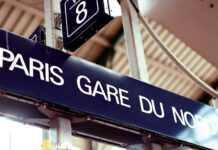
S. L. - Our new project is being carried out in phases. The first improvements - the most urgent - were carried out for the Paris 2024 Olympic Games, facilitating routes and connections between the different modes of transport, and in particular vertical circulation towards the RER, creating a real bus station as well as a taxi service and a vast cycle park with almost 1,200 spaces. The second phase, scheduled between 2026 and 2029is designed to meet the expected increase in passenger numbers on international rail services. In particular, it provides for the extension of Eurostar's cross-Channel terminal, where renovation work is already underway. Completion is scheduled for the end of March. Gare du Nord will also see the renovation of Transilien platforms 8 to 10, following on from that already completed on platforms 7 and 8.

Does this work also provide an opportunity to improve station accessibility for people with reduced mobility?
S. L. - Yes, absolutely. 736 SNCF stations are included in the Accessibility Master Plan. In both 2023 and 2024, 60 of them have been made accessible throughout the country. And in five years, SNCF Gares & Connexions has doubled the number of accessible stations in France, with 75% of the programme completed by 2024 and 80% of that planned by the end of 2025.
What role do you see for the new rail operators competing with SNCF Voyageurs?
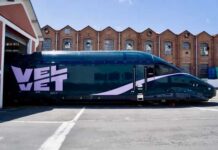
S. L. - As infrastructure manager, SNCF Gares & Connexions welcomes new companies provided they have obtained their certifications, SNCF Réseaux train paths and a transport plan. We then study their needs in terms of sales areas, waiting areas, etc. or even VIP lounges. Trenitalia, for example, has a sales area at Gare de Paris Lyon. We also need to make room for them in station operations centres.