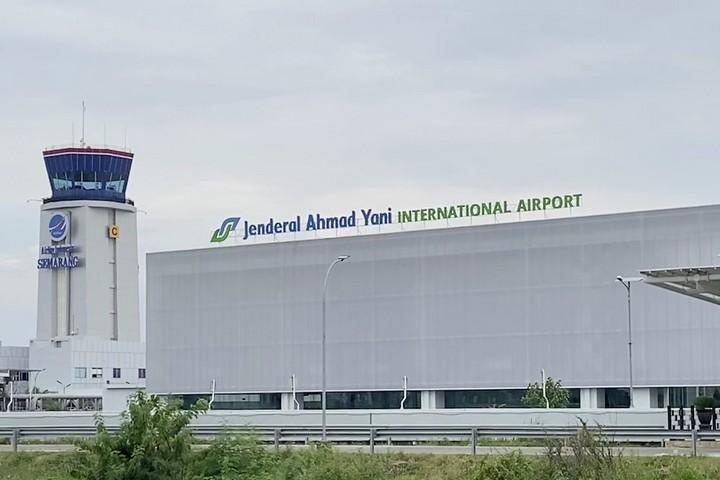
No more transiting through Singapore or Kuala Lumpur to go directly to Palembang, the major economic centre of South Sumatra with its million and a half inhabitants. Or to Semarang, the capital of Central Java and a major trading port. From now on, business travellers going to these two cities will have to transit through JakartaBali or Medan. Visit Indonesian government has decided to withdraw international status from 17 airports across the country. Since May, 17 airports continue to enjoy international status, compared with 34 previously.
It is understandable that some airports have never attracted a single international flight, the rationale for this decision seems very uncertain behind the closure to international traffic of airports such as Palembang (South Sumatra), Pontianak (West Kalimantan) and Semarang (Central Java). Until now, these three major cities have been served by regional flights, providing easy access for business travellers. In particular Palembang and Semarang, two cities with over a million inhabitants and real economic centres at national level.
17 airports lost their international status in May
According to the Indonesian Ministry of Transport, this reduction should help consolidate international air traffic to a few major hubs. And establish them as national and international hubs.
The Ministry is thinking in particular of Jakarta, Bali as well as Medan (North Sumatra), Surabaya (East Java), Makassar (South Sulawesi) and Yogjakarta. The other 11 airports, which retain their international status, are mainly used to promote tourism. The exceptions are Balikpapan and Pekanbaru, one in Borneo and the other in Sumatra, which are key centres for gas exploitation.
The government's underlying aim is to avoid transferring regional passengers to more competitive international hubs such as Kuala Lumpur or Singapore.
Jakarta and Bali, hubs with few intercontinental flights
Speaking to the national media, Ministry of Transport spokeswoman Ardita Irawati revealed the primary objective of this decision: "Most of our current international airports serve only a few specific countries and do not offer long-haul services, which means that passengers go to international hubs in other countries". Most of our current international airports only serve a few specific countries and do not offer long-haul connections, which means that passengers go to international hubs in other countries".
The restructuring is part of a programme to transform the airline's infrastructure, known as InJourney Airports. The programme aims to create a more efficient air connectivity network to promote tourism and economic growth through better management of the airport ecosystem.
Except that in reality, Jakarta and even Bali are still less well served internationally than their counterparts in South-East Asia. In 2024, Jakarta will have flights to 41 cities worldwide (including only Amsterdam and Istanbul in Europe). Bali is not doing much better.
The Indonesian capital's airport hardly compares favourably with its neighbours. Kuala Lumpur offers flights to 108 international cities (including Amsterdam, Istanbul and London in Europe). Bangkok does even better. The Suvarnabhumi hub is linked to 120 international cities (including 15 in Europe). Last but not least SingaporeThis is the airport most used by travellers to and from Indonesia. 145 destinations (including 14 European cities).
European travellers will bear the brunt of this decision. From now on, travellers to certain Indonesian cities will have to change planes at least twice. Not to mention of the additional cost generated by these stopovers and the use of different airlines.