













Will the current crisis have an impact on train design?
Hervé Macé - As a result of the pandemic, new requirements will come into play, such as air renewal and the positioning of seats to facilitate cleaning. In addition to hygiene, respect for the environment is another important aspect today. If we want to make the use of rail transport a standard-bearer for ecology, we have to go all the way. Our in-house slogan at Segula Technologies is decarbonising rail transport to make it more attractive. There are a lot of trials going on in this area, particularly with hydrogen and replacing diesel with liquid natural gas. Segula is very open to this type of initiative to reduce the train's CO2 footprint.
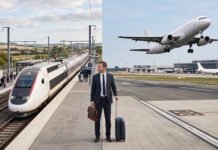
Awareness of environmental issues is driving more and more travellers, particularly business travellers, to take the train. But aren't there other issues at stake in making this mode of transport even more attractive than the plane or the car?
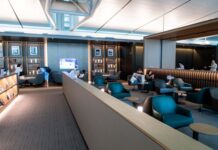
H. M. - We need to ensure that the quality perceived by passengers when they board a train is identical to that when they board a plane or get into their car. There are visible elements that enable airlines and manufacturers to stand out from the crowd. Today, this also applies to the rail market. Most operators want to make a difference in terms of comfort. Through style, designers will give a modern image with shelves of this or that shape, soothing colours and appropriate lighting. We help manufacturers to work on what really counts in the eyes of the passenger. Certain areas of the seat, for example, don't need to spend time and money on them, unlike the armrests, access to sockets and the general environment.

Will the opening up of the rail market to competition be accompanied by an improvement in comfort and design?
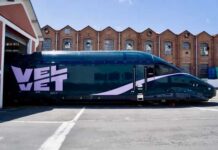
H. M. - We have seen this in England and Germany. In Germany, new franchises have been opened up to passenger traffic, with rights granted to operators for periods ranging from 7 to 15 years. During this time, they need making the difference in interior designThese are either new trains with the latest comfort features, or old trains that have been renovated and fitted with WiFi equipment. The image of modernity, the exterior and interior design is very important for operators, particularly in convincing the political authorities to grant them franchises.
How could the comfort offered to business travellers evolve?
H. M. - One thing is clear: there will always be a seat for leisure travel and another for business travel. If the railways want to win market share from regular air travellers on journeys of 5 to 6 hours, they will have to adapt their offer to these long-distance routes. For attracting business travellersWe need to enable them to work in good conditions, with an appropriate layout, good connections for videoconferencing, and places to hold meetings without disturbing other passengers. The profitability of these workspaces needs to be studied, but these are things on which proposals are being made.
If the railways want to win market share from people used to travelling by plane on journeys of 5 to 6 hours, they will have to adapt their services over these long distances.
All this also requires very high-speed connectivity...
H. M. - This is the key. If operators want to attract customers to the train, whether for short, regional, intercity or international journeys, they need to a must. Whether on the train or the metro, today's passengers need to be connected at all times, without interruption.
So what does the future hold for 5G in the world of railways?
H. M. - It's a political debate, but of course it's essential. 5G is clearly the technology of tomorrow. This means setting up an entire sector - operators, manufacturers, etc. - which must be ready to use 5G in industrial applications, as well as transport-related applications. - which must be ready to use 5G in industrial applications, as well as transport applications.

As well as passenger connectivity, communication technologies are also important for train operations...
H. M. - If we want to attract more passengers to the train, we need capacity. To increase capacity, one of the major trends is to automate lines, as we are seeing with line 14 of the Paris metro and elsewhere in the world. If you want to achieve a frequency of one minute between each metro station, you have to go that way, and it's the same for regional trains. The technologies enabling this automation will support the increase in production rates and the running of trains at close range in complete safety for passengers. This adaptation will make it possible to put more trains per hour on the tracks. The rail industry has to make do with the infrastructure it has. It is either impossible or extremely costly to create new infrastructure in countries that are already well-equipped. Another factor in favour of greater mobility is the harmonisation of signalling under way in Europe, which will enable interoperability between countries without the need to change locomotives.
In the same vein, do you think the Hyperloop is a credible project?
H. M. - I would be wary of judging any idea that might be a step in the right direction, that of transport that avoids the road and limits CO2 emissions. There are tests that Segula is following and for which we have been asked to contribute at one time or another. What's interesting is to have a complementary range of solutionsIt's not about being dogmatic, it's about being able to adapt to different circumstances, countries and geography. It could be a magnetic levitation train, as in China, linking an airport terminal in the city centre in record time or a competing technology such as that of Hyperloop which can provide the same type of services between a rail terminal and other destinations. The idea is to work on intermodality, because rail cannot exist without other modes of transport. If you want to do door-to-door transport, for example, you need to have trucks to take the freight to its destination. To have a wide range of solutions, I'm in favour of having more ideas rather than too few.