













The city of Djibouti, founded in 1888 under French colonial rule and capital of the country of the same name, of which it is one of six administrative divisions, is in the process of becoming one of the most modern ports in the world. An economic lung for two-thirds of the country's total population, i.e. almost 600,000 people living in an area of almost 650 square kilometres.
Economic artery
The city has emancipated itself from its historic architectural core, yet its arid environment and dusty streets are the backdrop. But it is at the crossroads of the Horn of Africa, a strategic position that cannot be ignored. Today, the port of Djibouti remains the main gateway to the Red Sea for the neighbouring country, and is also a major port of call for the international community. Ethiopia's economic giant. Thanks to the new port facility at Doraleh, this is a key economic artery for the whole of East Africa.
" One of Djibouti's major assets is its geographical position, at the entrance to the Bab-el-Mandeb Strait on the Red Sea, just 6 hours from one of the world's major shipping lanes which handles 30,000 ships a year and 90 ships a day. Compared with Dubai, this represents 2 to 3 fewer days of diversion for a ship. But an hour of sailing represents thousands of dollars for a shipping company. "says Wahib Daher Aden, CEO of the multipurpose port of Doraleh.
Djibouti officially inaugurated this massive $580 million port facility in 2017, taking over from the historic port of Djibouti, which was destined to become a business centre in the future. The new port, which has been reclaimed from the sea, looks as follows under the banner of gigantism with its twelve giant bright red gantry cranes deployed on a 1200 metre long quay. One of the world's most efficient deep-water ports (18 metres), it can accommodate ships of up to 15,000 containers as well as bulk carriers, handling 9 million tonnes of goods a year.
What makes it special is that it will soon be linked to the railway line to the Ethiopian capital Addis Ababa, due to open in 2018, and will be adjacent to a industrial free zone which specialises in logistics, trade and light industry. It currently offers 140 hectares of facilities to around thirty foreign companies, and there are plans to extend it over dozens of kilometres. On the other side of the capital, the Damerjog heavy industry cluster is also emerging, covering more than 3,000 hectares. It will eventually include a gas liquefaction plant, an oil storage facility, an oil refinery, a cement plant and a ship repair yard.

New infrastructures
To make this logistics complex more fluid, the infrastructures are being developed at a rapid pace. Road transport capacity is being improved, with several corridors being completed. Djibouti is also working on the renovation and extending its airport facilities Djibouti's old airport is also used for military transport, and is becoming more and more saturated every day for the growing civil transport sector. " Our existing airport will be extended to accommodate the traffic we hope to attract, while we wait for another international airport to be built not far from our current one. "explains Said Nouh, Secretary General at the Ministry of Transport and Equipment.
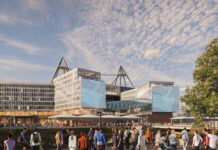
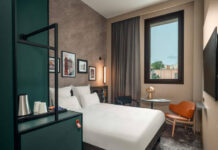
In a few years' time, visitors may no longer recognise the capital when they arrive, with a completely revamped coastline that will offer a genuine business centre, a marina to accommodate pleasure boats and cruise ships, and office towers to house companies. This revolution is already being accompanied by a sharp increase in the number of hotelsThis is currently insufficient to accommodate the growing flow of tourists and international businessmen.
Several hotels are currently under construction, including the multi-purpose hotel and shopping complex by the Chinese company Touchroad International: a building with 32 shops, two cinemas, a casino, several restaurants and numerous areas devoted to sports and leisure. The top three floors will house a 200-room hotel.
Situated on the seafront on the road to Venice, the business district The new Mall Bawadi, Djibouti's first top-of-the-range shopping centre, will complement the capital's upmarket shopping and leisure facilities, which include a Carrefour hypermarket, numerous shops, banks, restaurants and cafés, as well as a bowling alley and cinema.


