From public initiatives to private projects, New York is becoming ever greener and more aware of the challenges facing the planet.
By Cécile Balavoine Photos Ludovic Maisant -
While Central Park has been New York's emblematic green lung since it was created in the mid-19th century, the last decade has seen a proliferation of tree-lined areas in the city, from the Meatpacking District to Brooklyn and the banks of the Hudson.
New York has long been a UFO in the ecological landscape of American cities. Owning half as many cars as the rest of their compatriots, New Yorkers have one of the lowest per capita carbon footprints in the world. And even more so since they benefit from an ever-increasing number of green spaces. In fact, in addition to the 350 hectares of Central Park, 220 new hectares of gardens have recently been added thanks to the development of the banks of the Hudson and the creation of Hudson River Park, which stretches over seven kilometres. The same is true of Brooklyn, with Brooklyn Bridge Park and its...
New York has long been a UFO in the ecological landscape of American cities. Owning half as many cars as the rest of their compatriots, New Yorkers have one of the lowest per capita carbon footprints in the world. And even more so since they benefit from an ever-increasing number of green spaces. In fact, in addition to the 350 hectares of Central Park, 220 new hectares of gardens have recently been added thanks to the development of the banks of the Hudson and the creation of Hudson River Park, which stretches for more than seven kilometres. The same is true of Brooklyn, with Brooklyn Bridge Park and its 34 hectares of greenery dotted along the East River. Little by little, particularly since the opening in 2011 of the High Line, a suspended park running along 2.3 kilometres of former railway lines, New York has become a more herbal city. It is greening up, breathing deeply.
It all really began in 2007, when the mayor at the time, Michael Bloomberg, proposed his ecological plan for 2030, the famous "PlaNYC", one of the most radical objectives of which was to reduce greenhouse gas emissions by 30 %. Since the arrival of Bill de Blasio at the head of the city in 2013, the plan has admittedly become GrowNYC and its horizon pushed back to 2050, but the objectives have remained broadly the same, with greenhouse gases having to be reduced by 35 % in 2025. "We are committed to making New York the most sustainable city in the worldexplains Mark Chambers, Director of Sustainable Development at New York City Council. Initiatives such as reducing food waste, electrifying our public transport system and improving the energy efficiency of our buildings are necessary for the future of our economy, our city and our planet. We're proud of the work we've already done to create a greener city, but we know there's still a lot to do."One of the new objectives is to achieve a high level of electricity production capacity using solar energy by 2025.
L'Assemblage, a coworking centre with a very contemporary feel.
Rethinking the urban ecosystem
But since the devastation caused by Hurricane Sandy in 2012, New York has also been aiming to preventing environmental disastersThis is being done by strengthening the riverbanks and providing ways of retaining rainwater. As a result, some buildings have been completely redesigned, transforming them into veritable urban ecosystems.
Such is the case of the Jacob Javits Center, the convention centre designed by I.M. Pei, located on 11th Avenue and 34th Street, overlooking the Hudson River. In 2014, this building dating from the 70s was completely renovated to become an all-glass venue and, above all, with a green roof designed to capture rainwater in the neighbourhood. "We are now 96 % more energy efficient than we were before and LEED Silver certified."explains Tony Sclafani, spokesman for the Javits Center. But what's even more astonishing is the presence on the roof of several species of birds, as well as beehives offering not only the chance to take beekeeping lessons, but also to taste honey made in Manhattan. "We also set up a climate station in collaboration with a Philadelphia university."Tony Sclafani goes on to say that these developments cost 463 million dollars and were financed by tourism through hotel taxes.
And in fact, thehotels could well become the next driving force behind the city's ecological advances. A former hotelier, Frenchman Hervé Houdre, who managed the Plaza, the InterContinental Barclay and many others, has become "Mr Sustainable Development" at NYC & Company, the New York Convention and Visitors Bureau. His aim is to help businesses in the tourism sector - hotels, restaurants, transport, theatres, museums, shops, etc. - to develop their own sustainable development strategies. an ecological policy. "We need to make hoteliers and other players in the tourism industry understand that we can help the planet while continuing to make a profit. And that it is even by making a profit that we will be in the best position to contribute to progress."explains Hervé Houdre. He guides these professionals towards the United Nations Sustainable Development Goals platform, while helping them to obtain their certifications.
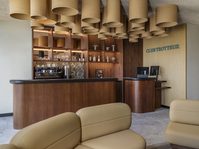
New York remains at the cutting edge of trends, especially when they're green. Last November, just a stone's throw from the famous Flat Iron Building, a brand new coworking space opened its doors, The Assemblage, with a focus on well-being and "green". biophiliaThe principle is that people should remain connected to nature. We work in front of a huge green wall or in Zen-like offices. "Our members can enjoy Ayurvedic meals, meditation classes and an organic juice bar."explains Carla Burke, spokeswoman for the venue. The concept has caught on, and another Assemblage, with an integrated mini-hotel, has just opened in the Wall Street district. It's a must-see, but you'll have to get there on a CitiBike, one of the 12,000 blue bicycles that are slowly competing with the famous yellow taxis.
By using our site, you consent to the use of cookies.
We use cookies on our site to store and/or access information about your device, in particular to offer you advertising and to compile statistics in order to improve ergonomics, navigation and editorial content.
Analytical cookies enable us to gather valuable information to optimise the performance of our site and improve your user experience.
By accepting cookies, you are supporting the work of our editorial team in providing you with quality information, while enabling us to offer you content and services tailored to your interests.
For more information, please consult our page Privacy policy.