





















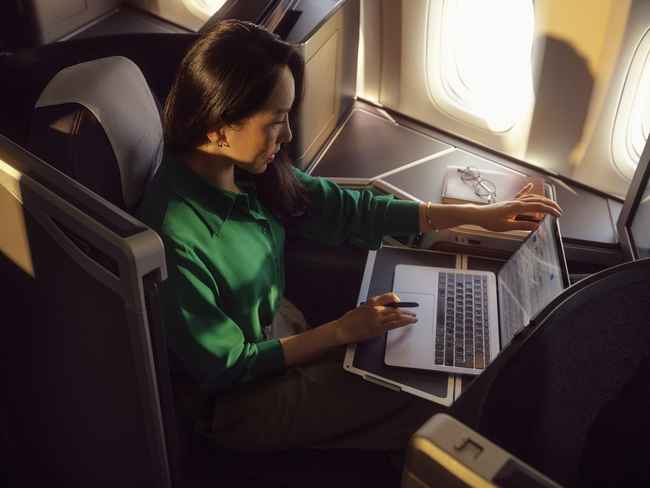
What if Starlink became the standard for in-flight connectivity? Air France, Qatar Airways, SAS or even WestJet SpaceX has been stepping up its partnerships with major airlines for several months now, with a view to bringing satellite Internet access technology into widespread use. And now another major player is getting up to speed on wi-fi: on 6 November, the IAG group announced a strategic investment in connectivity to equip more than 500 aircraft. These will include aircraft operated by Aer Lingus, British Airways, Iberia, LEVEL and Vueling. With the promise of operating more aircraft equipped with high-speed wi-fi than any other European airline group.

According to the timetable outlined by IAG, the first aircraft should be equipped from the beginning of 2026. The Group's plan covers short-haul flights in Europe as well as all long-haul transatlantic and international flights.
" Staying connected in the air is increasingly important for our airline customers "says Luis Gallego, CEO of IAG. " The introduction of Starlink's high-speed wi-fi will transform on-board connectivity, improving both connection speed and reliability for customers. Customers of all IAG airlines will be able to benefit from the service from next year. This demonstrates how IAG is working together as a group to drive innovation and secure major agreements for the benefit of all our stakeholders. "says Luis Gallego.
At British Airways, CEO Sean Doyle explains " We continue to focus on transforming the customer experience. The launch of Starlink on our long-haul and short-haul aircraft is a game-changer for us and our customers, enhancing their experience on board our flights by offering seamless connectivity from door to door. Particularly on short-haul routes, this will really differentiate us from our competitors. With our new Starlink-powered Wi-Fi, our customers will be able to enjoy ultra-fast, low-latency internet from the moment they board to the moment they land - even over oceans and remote areas. It's Wi-Fi that feels like home, even at 38,000 feet. "explains Sean Doyle.
