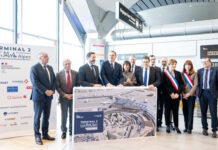












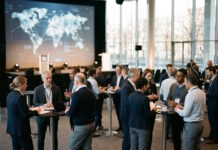





Let there be no mistake: the SAF made in France is "in the pipeline". At least judging by the list of participants at the "Meeting on Sustainable Fuels for Aviation", held on the morning of 14 February. All the decision-makers involved accepted the invitation of three ministers: Agnès Pannier-Runacher to the Energy Transition, Clément Beaune for Transport, and finally Roland Lescure for Industry. Under the impetus of the regulatory framework that is finally taking shape at European level, the French government intends to confront the players concerned with their responsibilities, by bringing them together around a new strategy. "task force. With ambition and realism... " If we're honest, there have already been attempts to do this work, and we haven't gone all the way, reminds Clément Beaune. Perhaps because we were missing a link. The trigger today is the European standards that give us this visibility. ".
The European roadmap is indeed taking shape, as Pascal Canfin explains. Speaking from Strasbourg, the Chairman of the European Parliament's Environment Committee was reassuring about the progress of the negotiations: " In the end, the trajectory between the different European institutions is fairly similar. It diverges at the end of the period but is fairly similar in the first part: 2% of SAF in 2025 in both cases, then 5% in 2030 for the Commission and 6% for the Parliament. Then 37% in 2040 for the Parliament, 32% for the Commission and the Council. We have paved the way so that you can invest with visibility over fifteen years. I have no doubt that we will easily reach an agreement on this point. "promises the former minister.
SAF who can?
Visibility: a word that came up a lot during the two-hour meeting - maliciously compared by the Minister for Industry to " a meeting of anonymous CO2 emitters ". And in this quest for sobrietyHowever, the energy companies insist that the investment required is long term, with projects spanning several decades. Projects for which French and European subsidies would obviously be welcome...". If we could have a little more than the Americans have managed to do very quickly, by being agnostic about e-kerosene production methods, it would be a huge advantage for us. "says the Engie representative. The energy companies are also calling for greater visibility when it comes to classifying what will be included in the virtuous circle and what will be excluded. At Suez, Vincent Menuet points to the " need strong support from the public authorities, particularly for RCFs (Recycled Carbon Fuels). It is important that these RCFs are taken into account in the regulations. Admittedly, some of them come from fossil sources, but when they are recycled, it is very important that they have a more favourable status. This lack of visibility on the status of RCFs is a significant brake on the launch of projects. "warns the Director of Public Affairs, Safety and General Resources at Suez.


The government says it is "listening". " It is clear that the State is expected to provide industrial, financial and fiscal support. "says Transport Minister Clément Beaune. Agnès Pannier-Runacher warns: " When it comes to support, we listen, but we are also demanding. And we will be accountable for the proper use of public money. There are certainly opportunities for good measures. Others are less feasible. ".
But the impatience of the airline industry is now palpable. " If the energy companies don't wake up in France, my neighbour on the right [Anne Rigail, CEO of Air France, editor's note] will go and buy her e-fuel in the United States. "Augustin de Romanet, CEO of the ADP Group, warns. The company has not waited long to do without French SAF. " We buy sustainable fuel wherever it is found, so unfortunately we have started by doing it to USA and in Finland because that's what was available "says Anne Rigail. While the CEO of Air France is delighted that agreements have been reached with French players - such as the French Air France - she is also pleased that the company has been able to sign a number of contracts with French companies. TotalEnergies and Engie in this case - it cannot be satisfied with the pace of progress, nor with the level of ambition displayed by Europe. " The debate about 5 or 6% by 2030 is relatively outdated for a number of airlines, including Air France KLM, since we have committed to incorporating a minimum of 10% of sustainable fuel by 2030. (...) It is in the coming years, in the very short term, that investments must be made so that international competition can be established around this sector. Current production represents a tiny fraction of aviation needs. Everything still to be built. In France, it is estimated that 300,000 tonnes per year will be available from 2024. Our real fear is that France and Europe will be left behind in this global competition for SAF. The United States are moving fast through their IRA, albeit with sustainability criteria that are not ours. Their objective is to ensure the autonomy of American aviation in 100% SAF by 2050. And current projects are already reaching 9 million tonnes by 2030. That's four times more than in Europe! ".
Anne Rigail is not alone in expressing alarm at the gulf between European and American ambitions. At Safran, Olivier Andriès puts it bluntly: " Europe's ambitions are rather low, rather timid. The United States is moving twice as fast: 10% by 2030. So there is little chance that we will be in the game by 2050. At a time when the European Commission prides itself on being the Green Deal Commission, and when our ambition is for Europe to be the most exemplary continent in terms of decarbonisation, we are quite timid... "laments the Managing Director of Safran.
Admittedly, France reserves the right to go beyond the regulatory framework currently being set at European level. Of the two scenarios envisaged in the roadmap presented on Tuesday - "Action and "Acceleration -The Group expects to incorporate 10% of SAF by the end of 2009. 2030and 85% on the horizon 2050. But this will mean an even greater output. Clément Beaune agrees: " There are several tens of millions of tonnes to be produced worldwide, and several million at European level by 2030, even with a target of 6%. And no doubt, as a result of market choices or European regulations that may become more ambitious before the end of the decade, I firmly believe that the standard will be around 10%. Which means that the effort we have to make, which is already gigantic, still needs to be increased. ". Although the meeting on 14 February failed to produce concrete solutions or find common ground between the imperatives of each party, it did set in motion a new common dynamic and the start of a timetable. A date has already been set for the next Paris Air Show, in June, at which the government intends to make more concrete announcements. In the meantime, the new "task force" set up on Tuesday will have to put in place a " industry committee "It will be headed by a two-person team to be appointed shortly. France doesn't have (enough) SAF. It has committees.