
















Information systems play a key role in the world of business travel. Broadly speaking, there are two main categories of information system used to make online reservations: on the one hand, GDSs (global distribution systems) dedicated to travel agencies; on the other, SBTs (self booking tools), which may or may not be shared, designed for companies. These two families of technological tools can be connected.
To optimise their business travel, companies generally sign a contract with a travel agency, which provides them with an SBT. This tool is itself linked to the GDS used by the travel agency.
A small number of players
The number of players, whether GDSs or SBTs, is relatively limited. The European group Amadeus, the world leader in travel distribution, retains three historic shareholders in its capital: Air France, Iberia and Lufthansa. This is despite the fact that, since 2005, investment companies have held just over 52 % of its capital. As manager of the reservation system (GDS), Amadeus has some 103,000 travel agencies and points of sale connected to more than 720 airlines and more than 85,000 hotels. Sabre, Galileo, Worldspan and other global reservation systems are essential technological partners for the travel industry. The GDSs, whose remuneration is based on transactions, provide the tourism and business travel industry with a technological offering that applies to distribution, IT and points of sale. Their customers include TMCs (travel management companies), business and leisure travel agencies and online travel agencies. Amadeus processed some 670 million paid transactions worldwide in 2009. Its customer base also includes individual travellers, thanks to subsidiaries such as Opodo aimed at the general public.
Shared portals
Having diversified into SBT, Amadeus and Sabre have developed Amadeus eTravel Management (AeTM) and GetThere respectively. In this market, aimed at companies keen to control their travel expenditure, they are competing with publishers such as KDS, Traveldoo and Concur.
Depending on the size of their business travel budget, companies can choose between a shared SBT or a proprietary solution. Generally speaking, for annual expenditure of less than one or even two million euros, the portal solution offered by a network of travel agencies is recommended. However, the SBT publisher still needs to be present in this niche.
Concur France does not yet have a portal. Offering companies in the private or public sector whose business travel budget exceeds €2 million a year the chance to acquire their own SBT, Concur France is targeting the SME market, working on a portal that will be available to travel agency clients from next year.
For a company or group, managing its travel exclusively through manual processing, known as off-line, is proving very costly. Given the changing schedules, most train or plane tickets are taken by the agency in flexible mode, and therefore at fairly high cost," comments one observer. It makes more sense to implement a self-service system that gives travellers a sense of responsibility and allows them to choose a fare that can be adjusted according to the reliability of their schedule. In addition, the introduction of a service that allows automated processing of bookings (on line) and limits manual processing (off line) enables two types of savings to be made. These are lower travel costs, thanks to the adoption of a more competitive air or rail fare, and lower transaction costs invoiced by the agency. The only downside is that multi-leg journeys, VIP trips and certain group trips cannot be handled efficiently by an SBT.
This restriction explains why the SBT adoption rate within a company is often around 60 % and, after a year's use of the tool, can reach 75 %. Whether or not they come from online booking software publishers, solutions relating to travel orders, expense reports and even invoicing can be integrated into SBTs.
Mobile version
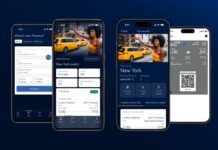
There's no doubt about it, technology players are regularly releasing new versions that are more and more effective. One of the current challenges is the mobile version of their solution. In autumn 2009, Concur France launched a free mobile application for its customers. A genuine extension of the SBT, it has already attracted more than 100,000 users. The release of a Concur Mobile version, available as a free download, gives mobile workers a choice of three major smartphone platforms: iPhone, BlackBerry and Google," explains Pierre-Emmanuel Tetraz, Regional Director of Concur France. For the company, the aim is to optimise the management and control of business travel. In practice, employees can use their smartphones to easily change or update their itineraries, and enter or validate expense claims. When on the move, they are no longer dependent on the travel agency or their computer to access their group's central SBT software.
Technological advances can also come from suppliers. For example, since 8 June 2010, SBT software publishers have integrated the SNCF's e-ticket into their offering. Thanks to this new method of ticketing from the railway company, passengers can receive their ticket directly by e-mail, or modify or even cancel their journey without having to travel. What's more, they can access trains without having to worry about stamping their tickets. All they have to do is print out their tickets in PDF format. Soon, they will be able to use their loyalty card as a ticket.
Tried out since December 2009, notably on the TGV Est, e-ticketing currently only concerns around twenty destinations in France, but over time it will become more widespread. To identify themselves, passengers must enter their date of birth and e-mail address. Once the ticket has been issued, a "travel documents" link on the summary page allows the e-ticket confirmation to be reprinted for two months following the journey, and any supporting documents to be printed.
Sustainable development
SBT's editors have developed an integrated solution dedicated to CO2 emissions. GetThere Green provides access to a range of tools designed to customise a company's online booking site in order to manage its environmental policy. By displaying a train/plane comparator, travellers can be informed of the different levels of carbon emissions generated by their journeys. This is an important lever for encouraging people to choose the train for many destinations, and even for dissuading employees from making certain non-essential journeys.
Travel agency networks, whether integrated or not, have all signed agreements with one or two publishers of online booking solutions in order to have an in-house offering. At AS Voyages, for example, the e-Smile shared booking portal is published by KDS. As this is a 'blank' product, the end user, in this case the SME, only knows the name e-Smile. As a network of travel agencies, it's in our interest to offer our customers a packaged editor solution that enables them to make online and even offline reservations, issue travel orders and edit expense reports," says Philippe Quillien, Director of Business Travel at As Voyages, the result of the merger of Selectour and Afat Voyages. Otherwise, corporate clients would have to choose IT solutions from other providers and have them integrated into our KDS online booking tool."
Integrated validation circuit
The system makes it possible to book services in compliance with the rules of the travel policy and even offers a validation circuit. Passenger information is entered in advance, while the online tool is being set up, to ensure that every booking request is taken into account. Access to the system is available 24 hours a day, 7 days a week. When consulting suppliers of online solutions, the key selection criteria are the quality of the tool, the search engine and the price proposal," continues Philippe Quillien. In addition, the transaction cost invoiced by the publisher to the travel agency must be as competitive as possible". Software platforms for booking and managing online travel provide agencies with the means to rapidly develop their Internet sales channel and to be more available for higher added-value offline sales.
Instead of connecting to a portal, large companies wishing to rationalise their travel budget expenditure are launching a call for tenders to set up an online booking tool. Obviously, this application must incorporate the travel policy defined in advance by the company, to facilitate compliance. With this system, travellers or their assistants can compare prices in a single click and book quickly. As for the company, it is sure to optimise its travel programme. "With dynamic price ceilings, it is possible to improve transport and hotel expenditure by designating a price or setting a maximum amount per market", says Traveldoo.
What's more, the self-booking tool automates control procedures, provides access to a wide range of suppliers and streamlines exchanges with the travel agency. Helping to rationalise purchases linked to business travel, this system is truly effective.


