














Since 1993, the structure of business travel expenditure has changed considerably. According to the 2007 American Express Business Travel Barometer, "in a market estimated at 26.6 billion euros, air and rail carriers account for almost 70 % of travel expenditure, compared with 50 % in 1993". While air travel remains the major expense for French companies, with a share of almost 50 %, rail travel has seen significant growth, rising from 10 % in 1993 to 20 % in 2007. "This trend is linked to the constant development of rail services, both domestically and internationally. From this point of view, France remains an exception at European level: it is the only country to include such a high 'rail' share in business travel expenditure", the study points out. This share is set to increase further in the coming years, particularly for short journeys, thanks to the development of high-speed lines in Europe.
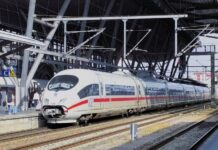
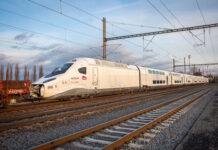
According to the AMVA barometer, "these new routes should appeal more to business customers. Not only because of the departures and arrivals in the city centre, but also for environmental reasons. Indeed, the environment has become a new concern, particularly among large companies, 47% of which (%) say they take this factor into account as part of their travel policy. With the development of high-speed lines in France and Europe, companies now have a choice of transport mode for certain routes. As a result, reductions in journey times, such as Paris-London or Paris-Strasbourg, will have a very strong impact. It's clear that as European high-speed lines develop, they will become real alternatives to air travel: by 2020, the network is set to triple to more than 15,000 kilometres! Already, with the TGV Est, passengers can travel from Paris to Strasbourg in 2 hours 20 minutes, from Paris to Luxembourg in 2 hours 05 minutes, from Paris to Basel in 3 hours 20 minutes, from Paris to Stuttgart in 3 hours 40 minutes or from Paris to Zurich in 4 hours 35 minutes. And let's not forget the ICE (Inter City Express), the trains operated by the German railways which, from Paris, serve Frankfurt, Mannheim, Kaiserslautern and Saarbrücken for the first time.
From city centre to city centre
By providing rapid access to these cities, the train is appealing to business travellers. As indicated in the Bedouk-Coach Omnium 2007 survey: "The notion of accessibility is increasingly important, as it determines the journey time for participants, especially given that business meetings are currently shorter than in 2006: two-day seminars are the most common, closely followed by study days. With the arrival of the TGV Est high-speed rail link, it's clear that the provinces are becoming increasingly popular with companies based in France.
For Hervé Bellaïche, CWT France's Key Account Sales Director, "the train is proving to be a major trend in demand from business travellers, particularly in Europe and Japan, where it accounts for more than 40 % of booked journeys! This success can be explained by the fact that the journey from city centre to city centre is more time-efficient, with fewer boarding formalities than by air. The train is also a comfortable solution that is particularly well suited to work, with the possibility of telephoning and reading emails on PDAs, real workspaces with wi-fi, meeting tables, electrical sockets, etc. 96 % of passengers say that their travel time is useful!
Another advantage is the frequency of trains. Up to 25 daily Paris-Brussels round trips on Thalys and 16 daily Paris-London round trips on Eurostar! Similarly, better punctuality than by air is a decisive factor. According to SNCF, the number of arrivals with a delay of less than fifteen minutes is around 90 % for trains, compared with 70 % for planes, according to the UK Civil Aviation Authority. A final argument in favour of rail is that fares are generally lower than those charged by the air sector. "When it comes to journeys of no more than two hours, rail has a market share of around 80 to 90 %! However, for journeys of more than three or four hours, it is the fare that makes the difference between air and rail", says Luc Aliadière, Director of the International Union of Railways (UIC). He believes that on-board service, particularly in first class, the extension of high-speed lines and the rejuvenation of a somewhat outdated image are contributing to the revival of the train. "On board, business travellers not only have a workspace with the appropriate technological equipment, but they also have access to a range of services such as catering and taxi reservations. They can use their telephone, move around as they wish during the journey, access the restaurant or bar and sit in comfortable seats. At the same time, the rail companies have renovated their trains, developed their connections and refurbished their stations, turning them into pleasant, functional places to live, with the added bonus of an ideal location: right in the city centre! We are currently in the midst of a major transformation in rail transport, particularly in Europe, where structures and connections are being developed on a regular basis...". To further attract business customers, the major European rail companies are expanding their services. Hervé Bellaïche comments: "Trains are continually trying to respond to the changing needs of business travel. It has even adopted the commercial methods that have made airlines so successful: e-ticketing, access to lounges for frequent travellers, interline alliances, yield management, low-cost fares, etc.". In addition to a progressive fare structure modelled on that of low-cost carriers, i.e. the best fares for the earliest bookings, the TGV and Téoz have launched the "Pro" offer, which provides special services for business travellers such as last-minute access, Minute Pro exchange kiosks, Express Pro ticket offices for immediate departures, on-site catering and "service included" fares. Holders of Pro 1er tickets are entitled to other privileges, such as access to the Grands Voyageurs lounges in stations. These include a concierge service and Wi-Fi connections. In addition, business travellers are grouped together in the same "business" carriage and can take advantage of free taxi, car park, motorbike with rider and office reservations...
Since spring 2007, the SNCF has been stepping up its efforts with business travellers, with the aim of increasing the 20 % share that these passengers represent for the group's overall business. As Valérie Assayag, Director of Group Sales and Special Trains at the SNCF points out: "In partnership with various service providers, we have put together a dozen themed products especially for this clientele, on key destinations accessible in two to three hours by TGV, Thalys or Eurostar. Our services range from the simple purchase of train seats to services such as hotel reservations, entertainment, the organisation of excursions, transfers to the departure station, a personalised welcome for the group on the platform and on-board catering, right through to the personalisation of the train, the chartering of a TGV or the development of a tailor-made product. A single telephone number, 0810 879 479, and a dedicated e-mail address, acvgroupes@sncf.fr, are available for all information and bookings.
One of the main concerns of business customers is to save time between train-hotel-meeting place journeys and therefore to make the most of their travel time. For this reason, in 2008 Thalys launched an offer in which everything is designed to make the journey time of its 6.2 million passengers pleasant and productive, particularly that of business travellers, who account for almost 50 % of its customer base.
Value-added services
On the 2008 programme: high-speed wi-fi Internet access with a two-way satellite link and free travel for Comfort 1 passengers, Railteam membership, a new on-board catering service with timetables adapted to the journey, and the introduction of the Ticketless MMS for Cybelys loyalty card holders. The principle is as follows: when booking via the Internet or a Cybelys direct telephone line, passengers indicate that they wish to travel Ticketless. They then receive a barcode on their mobile phone confirming their reservation, which can be scanned by the ticket inspector. At the same time, customers receive an e-mail confirming their order.
Thalys has also overhauled its staff uniforms and the layout of all its trains, offering more spacious areas, electrical sockets in all carriages and on all trains, and a "business lodge" in carriage 1. Equipped with an office, the lodge can accommodate four people and can be booked on request. At the end of the year, the company will be offering a high-speed train service between Paris and Amsterdam in 3 hours 13 minutes, followed by a Paris-Cologne journey in 3 hours 09 minutes in mid-2009. Another new feature announced by Béatrice Pâques, Sales and Marketing Director, Thalyseo. "Thalys, in partnership with the professional network Viadeo, is offering its passengers the chance to connect during their journey and be put in touch professionally with other passengers. This voluntary rail networking is a major European first!"
In Switzerland, Lyria is not to be outdone, as Christian Rossi, its Managing Director, points out. "Business travellers currently account for 40 % of our passengers, and we are counting on the arrival of the TGV Est to increase this share, while moving upmarket. To do this, I'm drawing on my twenty years' experience in the airline industry to help me launch new products. For example, on the TGV Est, which since this summer has offered four daily return trips between Paris and Basel in 4.5 hours, and since this winter between Paris and Zurich in 4.5 hours, all our staff speak at least French and German. In addition, passengers departing from Switzerland can issue an electronic ticket, and ticket offices reserved for TGV customers have been opened in Basel and Zurich stations. On all our trains, except for the Paris-Geneva service for the moment, we have introduced an à la carte service for first class passengers, with a menu of hot dishes. Also for first-class passengers, but only on board TGV Lyria trains to Paris, we are offering the possibility of booking a taxi."
Another new feature: from this summer, loyalty programmes will be offered as part of the Railteam programme. And by the end of 2008, Paris-Strasbourg-Zurich trains will be equipped with wi-fi technology. Finally, the introduction of an international electronic ticket is being studied and, by 2009, a private first-class business lounge will be installed in Zurich station.
Lyria is also working on overhauling timetables to meet the needs of business travellers, as well as increasing train frequency and creating a fully-fledged business service. Christian Rossi says: "Rail travel of less than four hours is the future! On the train, passengers feel like they're in the office, there's no break in their journey, police and customs checks are carried out on board and comfort is far superior to that of air travel". A view shared by Jerôme Laffon, Eurostar France Sales Director. "Since 2005, Eurostar has been offering a class specially designed for business travellers: the Business Premier class. It gives access to dedicated services, particularly in the station, with a Philippe Starck-designed business lounge and on-board services such as French newspapers, French and British electrical sockets, catering on board... Our aim is to make the journey as smooth as possible, in optimum comfort, with enough time to work or relax. At the same time, we are focusing our efforts on punctuality, which today stands at 91.5 %!"
In three years, the volume of business travellers has increased by around 30 %. In 2007, Eurostar carried nearly 8.3 million passengers, including 20 to 25 % business travellers, on its high-speed trains linking Paris, Lille, Calais and Brussels to London St Pancras International. Conceived as a real place to live, the new London station is connected to six underground lines and served by seven train companies. Its opening, combined with the launch of High Speed 1, the UK's high-speed line, has enabled Eurostar to reduce its Paris-London journey time by 20 minutes. "We are now part of the two-hour club, with Paris-London in 2 hours 15 minutes, Paris-Lille in 1 hour 20 minutes and Brussels-London in 1 hour 50 minutes. We operate an average of 16 daily round trips between the French and British capitals, i.e. one departure every half-hour! Our traffic has also increased significantly: it rose by 11 % between mid-November and the end of December 2007". According to him, business customers "are very demanding, keen to use new technologies to save time and be as flexible as possible. That's why we're closely monitoring all the tests currently being carried out by SNCF on wi-fi on board trains. Similarly, in the second half of 2008, we plan to introduce the Mobil Ticket, where a barcode will replace the ticket and indicate all the elements of the journey". This system is very similar to the MMS Ticketless system used by Thalys.
On the Spanish side of the border, the Elipsos Hotel Train, formerly known as Talgo, allows business travellers - some 17 % of its passengers - to travel at night in complete peace of mind. "It's a real train-hotel on wheels! All our cabins are fitted out like bedrooms, or even like hotel suites in the Grande Classe cabins", explains Evelyne Balthazar, Rail Delegate for France. In Grande Classe, passengers have the right to a single or double compartment, equipped with a real bed, washbasin, shower and toilet. They also have air conditioning, an intercom enabling them to contact a member of staff on board at any time, a telephone, toiletries and the international press of the day. Beds can be converted into comfortable seats, and breakfast is served in the cabin or restaurant in the morning. The same principle applies in Business Class, with the exception of the à la carte shower and dinner offered to customers travelling in Grande Classe. "Two hundred passengers, including 20 in Grande Class and around 70 in Business Class, can board each of our four trains: Paris-Madrid, Paris-Barcelona, Barcelona-Milan and Barcelona-Zurich. They have access to the dining car and bar. All our timetables are designed to make travelling easier. Departures take place between 7 and 8 p.m., after the working day, so they can arrive in perfect condition in the early hours of the morning in the city of their choice. An advantage much appreciated by business travellers. With a view to making their journey as pleasant as possible, we are currently testing an on-board taxi booking system," adds Evelyne Balthazar.
Luxury rail cruises
Business travel can also be pleasure travel, when passengers take exceptional trains such as the Venice Simplon-Orient-Express, the Royal Scotsman, the Pullman-Orient-Express or El Andalus. "Reward trips by train account for almost 15 % of our business, i.e. around 2,500 passengers, including 500 on the Venice Simplon-Orient-Express", says Yann Guézennec, Sales and Marketing Director France for Orient- Express Trains & Cruises.
On board, passengers experience the adventure of the 1900s, revamped for modern comfort. These are generally small groups of around fifteen people in decision-making positions for whom the companies take great care. "They know perfectly well that travelling on board one of our Venice Simplon-Orient Express trains will remain an unforgettable experience for the guests, forever associated with their image," says Yann Guézennec. The same is true on board the group's other flagship, the Royal Scotsman, as Sylvie Gremillot, Orient-Express Hotel, Trains & Cruises Customer Manager, explains. "Thirty per cent of our customers come from the incentive sector. From April to October, we offer an opportunity to discover Scotland off the beaten track, as the journey takes in landscapes that are often inaccessible by any other means of transport. With a capacity of 36 passengers, the train can be chartered and tailor-made theme trips can be organised..." Passengers on the Royal Scotsman experience a true rail cruise lasting from two to seven nights. "All our journeys are full board, including drinks, and the cabins have real beds, with shower and WC. The restaurant car serves cuisine reputed to be some of the finest in Britain. In the last carriage, an observatory carriage with picture windows welcomes guests for a drink in a typically Scottish atmosphere, sometimes enhanced by a storyteller," explains Sylvie Gremillot.
In Paris, another adventure awaits passengers on the Pullman Orient-Express. "Seventy-five per cent of our requests come from corporate clients! The majority of our customers want to embark for a dinner, which may or may not be combined with a visit to a site such as a Champagne cellar or château during the journey. Our themed evenings include 'gourmet escapades' and 'detective stories' based on Agatha Christie. We also organise tailor-made trips in France or Europe," says Pascale Moreau, Sales Director. We sometimes have meetings on board, but the number of people is limited to 35. Beyond that, we transport the participants to suitable venues. The train can also be used for VIP trips or team-building activities..." It's the only train in the world with carriages listed as historic monuments!
From Scotland to Andalusia
Finally, the last mythical train in Europe: El Andalus. Made up of twelve carriages decorated in Art Nouveau style, it takes passengers to the heart of Andalusia on a tour linking Seville to Cordoba via Ronda, Granada, Antequera and Carmona. As well as meals served in the restaurant carriage, lunch and dinner are served in some of Andalusia's finest establishments. Guests can enjoy traditional dishes from each region of Spain, prepared by renowned chefs. At night, five luxury sleeping cars welcome passengers in a Belle Époque décor. In the 1900s, these carriages had the privilege of welcoming crowned heads, including the King of England, on journeys from Calais to the Côte d'Azur.
Some cars, the "Club cabins", have two low beds and a private bathroom with shower, WC and washbasin. During the day, one of the beds can be converted into a comfortable sofa. All cars are air-conditioned and have wardrobes and crew guards. Two standard double cabins can even be joined together to form a suite with a living room and bedroom. Exceptional trips, then, that business tourism customers will not soon forget.