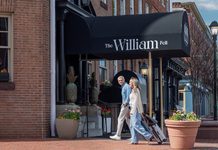
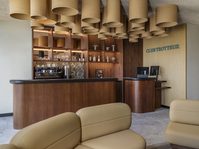

















As well as hotel workspaces, the "Le Bureau des Princes" operation that you are organising this week at the PSG stadium is further proof of the synergies between Wojo and Accor, your shareholder and sponsor of the Parisian club.
Stéphane Bensimon - This is one of the advantages of our strong relationship with Accor. This event marks the reopening of the working season. For four days, we recreate at the Parc des Princes the atmosphere in our coworking spaces with Wojo furniture installed in private offices, an 80-seat coworking space and several meeting rooms that many companies have booked. And what better place than the Parc des Princes to show that workplaces can reinvent themselves!

What role do you see for hotels in this development? Could converting some of their spaces into offices help to offset the expected drop in the number of business customers?
S. B. - I think we're at a turning point in the notion of the workplace. At Accor, I hope that business travel will come back, but I don't think it will come back as strongly as before. On the other handWorking in a hotel will become increasingly natural and accepted by companies. in the future. What's more, it's not just the employees who appreciate the formula, but they who we need to involve in this development. The friendliness and professionalism of the welcome you receive in hotels, the various services they offer, particularly catering, but also the guarantee of cleanliness and the range of opening hours: when you think about it, there's no better place than a hotel to house offices and receive customers.
As well as Wojo Spots and Wojo Corners, which you've already started to develop, are there any new opportunities to take things further?
S. B. - We have already installed Wojo Spots in more than 350 establishments, with dedicated areas where you can come and work for a few hours. All hotels are ready to welcome mobile professionalsThis was not necessarily the case before. There weren't always the right connections, the right sense of sharing between the teams and these professionals. But beyond that, we're in the process of transforming meeting rooms into office space. It's a natural progression, because when it comes down to it, what's more like an open space than a meeting room? We did this recently in several Mercure hotels in France and at the Pullman Tour Eiffel, where the workspaces have a magical view. We're going even further by also transforming private office rooms. At the same time, we are supporting hoteliers in this new business, because organising and marketing office space is not something you just do.
What types of customer are attracted to working in a hotel?
S. B. - We find everything from SMEs and start-ups looking for flexibility to large companies. Rather than take out a long-term lease for their regional offices, which are not always in tune with the times, some companies are now turning to our solutions. For example, among our customers, we saw one that took three or four positions in around ten hotels from different cities. It's economical for the company and attractive for their employees. All this complements our core business of Wojo sites, of which there are currently 15.
How is your range of sites evolving?
S. B. - A little over a year ago, we opened a site in the Madeleine district of Paris, followed by the first Wojo outside France at Barcelonabefore launching two other Wojo stores in Lille and Paris, rue de Tolbiac. In the future, we expect Wojo Montparnasse to open in the summer of 2022, working in close collaboration with the nearby Pullman hotel. Before that, next February, we'll also be opening a Wojo near Place Clichy, rue de Calais in the 9th arrondissement. It will be our first site under a management contractThis is a new feature in our development. The world has changed, and property companies and office building owners have to be flexible in their dealings with their customers. Hence the idea of inviting them to join us in managing and operating the site.

With the rise of teleworking, thousands of square metres of office space remain empty in the head offices of major groups. Is this another opportunity for Wojo?
S. B. - That's right. Developing Wojo spaces in the square metres left free by the new configuration of work is a real challenge. the second major lever for development for us. Take a company with 10,000 m2 of office space that only needs 7,000 m2 because of teleworking. We offer to manage the remaining 3,000 m2, sharing the added value with the building's users or lessors. Since one of Wojo's key areas of focus is service, and given our hotel DNA, we can also take over the keys to running the site, from reception and catering to yoga classes and business conferences.
But could companies also benefit from the property flexibility you offer?
S. B. - And that's the beauty of it. Like flexibility is the watchword for the years to comeFor example, companies can limit their office space to 7,000 m2. However, should they acquire another company or need to recruit, Wojo spaces can be used to extend their offices. What's more, companies can also host other players from their ecosystem in their building. This can be very interesting for them.
We need to rethink the issue and not pit teleworking against our approach, because we have always been fervent supporters of remote working.
So much for the positive side of teleworking for your development. But to what extent can its growth also have a negative impact on your business? In particular, what role can third places play in a "three days in the office-two days teleworking" configuration?
S. B. - We need to rethink the subject and not to set teleworking against our approachWe've always been fervent supporters of teleworking. First of all, teleworking does not necessarily mean working from home. It can be done in other places. Today, companies are asking themselves what the ideal working week is. So we offer them an alternative to working from home. Wojo, whether on our sites or in our hotels, also offers this flexibility, enabling them to cut back on their traditional leasesor even abandon them. We need to rethink traditional property schemes.
There's a lot of talk about the difficulties companies have in getting their staff to come back to the office. Can attractive locations help to motivate them?
S. B. - We're convinced of this, and we see it every day on our sites. In particular, we've experienced this with Accor's teams. In Paris, our shareholder's employees can come and work at Wojo sites and we have 200 bookings a week out of 1,000 employees, which is a huge number. The emotional and experiential side of our sitesIt's all part of the package, with terraces, gardens and entertainment. Of course, some companies have invested a lot in the general atmosphere or design of their offices, but they don't offer all these opportunities to meet and share with other companies in the same place as we do. That's where the real excitement and fulfilment comes from. In the end, we found that once the restrictions had been lifted, people returned to the office fairly quickly at our sites.
How have visitor numbers to your sites changed over the last few months?
S. B. - For 18 months, business was obviously a bit difficult. But since July, we've never had so many requests, whether for our sites or our hotels. While not all of them materialised when we restarted, we feel that things are speeding up. At present, 77% of our sites are occupied, compared with 90%-95% before the crisis. But We'll come back to these levels shortly. As for actual office use, it hovered around 70% before the pandemic, before dropping to almost zero and then rising to 30% in the intervening periods. Today, attendance is around 50%, and rising. People are delighted to be coming back to the office. To support these returns, we've relaunched a whole range of events, from business conferences and sports activities to breakfasts and after-work events.