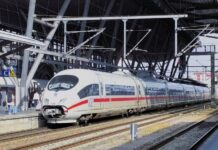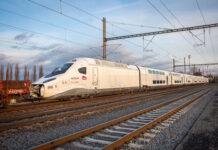


















High-speed rail is gaining support in Europe as the European Commission seeks to accelerate the development of intelligent, sustainable mobility. The European Commission aims to double high-speed rail traffic by 2030 and triple it by 2050. To achieve the 2030 target, we will need to increase the length of the current high-speed network by at least 75 % to 11,526 km.
This perspective was presented in mid-July under the auspices of the Czech Rail Agency Správa železnic and Czech Railways České dráhy (CD). The presentation was held in partnership with CER, the Community of European Railway and Infrastructure Companies.
Creating high-speed rail in Central Europe
In fact, with rare exceptions, the current high-speed rail network is mainly made up of "national high-speed islands". in less than half of EU Member States. While much has been achieved to date, with national success stories linking Paris-Lyon, Milan-Rome, Barcelona-Madrid and Berlin-Munich, it is increasingly necessary to developing a trans-European high-speed network.
A major project is the creation of a network of high-speed trains in the heart of Central Europe. At the moment, trains in this part of Europe run at barely any faster than they did at the time of the Iron Curtain. For example, it takes three hours to cover the 205 km separating Prague from Brnothe country's second largest city. The 500 km separating Prague from Budapest are completed in 8 hours, while the fastest train journey between Berlin and Vienna (660 km) also takes 8 hours.
The main infrastructure projects approved by the Czech Republic include two major routes in Central Europe. The first will link Berlin-Dresden-Prague-Brno-Vienna and Budapest. The second would start from Vienna and Budapest to Bratislava-Brno-Ostrava-Katowice-Warsaw. In addition to improving east-west and north-south links, it will link the main capitals of Central and Eastern Europe in two hours. This initiative will result in halving overall journey times and rebalance regional disparities. Thanks to the "Via Vindobona and the Rail BalticaThese future high-speed links will also connect to the rest of Europe.
High-speed rail is the future of travel in Europe
During the conference, Martin Kupka, Czech Minister for Transportunderlined: " High-speed rail represents the future of travel in Europe. This is why the development of high-speed lines is one of our main transport priorities during the Czech Presidency of the Council of the European Union. We must overcoming "national high-speed islands and build a truly pan-European network of high-speed connections. In this respect, the most important connection in the Central European region, the "Via VindobonaIt will provide fast, convenient travel between the Central European capitals of Prague, Berlin and Vienna... "
The aim is to make this a reality by the middle of the next decade. Last year, the Czech Republic, Germany and Austria signed an agreement to introduce much faster Berlin-Prague-Vienna trains, which would put Berlin just 4 hours 05 minutes from Vienna. (2h Berlin-Prague and 2h5 min Prague-Vienna).
This year, ČD has ordered a fleet of 20 rail convoys equipped with 9 cars. These future trains will be capable of travelling at 230km/h. The investment represents almost 500 million euros. They are due to come into service between 2024 and 2026.. The Czech government plans to offer fast links between Prague and Brno from 2027.