Deutsche Bahn steps up its digital rail investments
"Digital Schiene Deutschland" (Digital Rail Network in Germany) is an ambitious project piloted by the Federal Ministry of Digital Affairs and Transport and Deutsche Bahn to bring greater punctuality and improved frequency to the network. An initiative that will improve passenger service.
By Luc Citrinot -
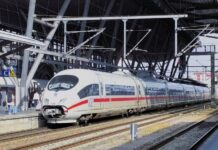
More ICE in the future with digital investment from DB and the German government (Photo: Luc Citrinot)
Planning for Digital Schiene Deutschland (Germany's Digital Rail Network) accelerates. The Federal Minister for Transport, Volker Wissing, and the Director of Infrastructure of the Deutsche Bahn (DB)Berthold Huber, signed agreements to this effect in Berlin on 8 December. As a result, the financing contract for this infrastructure will rise from around €1.7 billion to €2.7 billion.. In addition, DB has obtained a promise from the Federal Government to continue funding studies for several projects.
ETCS, a technological revolution for Europe
All rail lines and hubs need to be equipped over the long term...
Planning for Digital Schiene Deutschland (Germany's Digital Rail Network) accelerates. The Federal Minister for Transport, Volker Wissing, and the Director of Infrastructure of the Deutsche Bahn (DB)Berthold Huber, signed agreements to this effect in Berlin on 8 December. As a result, the financing contract for this infrastructure will rise from around €1.7 billion to €2.7 billion.. In addition, DB has obtained a promise from the Federal Government to continue funding studies for several projects.
ETCS, a technological revolution for Europe
All rail lines and hubs need to be equipped with this system over the long term. European Train Control System (ETCS). This applies in particular to signal boxes, which are being converted to digital technology. The aim of this infrastructure modernisation is to benefit passengers. It will mean more passages for trains, better punctuality and fewer disruptions. All thanks to the intelligent networking of data on train movements and infrastructure.
For DB, this new technology will enable the company to completely reorganise the operation of its rail network and create up to 35% of additional capacity.
For Federal Minister Volker Wissing, " To meet our climate targets, we need more rail capacity quickly. We want to make rail the backbone of a climate-neutral transport system. In addition to renovation, construction and expansion, digitalisation is a decisive factor. With today's agreements, we are creating a financial basis for launching the ETCS train safety system. At the same time, we are modernising and digitalising the signal boxes in Germany. This will immediately increase the capacity of the existing system. And therefore to rapidly increase rail services." .
Berthold Huber, Director of Infrastructure at DB, declared that " To cope with the increase in traffic, we need to make our rail network more powerful and more efficient. In the medium and long term, we focus on extension and construction projects as well as the general renovation of our most important rail corridors. But to achieve this, the digitisation of the infrastructure is decisive. Thanks to digital rail operations, we will be able to run more trainsby avoiding the costly and complex construction of new tracks. The agreements reached with the Federal Government will therefore make a decisive contribution to the development of Germany's digital railways." .
Digital on the Rhine/Alps axis
The funds now made available will be used in particular to modernise and digitise infrastructure on the Rhine-Alps freight corridor. The corridor stretches from the Dutch North Sea ports to Italy. It is to be equipped with the European Rail Traffic Management System (ERTMS). This system is making a major contribution to facilitating cross-border rail traffic in Europe. Until now, locomotives and trainsets have had to be equipped with different national safety systems. ERTMS will eliminate this anomaly in an integrated European rail system.
Stuttgart 21 to benefit from digital rail hub project (Image: DB)
The Stuttgart digital hub, a global pioneer
With approximately 307 million euros, DB to join Scandinavia-Mediterranean corridor project. This European corridor, which is also important for freight transport, is due to be fully equipped with ETCS by the end of 2030 between Denmark and Austria. This involves 4,500 kilometres of lines in total.
An additional €83 million is available for the planning of the digital hub of Stuttgart. By 2030, digital technology will take over train operations in and around Stuttgart - including on regional lines. The nerve centre of the rail hub will go into service in 2025 with signal-free ETCS. It is part of the Stuttgart 21 project and will give the region a pioneering role worldwide.
Around €11 million in planning funds are earmarked for the ICE line Cologne-Frankfurt/Main. By 2028, DB wants to equip around 200 kilometres of lines with ETCS and digital signal boxes.. This stage improves the quality and efficiency of train movements.
By using our site, you consent to the use of cookies.
We use cookies on our site to store and/or access information about your device, in particular to offer you advertising and to compile statistics in order to improve ergonomics, navigation and editorial content.
Analytical cookies enable us to gather valuable information to optimise the performance of our site and improve your user experience.
By accepting cookies, you are supporting the work of our editorial team in providing you with quality information, while enabling us to offer you content and services tailored to your interests.
For more information, please consult our page Privacy policy.