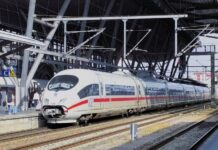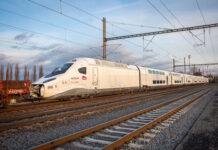



















The world's first network on which hydrogen-powered trains run every day began in 2018 in Germany. This 123 km line is located in Lower Saxony between Buxtehude, Bremerhaven and Cuxhaven.. The line is accompanied by a hydrogen refuelling station - the first of its kind in the world. It has been available to the public since the end of August 2022..
The choice of the German state of Lower Saxony was based on its proximity to the North Sea, which generates the energy and wind needed to produce hydrogen.. The Land is also known for its cutting-edge innovation industries. In fact, the Land contributed €85 million, along with the German federal government (€8.4 million), to the purchase of hydrogen trains from Alstom.
The construction of the refuelling station by Linde was also subsidised. This time by the federal government to the tune of 4.3 million euros. The Union of European Railway Industries (UNIFE) decided to grant the ambitious hydrogen train project to Landesnahverkehrsgesellschaft Niedersachsen (LNVG), the regional transport company for Lower Saxony, the European Railway Award.
According to the jury, "proof that alternative technologies can offer the same level of performance without emissions opens up the prospect of a rail system entirely free of CO2 emissions. "
Hydrogen, a system that's too expensive
The train in service, the Coradia iLint has been developed specifically by Alstom for use on non-electrified lines. In fact, in Germany, 39% of railway lines are still not electrified and still use diesel locomotives, which are often highly polluting. Alstom's Corodia iLint is the world's first hydrogen-powered passenger train.
Except that the cost of operating this line is a stumbling block to the future expansion of hydrogen railways. According to a study by the Land of Baden-Württemberg in south-west Germany, the long-term extra cost compared with an electric train system would be 80%. In addition, the software and technologies used for the trains have had to be adjusted several times, and there have been problems with hydrogen refuelling during the winter.
A year after the commercial launch, the Ministry of the Land of Lower Saxony abandoned the idea of future hydrogen trains, arguing that battery electric models "are cheaper to run".. However, the Land will continue to operate its only hydrogen-powered line..
Trains powered by electric accumulators
The LNVG has announced its plans to decarbonise its transport network. From 2037, only trains that emit no carbon dioxide will run. But these will be battery-powered electric trains.
" From 2029 onwards, we will successively introduce 102 new railcars equipped with accumulators.This will eliminate the current diesel fleet," said Olaf Lies, Lower Saxony's Minister for Transport, on 27 July.

Battery-powered trains can run on lines equipped with catenaries and be recharged there using a pantograph. Alternatively, these trains can be recharged on "charging islands". Either way, an electrical contact cable is not required over the entire line.
"This is an important decision for mobility. The new trains offer more space than the vehicles currently in service. In this way, we are creating the conditions necessary for an increase in passenger numbers", said the Minister. The LNVG will issue a call for tenders for the vehicles before the end of the year.