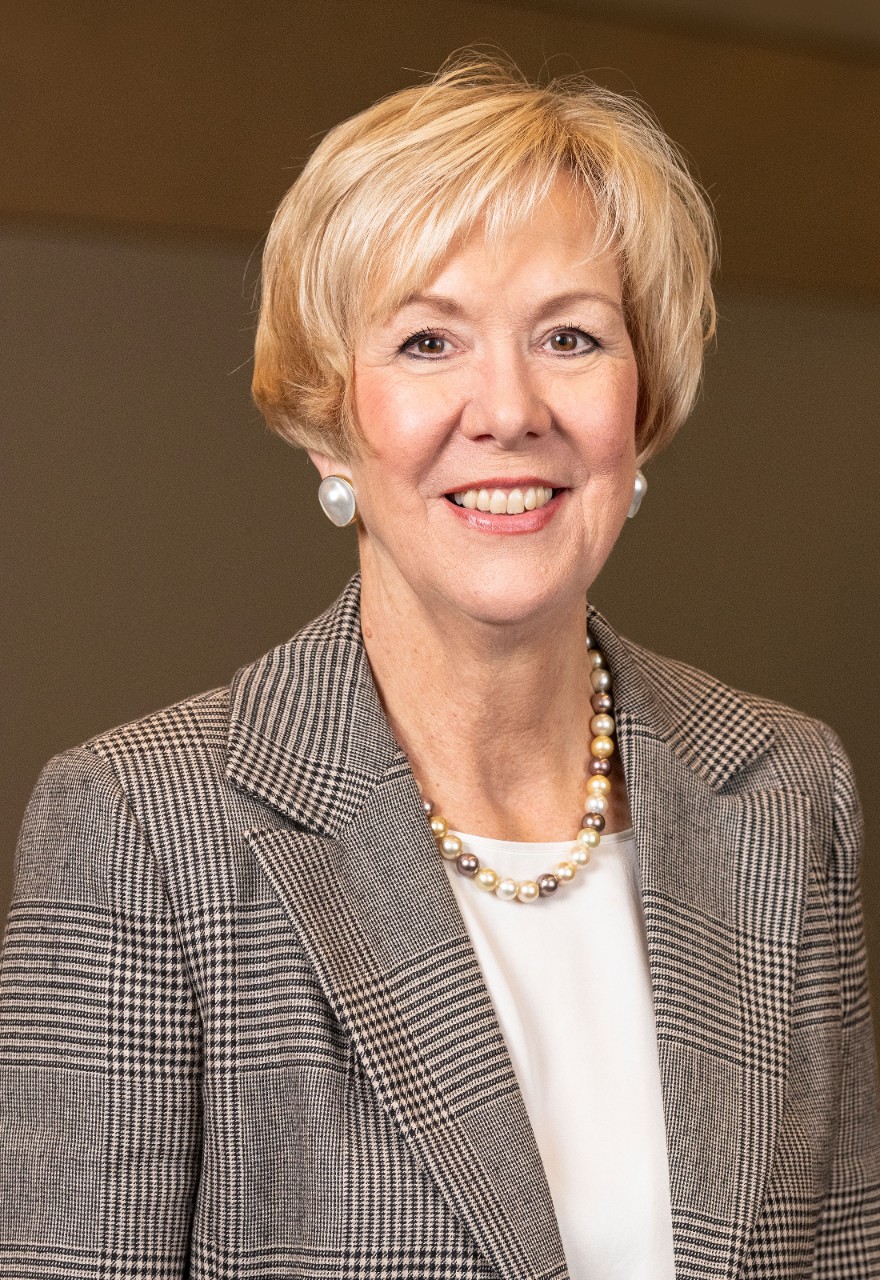
On 12 August last, SBB President Monika Ribar explained the Swiss rail group's strategy in detail in a long interview with the daily newspaper Neue Zürcher Zeitung (NZZ). Cooperation in Europe was at the heart of this conversation. Here is a summary of his interview.
According to Monika Ribar, infrastructure problems in Europeincluding network saturation, make it difficult to create new direct routes between Switzerland and the European Union.
No new routes from Geneva to Lyon and the south of France for the time being
For example the difficulty of operating more rail links from Geneva to Lyon and the south of France. On the Geneva-Lyon route, the question of whether Swiss trains would be able to reach the capital of the Rhone region was a no-brainer.
" We have to have lines that are profitable. Otherwise, it makes no sense from the company's point of view. Lyon certainly has potential. Rail would be a good alternative to road on this line. But the problem is the infrastructure. On other lines close to the border, Switzerland has co-financed the improvements. This is not the case between Geneva and Lyon.
"It would certainly be possible to find additional rail corridors. But apart from operational challenges such as power supply, there are already subsidised trains [...editor's note: TER]. This makes it difficult for us to make a better offer. Under these conditions, we cannot compete with road transport. That's why we don't believe that investment in rolling stock and staff is cost-effective."
SBB is also examining the potential for additional trains between Geneva and Marseille outside peak season. " But the problem is that, unlike Paris, users of the line do not go to a city and stay there. Marseille appears to be more of a stopover to the rest of Provence or the Côte d'Azur" .
On one axis Geneva-Lyon-BarcelonaMonika Ribar points out that the cessation of cooperation between SNCF and Spain's Renfe is effectively hampering the introduction of direct services between Switzerland and Spain. Although she admits that the railway company is still looking for possibilities for other direct links to the south of France or even to Spain.
Swiss rolling stock not suited to Europe's high-speed lines
The same difficulty applies to a direct service from Switzerland to Rome. There is already a two-hourly timetable between Zurich and Milan. But the infrastructure is mainly used for freight trains, offering few slots for passenger trains.
There is also the problem of fitting Swiss trains onto Italian high-speed lines. " We currently have no rolling stock for the Italian high-speed lines. What's more, the line from Milan to Rome is already very busy. It's not easy to get slots there." says Monika Ribar. She also points out that rail links between Switzerland and Rome would attract few business people - the most lucrative market - due to the length of the journey.
It is therefore highly unlikely that SBB will operate its own trains on long-distance international routes.. " Abroad, we are not going to set up costly structures for just a few trains a day. It's a business risk that we consider too high".says Monika Ribar to the NZZ.

When asked by the daily whether a rail link between Switzerland and London might one day become a reality, the problem of cost was once again raised. " If we try to operate a cross-Channel line ourselves, we should set up companies in England and France and take on staff. And to have rolling stock approved for these countries and for the Channel Tunnel. This would require a small fleet with high operating costs, as we would not need such trains anywhere else." says Monika Ribar.
" The investment would therefore be enormous. What's more, the chances of success would be questionable, because competition from low-cost airlines is fierce. The CFF is heavily in debt and have little room for manoeuvre" she adds.
Cooperation with other rail operators, the best solution for SBB
As for traffic to Germany, which is already high via Basel or Zurich, the company will be able to offer a wide range of services, the saturation of the German network and an ageing infrastructure are major obstacles in the eyes of the Chairman of SBB.
" It will take years for Germany's rail infrastructure to be in better condition. France, on the other hand, has a good high-speed network. But we have no rolling stock for these lines.s. Thanks to SNCF trains, we can go to Paris. In fact, since 2016, we have significantly increased our traffic to Paris, Munich and Italy. For us, it's clear that cooperation is the best option. This means we can carry more customers and offer more than ninety direct connections per day and per direction to ten European countries" she concludes.
Article based in part on Monika Ribar's interview of 12/08/2024 in the Neue Zürcher Zeitung (https://www.nzz.ch/schweiz/sbb-praesidentin-monika-ribar-ich-wuerde-in-deutschland-nie-im-fernverkehr-taetig-werden-ld.1842857)