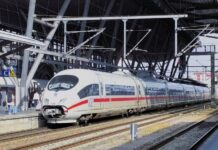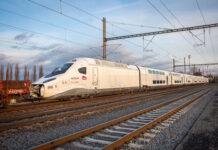


















Rail projects are multiplying in Europe. These include a future direct line between London and Berlin. An agreement to this effect was signed on 17 July between German Chancellor Friedrich Merz and British Prime Minister Keir Starmer. Under the terms of the agreement the two governments are working together to remove the legal and logistical obstacles that are currently preventing the creation of a high-speed rail link between London and several German cities. As a first step, Eurostar or another operator - Deutsche Bahn? - to operate services to Frankfurt and Cologne from London St Pancras International Station. St Pancras will also be undergoing major redevelopment work to double its annual passenger handling capacity.
This new line would then be extended to the German capital. In particular, the two parties will have to reach agreement on issues such as baggage security, border controls and safety standards for railway equipment. The rail operator(s) wishing to start operating this line will be involved in the project. Eurostar seems to have a head start, having announced last spring its intention to open new routes from London to Germany and Switzerland.
A route that will have to compete with air travel in terms of journey time
The two governments are planning to bring the London-Berlin line into service in the early 2030s. The journey time by high-speed train is estimated at around 5 hours, compared with 11 hours at present, with two or three connections. And 1h45 by plane ! A London-Frankfurt flight is no match for air travel either, requiring almost 8 hours of travel and one change. This radical reduction in journey times will be necessary to compete with air travel and meet the expectations of business customers. " We are ushering in a new era of European rail connectivity and Britain is determined to be at the heart of a better-connected continent "said Heidi Alexander, the UK's Minister for Transport, at the signing of the treaty. The main advantage will also be ecological, since the tain emits less CO2 than the plane. On a Paris-Berlin journey, for example, a plane emits 250 to 400 kg of CO2 per passenger, compared with 15 to 20 kg for a TGV or ICE train on this 1,000 km route.