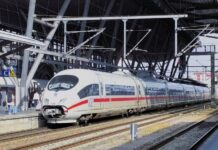
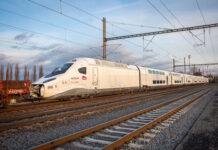
A few days after blowing out its twenty candles, Thalys is already looking to the future: that of the rail company, of course, but also and above all that of the planet. European Mobility Week kicks off on 16 September, and the company, well known to business travellers, intends to make sustainable development a key theme of the event. This is no mean feat for Thalys, which has made respect for the environment one of its credos for several years. In fact, some time ago, the company set the 2020 target as part of the Science Based Targets In the meantime, Thalys claims to have reduced its emissions by 40%.

The railway company is on the right track, with an increasingly flattering carbon footprint: last year its emissions reached 51,243 tonnes eq. CO2, 14,000 fewer than in 2008 (-22%). These efforts are obviously aimed at reducing the environmental impact of travel. But they are also part of the growing competition between rail and air travel. Rail is the logical winner in this battle, despite the efforts made by airlines to use less polluting aircraft. Thalys points out that a journey on its famous red trains emits on average, ten times less CO2 than by plane, and eight times less than by car.
The first thing we need to do for the environment is to be ambitious
However, the company's directors are not satisfied with this state of affairs: " Environmental commitment is in the DNA of Thalys as a collective transport solution, but the climate challenges require us to go further and really get going with ambition. "says Agnès Ogier, General Manager of Thalys. " In this context, our objective is twofold: firstly to make people prefer the trainwhich is undoubtedly the best transport solution between all our destinations. challenging our carbon footprintwith exacting standards. Our customers are looking for high-performance solutions, and we've chosen to work with the best experts to go as far as possible. The first thing we need to do for the environment is to be ambitious "she adds.
Thalys is now turning its attention to the next stages in its environmental approach. A number of issues have been raised: train energy, through the reinforcement of eco-driving, the fitting of energy meters, and the reduction of lighting, heating and air conditioning consumption. Optimising load factors and decarbonising the electricity mix are also targeted, which will require effective coordination with the company's partners.
Passengers will also have a role to play, as Thalys' carbon emissions also come from catering. The rail company therefore intends to continue its efforts to give priority to seasonal, regional and organic fruit and vegetables, while favouring white meat and fish, as well as vegetarian dishes. Let there be no mistake: reducing our carbon footprint is everyone's business, even at very high speed...