Business expenses: the new advantages of corporate payment cards
An ever-increasing variety of payment solutions are enabling companies to better manage and optimise their travel policies. With these new methods, it is now possible to cover almost all business expenses, while automating the flow of information within companies. Here's a closer look.
By The Editor -
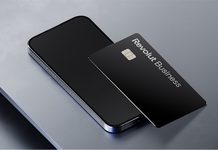
Whatever their size and the size of the budget they devote to business travel, companies are looking to rationalise their expenditure. To meet this need, international groups, as well as national companies, SMEs and very small businesses, are basing part of their strategy on the payment solutions best suited to their business. Focused on controlling day-to-day business expenses, these solutions take a number of forms: corporate cards in the private sector, purchasing cards in the public sector, business cards in the strict sense of the term, virtual purchasing cards and dematerialised payment, known in English as v payment (v for virtual). These solutions all have their own specific characteristics, both in terms of regulations and the information provided to customers.
The smart card makes it easier to pay for tickets
Available for travellers with annual expenditure of €50,000 or more, the debit card is no more and no less than a centralised payment system issued in the name of a company and 'housed' within the travel agency. Although it is not a physical card, it can be used to pay a whole range of expenses: airlines, car hire companies, the SNCF portal, hotel platforms, etc. Given the sums involved, most of the expenditure relates to ticketing for air or rail travel, the two biggest items in companies' annual travel budgets.
In France, there are two main players in the packaged card market: AirPlus, with its exclusive partnership with BNP Paribas, and American Express with its "business travel card account", also known as the Business Travel Account (BTA). Aimed at SMEs, this account is available as a co-branded solution with Air-France as part of the "Air France-American Express business travel card account". Over time, these two major players are improving their acceptance with different suppliers. As a result, the list of airlines usually made up of traditional airlines has been extended to include more than twenty low-cost operators such as Easyjet, Flybee, Transavia and Germanwings.
Before your trip
For a company, this means of payment, used in advance of business travel, offers serious advantages. Starting with a greater rationalisation of costs by enabling them to impose - and therefore enforce - a travel policy. For employees, it is no longer a question of dealing with unlisted suppliers by booking a car directly with a hire company that does not have a contract. What's more, instead of settling expenses on an ad hoc basis, the payment of expenses passing through the travel agency is made according to a schedule agreed in advance between the parties. For example, the Air-France-American Express "Business Travel Card Account" has an average payment deferral of 43 days. A significant cash saving.
Another advantage of using this centralised payment method is that you receive an electronic statement summarising all your transactions. This can be sent on a monthly, weekly or even daily basis. What's more, it's easy to integrate or connect a log-in card to the technological tools installed in the company: expense report management tools, ERP (enterprise resource planning) or integrated management software packages. These reporting solutions make it possible to consult, archive and analyse business travel data. "We can break down analyses down to the level of the individual transaction and supplement them with analytical mentions defined according to the specific needs of our customers."explains John Baird-Smith, France Director of AirPlus International.
This automation of workflows saves a considerable amount of time, enabling accounting teams to concentrate on higher added-value tasks such as data analysis and budgetary control. "A card in a travel agency provides very precise data on expenses paid directly to service providers such as airlines, rail companies, car rental companies and, sometimes, hoteliers.explains Étienne Pénaud, a consultant specialising in travel management and partner at Atlans in Anglet. Based on the information provided by a registered card issuer, a company's accounting department can find out which class of train its employees travelled in, or calculate the cost of each leg of the air journey on a Paris-New York-San Francisco trip". When it comes to air travel, this type of map provides details of expenditure by route: origin-destination, class, fare type, airline. In short, all the information you need to get a clearer picture of your ticketing expenditure.
The packaged card also offers other advantages in terms of greater rationalisation. Within a group, not all regional entities necessarily work with the same network of travel agencies. Let's imagine that a parent company has a contract with Carlson Wagonlit (CWT), the Lyon-based branch with AS Voyages and the Marseille-based branch with Egencia. "In addition to consolidating the expenditure incurred with these various agencies at Group level, the use of a dedicated card enables us to centralise all our travel expenses by cost centre and therefore to optimise our visibility of the expenses incurred by each supplier".admits a chief accountant.
Payment cards for on-the-go spending
Business cards, often referred to as corporate cards for companies, do provide useful data, but with a lower level of precision. "Unlike a card or a centralised payment system within a travel agency, payment or corporate cards do not provide details of consumption".continues Étienne Penaud. Let's take the example of a debit of 500 euros to a hotel restaurant. On its business card debit statement, the bank does not specify any disbursements; in this case, neither the number of hotel nights spent in this establishment, nor the expenses represented by the restaurant, nor the consumption of the minibar, etc. The accountants' dream would be to have the same level of precision as with a lodged card. The dream of accountants would be to benefit from the same level of precision as with a debit card, in order to know, for example, the details of the expenses incurred by a particular employee... However, in order to identify this item, the company has to carry out an additional operation: scrutinising employees' expense reports.
From global groups to SMEs, payment cards are used to pay for all the 'nomadic' expenses incurred by employees on business trips. Business cardholders appreciate this plastic rectangle that allows them to travel in complete security, a means of payment and cash withdrawal that can be used both in France and abroad. Depending on the issuer - Visa, Mastercard or American Express - the acceptance network may be more or less extensive. In addition, depending on its financial policy, the company may choose to debit its company account or that of the cardholder.
In the eyes of the specialists, this last formula encourages greater accountability. For example, in a multinational like Hewlett Packard, when a colleague travels, they are required to submit an expense claim within eight days of their return, using the Concur expense claim management system. Once the cardholder's expenses have been approved, Hewlett Packard pays American Express directly.
Tailor-made parameters
For companies, the use of payment cards is essential to manage business expenses efficiently. With this solution, with the exception of a few rare destinations, it is no longer necessary to give travellers advances on expenses, or to give them foreign currency when they travel outside France. In addition to this reduction in administrative costs, payment times are also reduced. Expenses are debited with a deferral of around thirty days, or even a super deferral of around sixty days, giving companies a kind of free credit. Still on the financial front, key accounts can even obtain 'commission rebates'. Once a year, the card gives them back part of the commission paid by merchants accepting payment by Visa, Mastercard or American Express.
Another advantage of corporate cards is that they can be tailor-made. Companies can set payment and withdrawal limits, or even emergency limits, according to the profile of their employees. For example, a sales executive in charge of the United Arab Emirates or Japan, where hotels are very expensive, will have a higher spending limit than a technician travelling for two days in Central Europe.
Among the international payment networks, Carte Bleue Visa is the one that covers the largest part of the universal acceptance card market, not including American Express of course. Some banks offer their business customers a choice of two payment networks: Mastercard and Visa. Depending on the type of customer they are targeting, the offer includes cards of varying levels of sophistication, depending on the level of services and assistance provided. At American Express, for example, business cards are aimed at the self-employed and SMEs. These customers generally only have one card, allocated to the manager. On the other hand, corporate cards designed for large companies are issued in the name of the employees.
Privileges for travellers
To meet their customers' need for flexibility, issuers are segmenting their card offerings. In a large company, the finance or purchasing department can choose the type of card according to the profile of the employees. Light travellers or sedentary staff will have an entry-level card, such as the Green Card from American Express. Frequent travellers will be entitled to a Gold card. Very frequent travellers, meanwhile, will receive a Platinum card and enjoy a range of privileges, including access to over six hundred airport lounges worldwide.
For a long time the preserve of company executives, top-of-the-range services are now aimed at a wider customer base. In March 2012, Société Générale launched the Visa Gold Business class card. Comprising two products - a top-of-the-range Visa card and a Business class option - it is aimed at customers who want to travel in greater comfort while optimising their travel time. In addition to the services offered by the Visa Gold Business card, this banking network offers them a range of privileges with a single number to call to take advantage of all the benefits: a priority call line to book a taxi or motorbike with a driver, an upgrade and discounts on hire cars, a superior category room in three and four star hotels throughout France, etc.
These much-appreciated services obviously add to the price of the annual subscription. It costs 123 euros a year for the Visa Gold Business card - or only 99 euros for holders of the Jazz Pro package - and 120 euros a year for the Business class option. "More than 45,000 professional and very small business customers are likely to be interested in this new top-of-the-range card, says Société Générale. To kick it off, we're offering them three months off the first year's subscription".
Last November, Air France and American Express strengthened their partnership around the co-branded Air France and KLM BlueBiz corporate card, aimed at SMEs. The benefits include enhanced travel insurance on Air France and/or KLM flights, full excess redemption for car hire with Hertz, and an annual BlueBiz points bonus.
Dematerialisation in progress
Recently, payment card issuers have been focusing on virtual purchasing cards. How do they work? Thanks to a unique virtual card number for each transaction, this solution meets the security needs of businesses. The return of analytical data also gives them traceability. In addition, the introduction of a payment ceiling, or even restrictions by type of expenditure, helps to ensure compliance with travel policy.
In November 2009, American Express launched vPayment, a platform for generating single-use virtual payment cards. In addition to the hotel industry, this solution meets the need for centralised payment management in sectors such as events, marketing and other expenses requiring flexibility and control. Since mid-2011, BNP Paribas has also been offering a virtual card solution for booking and paying for hotels, car hire, low-cost air tickets and meetings and events. Professional opinion is still divided on these innovative cards. "Virtual cards seem cumbersome for companies to manage and use, as they require a specific code to pay for a transaction".says Étienne Penaud. The same cannot be said of a large international group like HP: using a virtual card to pay for expenses relating to business meetings means that reservations can be centralised. This new flexible payment method is currently being tested by this multinational company.
The inevitable globalisation of solutions
There is also a trend towards globalisation in the range of products and services offered to businesses. American Express is an international company with a comprehensive range of products, from business cards to solutions for managing all travel purchases. As a card issuer in direct contact with cardholders and merchants, American Express offers added value based on expertise and support. "For more than forty years, we have worked closely with companies of all sizes, enabling us to identify their constantly changing needs and give them the means to identify savings opportunities, explains Stéphanie Laroque, American Express Cards and Corporate Solutions Marketing Director. Because, in addition to a range of payment solutions, we provide advice on harmonising and automating internal procedures."
At European level, Air Plus has formed an exclusive partnership with BNP Paribas. In France alone, the company's customers include 35 % CAC 40 groups. As a result of the strengthening of its agreement with BNP Paribas, Air Plus sales staff will be able to offer business cards and virtual payment, in addition to the debit card.
This globalisation of our offering gives us an additional advantage in international tenders. Given its American origins and worldwide network, American Express is particularly well equipped in this area. But its competitors are fighting back. Air Plus International and JPMorgan Chase Commercial Card Business have just announced a strategic partnership: these two players are targeting multinationals looking to strengthen control over their Business cards and travel expense management programmes. Air-Plus brings its expertise in business travel expenses, while JPMorgan Chase brings its strength in global banking services. For its part, Société Générale can rely on alliances with the Royal Bank of England and Deutsche Bank to respond to international calls for tender.
These invitations to tender are generally for three-year contracts. And, given the economic climate, companies are even more demanding in terms of getting the best service at the best price. Among the criteria that influence their choice, universal acceptance of the cards issued to their employees is a key point. If they are travelling in France, it is also important that the corporate card can be used to pay for independent hotels. Other factors to consider are the reporting capacity offered by the card issuer, and any partnership with a VAT recovery specialist. While some large groups handle the recovery of VAT in-house, others prefer to outsource this complex task.
In a business card programme, companies take a close look at the pricing conditions: the annual fee for the card, foreign payment and withdrawal fees, the monthly cost of reporting, the length of the deferred payment period in relation to the balance sheet date. Not all transactions are made in euros and, for transactions denominated in foreign currencies, international payment networks such as Mastercard use a mechanical exchange rate applicable to all card transactions. In addition to this rate, which is set at a specific point in time, there are of course issuer and bank commissions. These commissions may be fixed or proportional.
The bank takes a number of factors into account when deciding whether to waive the fees for business cards, including basic data such as the number of cards held by the company and the forecast volume of business generated by these cards. "Despite invitations to tender for the introduction of payment methods, particularly for business or corporate cards, many companies give priority to the banks with which they work.concludes Étienne Pénaud. It's a way for them to maintain their access to credit lines, which are essential for maintaining or even developing their business.." Conversely, a bank wishing to win over a large account will undoubtedly be tempted to grant it attractive terms for its means of payment.
By using our site, you consent to the use of cookies.
We use cookies on our site to store and/or access information about your device, in particular to offer you advertising and to compile statistics in order to improve ergonomics, navigation and editorial content.
Analytical cookies enable us to gather valuable information to optimise the performance of our site and improve your user experience.
By accepting cookies, you are supporting the work of our editorial team in providing you with quality information, while enabling us to offer you content and services tailored to your interests.
For more information, please consult our page Privacy policy.