

















Eurostar is planning a major acceleration in the growth of its rail business with the announcement of its intention to order up to 50 high-speed trains. This new fleet will provide passengers with greater comfort during their journey, and the railway company with higher-capacity trains capable of operating on the various European networks, and in particular to London via the Channel Tunnel. In addition to the five countries served (France, the United Kingdom, Belgium, the Netherlands and Germany) on which connections will be increased and developed, Eurostar plans togoing "beyond" in Europe. This order takes into account the anticipated increase in rail travel and its aim to carry 30 million passengers a year by 2030, compared with 18.6 million in 2023 (+22%).
This measure was made possible by the return of good financial results, with sales reaching 2 billion euros (+26%) for the first time since Eurostar's merger with Thalys and an Ebitda of 423 million euros (+8%). Debt, which exploded during the Covid periodhas been refinanced, from €963.7m in April 2024 to €650m today". in the form of a 5-year green term loan" . " Only seven months after the launch of the new Eurostar, we are confirming our trajectory with new record traffic growth and financial performance" said Gwendoline Cazenave, CEO of Eurostar.
The new trainsets will gradually replace Alstom trains
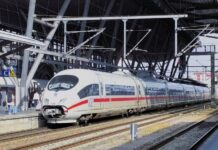
The future TGVs, which will be delivered progressively from the early 2030s, will join the fleet of 17 e320s delivered by Siemens between 2015 and 2018, with a capacity of almost 900 passengers (222 1st class seats and 672 2nd class seats). On completion of the contract, Eurostar will havea total of 67 trains, or " an increase of 30% compared with the 51 trains operated today" says the company in a press release. This suggests that these new trainsets will replace the 8 e300 trainsets and, above all, the 26 old Alstom Thalys TGVs that cannot run on cross-Channel routes. In the meantime, these red trains are still being renovated according to the project launched in 2019, before the merger with Eurostar. The project has been seriously delayed by the pandemic and the soaring cost of materials.
Energy-efficient trains
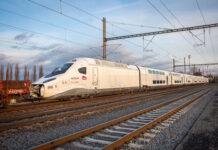
As for the new TGV M Commissioned by SNCF, Eurostar's main shareholder with almost 56% of the capital, these high-speed trains will be more environmentally friendly, with improved energy performance: less energy consumption, less carbon emissions, better recyclability... Gwendoline Cazenave's ambition is for Eurostar to become "the world's first high-speed train". the backbone of sustainable travel in Europe" . Will these 50 trainsets be built by Alstom or Siemens, to ensure uniformity with the e320? The battle is already shaping up to be fierce between the two manufacturers, with Alstom having just lost the contract to build the TGVs for the future Los Angeles-Las Vegas line.