
















Eurostar has unveiled its results for the 2025 financial year, during which it surpassed the 20-million-passenger mark. This represents a slight increase of 3.1% in passenger traffic, with turnover of €2 billion (up 1.71% on 2024) and EBITDA of €337 million (down 2.61%). The SNCF subsidiary has therefore performed slightly below the 51% year-on-year growth it had hoped for, stating that this result was achieved “ against a challenging economic backdrop, characterised by persistent inflationary pressures and high infrastructure costs, particularly in the UK ".
Business was driven mainly by three routes: Paris–London, which saw a 5.1% increase in passenger numbers last year; Paris–Brussels (+3.71%); and Paris–Amsterdam (+6.71%), which is today celebrating 30 years of service via the Belgian capital. The Amsterdam–Brussels–London route is set to become a growth driver thanks to the opening a few months ago of the new terminal at Amsterdam Centraal station, which has tripled capacity and increased the number of daily services. Eurostar has invested €20 million over the past two years in the creation of this infrastructure.
The first Celestia high-speed trains are expected in 2030
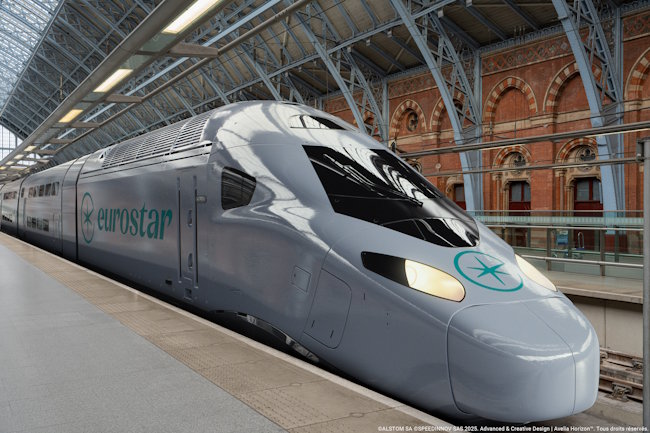
Will Eurostar manage to meet its target of 30 million passengers in 2030? The company plans to invest no less than two billion euros to increase its passenger numbers and open new European routes with London-Frankfurt, London-Geneva and Amsterdam-Brussels-Geneva. An agreement has already been reached with Deutsche Bahn to operate the line between Germany and the British capital. To ensure these developments, Eurostar has placed an initial order for 30 TGV Celestia trains, a derivative of the Avelia Horizon. Famous TGV M that the SNCF is set to put into service next September. The first trains of a total order of 50 Celestia trainsets planned should run from 2030 if Alstom manages to stick to this schedule.
At the same time, Eurostar has committed to improving the customer experience on these various fronts. The creation of the new Amsterdam terminal is part of this policy, while awaiting the redevelopment of the Paris terminal as part of the “Future Gare du Nord” project, which is due to be completed in 2029. Pending the delivery of its future trains, the carrier is continuing its programme of renovating the old Thalys trains, which began in 2022, in order to improve on-board comfort for passengers travelling on the Old Continent. The carrier thus intends to prepare for the possible arrival of competitors on its main routes, Virgin Train owned by billionaire Richard Branson, Uber Train in partnership with Gemini Trains, as well as Evolyn and FS Group to launch its Trenitalia company on the Channel Tunnel route.