














Despite the obvious upturn in seminar business, French companies are still tightening their purse strings, preferring to hold their meetings in France. However, there are new alternatives to the predominance of Paris. Both in the provinces and in other European cities, where the major hotel chains are increasing their presence while developing new tools to attract organisers.
François Tixier, Hilton's Sales Director for Western Europe, North Africa and the Indian Ocean, is delighted to report that "since 2005, international business has been more buoyant, with companies investing and setting out to conquer new markets". Last year, according to figures from the Observatoire du tourisme d'affaires, companies based in France spent 8.65 billion euros (+1.2 % on 2004), mainly on business meetings. In 2006, as many seminars and product launches were organised as last year, and 2007 looks very promising," continues François Tixier. On the other hand, the upturn in incentives is not as clear-cut, even though we have more requests this year than in 2005, as this type of event is booked between twelve and twenty-four months in advance."
Although this is no longer a time for pessimism, it is not a time for euphoria either, as hoteliers are still a long way from their exceptional results of 2000. This is all the more true given that companies are still looking to cut costs, particularly in the pharmaceutical industry, since the DMOS law obliges them to limit the value of trips to which they invite the medical profession.
80 % of events remain in France
"It's difficult to get a package to cost more than €200 per person per day", says Clarisse Thierry, Marketing and Sales Director at Marriott Rive Gauche. Seminars are also tending to be shorter - now lasting two or two and a half days, compared with three or three and a half a few years ago - and the number of participants is smaller. And above all, with the price of oil soaring, companies are reluctant to go farther afield, with all hoteliers agreeing that 80 % of events take place in France. "Paris is still very much in demand among companies because of the ease of access by road, rail or air," explains Emilie Fritz from Accor. And also for reasons of prestige. Even the anti-CPE riots in the spring failed to tarnish its aura, and the capital now accounts for 49.7 % of French demand. For French and non-French visitors alike, the City of Light remains 'the' business destination, and its hotels are continuing to move upmarket.
However, according to the Observatoire du tourisme, seminar organisers often express a desire to get out of the city and into the countryside in more reserved locations. But the lack of transport links and suitable facilities quickly leads them back to more traditional choices. So, if they can't get together in the countryside, they appreciate the feeling of nature that a golf course like Dolce International in Chantilly or the Radisson SAS Marnela-Vallée can give. "What's more, while being only twenty minutes from Paris and above all Charles-de-Gaulle airport, they are in a relaxing setting, far from the temptations of the city centre", stresses Philippe Attia, Vice-President for Europe at Dolce International.
The renaissance of Marseilles
The major provincial cities served by the TGV - Lyon, Marseille, Avignon and Bordeaux - are also very popular. The city of Marseille, in particular, has managed to change its poor image and is seeing an influx of visitors and investors. "There is a real desire on the part of the municipality to develop the destination," comments Marion Gauthier, Sales Director for Southern Europe at Rézidor SAS. With the opening of the New Hotel on the Canebière in April, Marseille now boasts 586 four-star rooms. And it has no intention of stopping there. Next year, Radisson SAS will open an establishment with 186 rooms and seven meeting rooms on the Vieux Port, Concorde has chosen to set up close to the Palais des Congrès, the beaches and the Parc Borély with 140 rooms and 16 meeting rooms, while in 2008 it will be the turn of a Marriott to open its doors close to Euroméditerranée. But it is without doubt Intercontinental's announced transformation of the Hôtel Dieu into a palace that will crown Marseille's renaissance.
Brussels plays the Thalys card
When companies do agree to go beyond France's borders - for a break from routine or to attend meetings between different European branches, for example - it is often because they don't want to venture further than neighbouring countries. Vienna, Barcelona, London, Berlin, Prague, Geneva and Amsterdam are among the most popular options. But at just 1 hour 20 minutes from Paris on the Thalys, Brussels is in pole position as a popular destination for the French market. And this trend is set to continue, even if the European capital is still suffering from a lack of capacity.
Unlike Paris, it is not physically saturated and developers can still build new establishments there. And they're not holding back. No fewer than thirteen projects are under way, including three for the Accor group alone. This year, a new Radisson SAS opened its doors in February, offering 281 rooms and 18 meeting rooms. Sofitel followed suit in September, with 149 rooms and 15 meeting rooms. For its part, Dolce International will be inaugurating a hotel-conference centre at La Hulpe, on the edge of the Forêt de Soignes, 15 kilometres from the city centre and airport. This complex will feature 264 rooms, four auditoriums, a 450 m2 multi-purpose hall, 22 meeting rooms and 13 sub-committee rooms, as well as a leisure, wellness and fitness centre.
Incentives in the sun
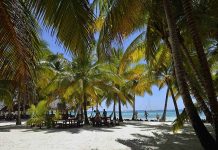
Finally, destinations with a farniente connotation tend to be reserved for pure incentives. Even if the upturn in this segment is not as marked as it is for business seminars, companies are constantly having to launch new products to train their troops and motivate them at the same time. But here again, apart from on rare occasions (see box), the desire to save time and money is driving choices towards destinations less than three hours' flight away, such as southern Spain, Portugal, Tunisia and Morocco, where there is good value for money and... sunshine!
To compensate for the seasonal nature of the leisure clientele, these countries are playing the business card to the hilt, not hesitating to communicate on this segment. And hotel chains are following suit with new resorts equipped with several conference rooms and sometimes even a congress centre, such as the Sofitel Hammamet, opened last year, which offers four meeting rooms for up to 480 people and three sub-committee rooms, or the Westin Real de Faula Golf & Resort, in Spain, with its six meeting rooms for 70 to 550 people.
Whatever the destination and the type of event, chain hotels remain popular with companies, which are sensitive to their infrastructure and capacity. "You have to be able to offer a large meeting room and several sub-committee rooms", says Éric Fiat, Sales Director of Kempinski.
High-tech equipment
For greater flexibility, the new establishments all feature fully modular reception areas that can be adapted to the needs of each customer. What's more, they must have the very latest high-tech equipment, including wi-fi and ADSL Internet connections, overhead projectors, sound systems, simultaneous translation, etc. To meet the needs of their customers, chains are not hesitating to invest in services, of varying degrees of sophistication, dedicated to organising seminars. Especially as the majority of events are booked live on the Internet.
Accor Meeting Solutions provides information on the availability of the French group's brands and promises a quote within 24 hours. Reservation requests are coming in later and later, and the organiser wants to be able to get a quote quickly," explains Clarisse Thierry at Marriott, which also offers the creation of a personalised web page. Passkey is available in around fifty Marriott and Renaissance hotels, and will be introduced at the Rive Gauche before the end of the year. It enables the organiser to keep track of participants' reservations on a day-to-day basis, allowing them to register online, order special services and modify their wishes right up to the last minute".
Once a reservation has been made, the Web is no substitute for human contact, so hoteliers are increasingly putting a coordinator at the service of their customers. Whether they are called meeting planners or starmeeting concierges, they will be the sole point of contact for event organisers, from the moment they arrive until they leave.
Since last year, loyalty programmes - such as Starwood Preferred Planner, Hilton Honors Event Bonus or Hyatt Meeting Dividents - aimed directly at the companies' travel managers, have been gaining ground. "The principle is simple: to reward seminar organisers for the operations they carry out with all the group's hotels in France and abroad. The organiser joins the programme and earns points that can be exchanged directly at our hotels for free nights, catering or any other service," explains Francesca Marchetti, Sales and Marketing Director for Northern France at Starwood Hotels and Resorts.
In the face of competition, these programmes should continue to be emulated, particularly by French channels that do not yet offer them.
Dossier - Spending under scrutiny
- Expenditure under scrutiny
They've fallen out of favour
Team bulding, local culture and well-being