




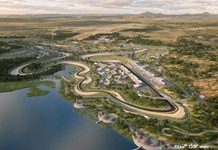





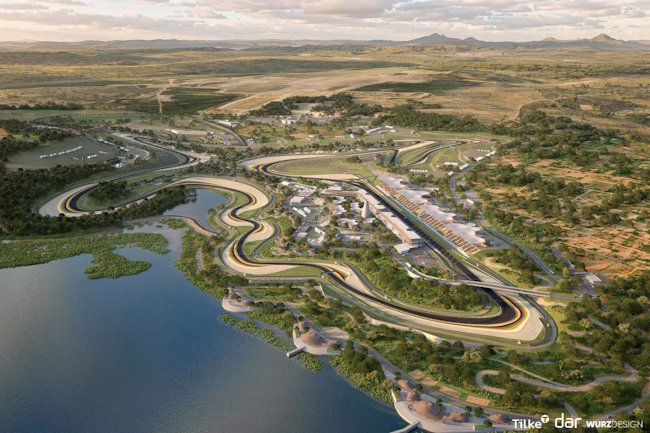
Almost 40 years after the last Grand Prix held at Kyalami, near Johannesburg, Formula 1 will return to the African continent by 2030, in Rwanda. Nothing that would directly affect business travelers, apart from the fans of Lewis Hamilton, Kimi Antonelli or the Scuderia Ferrari. And yet… The confirmation, by the Fédération Internationale de l’Automobile, of the inclusion of this African Grand Prix in the calendar provides them with the assurance of the completion of the new international airport, currently under construction in Bugesera, 40 km from the capital Kigali.
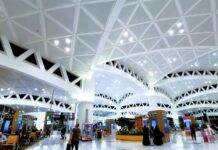
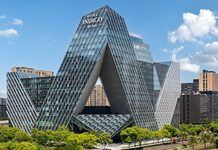
Indeed, the future Formula 1 circuit is part of a broader project, with the construction underway of a new entrance for the country within a complex that combines sports, entertainment and large-scale congresses. A congress and exhibition center capable of accommodating up to 5,500 delegates is envisaged, accompanied by the arrival of major international hotel chains. In parallel, this Airport City is also expected to host logistics and medical hubs and more broadly foreshadow the emergence of a new industrial park in its vicinity, the Bugesera Special Economic Zone, supported by the future cargo terminal of the airport.
" The Bugesera circuit, alongside the new international airport, will bring jobs, skills, tourism and new economic activities to our country and our region for the coming decades, because our goal has never been just a weekend of racing, but a lasting benefit for our population. », said Paul Kagame, President of the Republic of Rwanda.
Rotational plaque of the African MICE industry
The project for this new hub, intended to compensate for the congestion at Kigali Airport, which is already operating at capacity limits, was launched in 2017 with the goal of being able to accommodate 7 million passengers initially, in 2028, and then 14 million by 2032. All this, for a development costing nearly 2 billion euros, supported and largely financed – to the tune of 60% – by Qatar Airways, the major partner of the RwandAir company.
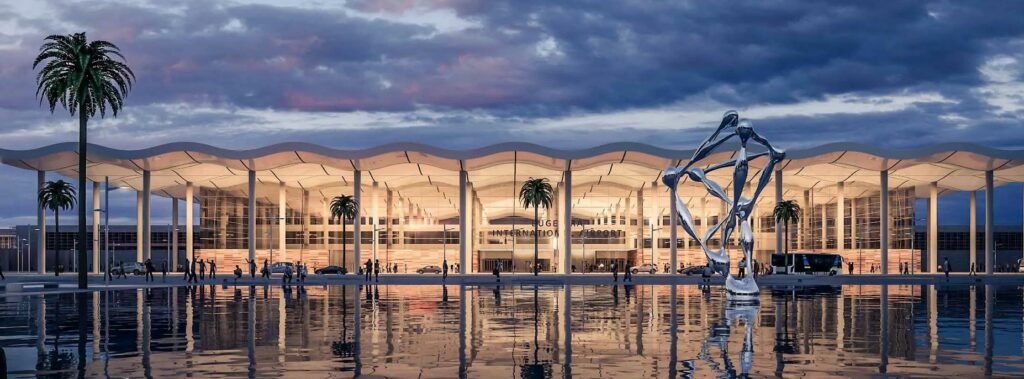
Thanks to this platform, the national carrier, which serves directly Paris and London for three years now, intends to challenge Ethiopian Airlines, the largest African airline that concentrates connections between Africa, Europe and Asia from its hub in Addis Ababa. And soon from its mega-hub in Bishoftu, expected in 2035 and with an initial capacity for 60 million passengers.
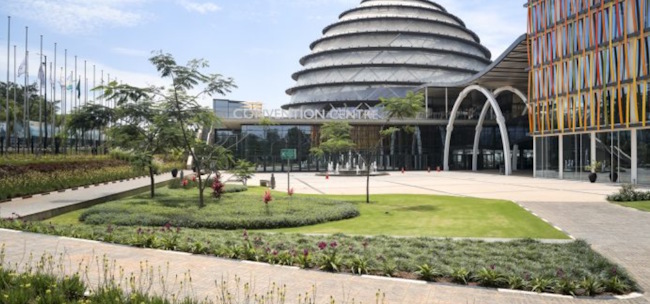
While success in bringing Ethiopian Airlines down from its pedestal is not guaranteed, the arrival of this new airport and everything that will be associated with it – Formula 1, hospitality, MICE – contributes in any case to the Vision 2050 of a country with overflowing tourism ambitions. In this context, several high-end MICE infrastructures have emerged in the capital over the past decade, with the inauguration of the Kigali Convention Centre in the summer of 2016, in advance of the African Union summit. The following year, it was the turn of the Intare Conference Arena, equipped with a 2,500-seat auditorium, and in 2019 of the BK Arena, adjacent to the Amahoro football stadium, renovated in 2024 and which can also be used to host events.
According to the ICCA ranking, Rwanda ranks third on the continent thanks to hosting major congresses, with 32 events scheduled for 2025. Second among African metropolises behind Cape Town, Kigali will host the 66th congress of the international association next year. It is no coincidence that ICCA is returning to Africa after more than 20 years of absence.