






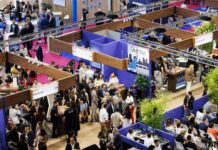
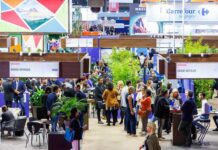





The Rugby World Cup today, the Olympic Games tomorrow: will these major events have an impact on business travel, given that passenger numbers and fares are higher at these times?
Saskia Gentil - We're in the middle of a call for tenders. And for the period around the Olympic Games, we are in fact in discussions with our customers on these dates, when demand will be very strong. Our main challenge will be to filling our hotels before and after the Olympic Games. But one thing is certain, these two sporting events are excellent for tourism in general.
You mentioned invitations to tender. What policy do you follow in your pricing strategy?
Saskia Gentil - Until now, customers negotiated static corporate rates, which always remained the same. We have introduced dynamic pricing, where the room rate varies according to the market. This is a solution that we always offer in our corporate contracts. While some consultancy companies, who charge back travel costs to their end clients, may have stuck to static pricing, this is really disappearing. In a market like today's, where prices have risen enormously, a static rate may be more attractive for the time being. But because everything is so volatile and difficult to plan, the dynamic pricing offers the best value for money. Businesses were able to see this for themselves during covid, with static prices at 200 euros, for example, when rooms could be found for 80 euros.
More generally, the hotel industry seems to be back on track. How would you describe business in recent months?
Saskia Gentil - It's going to be a good year. If you look at the figures for my department since the beginning of the year, we're practically at 20% above our targets. The desire to travel has been there since the covid came out, luxury goods are doing very well, companies need to get together, to recreate a sense of belonging, and this is generating numerous events. Many people thought we were going to travel or do events differently after the pandemic. In the end, not so much, even if there are plenty of new trends emerging that should accelerate in the future.
Which of these trends is the most important?
Saskia Gentil - The most marked trend is undoubtedly the very strong awareness among companies of the need to protect the environment. CSR. As far as business travel is concerned, we see this in our invitations to tender. In the past, there were already questions about sustainable development. But now there are many more, both about our hotels' initiatives in this area and those of the Group in general. On the MICE side, we are seeing more requests for destinations that are accessible by train or in the countryside. Some events agencies are starting to sell their clients only 'green' events. As a service provider, we have to adapt to these changes.
What are your responses to this growing awareness of CSR?
Saskia Gentil - One of the main things we have put in place are measuring tools which provide companies with precise data on hotels' carbon emissions. Nearly three-quarters of our establishments now have them. As far as meetings and events are concerned, companies are also asking for help in calculating the carbon footprint of their events. That's why we have the Net Zero Carbon Calculator which enables us to estimate the overall footprint of an event, taking into account a number of parameters, including how guests get to the hotel, but also factors such as whether buffets or sit-down dinners are held, the origin of the products consumed, particularly if they come from short distribution channels, and an estimate of food waste. In the end, we arrive at an amount of carbon emissions that our customers can offset by supporting several associations that we support. Finally, beyond that, there are all the initiatives taken by the Accor group, whose ambition is to halve its carbon emissions by 2030by 2050.
What are these initiatives?
Saskia Gentil -To give you a few examples, we have already drastically reduced the use of single-use plastics at the end of last year. Plastic bottles, coffee pods and slippers have all been removed from our hotel rooms. We are also working on the certification of all our hotels with Green Key and Green Globe labels, a very important element in calls for tender with companies. Especially as we realise that they are prepared to spend more per stay to obtain better environmental credentials.

CSR is unsurprisingly one of the major trends. Teleworking is another, and one that generated a lot of meetings in the wake of the pandemic. Is this need waning?
Saskia Gentil - We're not seeing that trend today. We still see a lot of two-day/one-night or three-day/two-night event formats where companies bring their staff back, not in their offices, but in a hotel. In particular, to work on team cohesion and the feeling of belonging. That said, if the number of authorised teleworking days is gradually reduced by companies, this could undoubtedly have an impact on meetings.
As a corollary to the growth in teleworking, are 'bleisure' breaks continuing to develop?
Saskia Gentil - We can see this in both meetings and business travel. Today, companies are sending their staff abroad for longer and less often, especially if they are going far away. Instead of flying from Paris to Singapore twice, they now only take one trip, but it lasts around ten days, with a weekend on site. Hence the possibility of offering these customers a bleisure package, to keep them at the hotel during this time. In the same way, when a seminar ends on Thursday evening, why not offer employees the chance to stay until Sunday evening and extend the event with a private stay enhanced by gastronomic or wellness experiences?
When you talk about bleisure offers, how can employees who want to extend their stay organise it?
Saskia Gentil - In most companies, particularly those with well-established travel policies, employees have to use their self-booking tool, where they can generally only book their business trip. But what we are developing are special bleisure offers on the company intranet, where travellers can find the hotel and organise an extended stay. It is also worth noting that points earned through our loyalty programme All are used a lot in this bleisure setting, either to take a suite instead of a normal room, or to take advantage of all the experiences offered by this programme, from concerts to street food...
Accor recently published a lengthy study on the future of meetings, which also highlighted the emergence of the well-being component within events. In what way?
Saskia Gentil - More and more seminar days start with a yoga class, and there is a particular focus on well-being and, more generally, on smoother productivity. Everyone suffered a lot during Covid, and companies are incorporating it into their events, adding a touch of wellness.
The pandemic has also established videoconferencing as a credible alternative to face-to-face meetings. Is this virtual element still relevant today?
Saskia Gentil - Of course, contract signings and other essential meetings will always take place in person. But we're still organising hybrid events, with some people in person and others virtual. It's a a beautiful tool small meetings where, for an hour, a person from a distance can take part without having to travel. We can see very clearly that there are fewer and fewer large-scale global gatherings, and that regional events are the way forward. Especially since in Europe, for example, the slot between midday and two o'clock means that you can connect virtually with Americans and Asians at the same time.
What other technological innovations can we expect?
Saskia Gentil - There are lots of things happening. We're entering a new era with team meetings where you can create your own avatar, and the metaverse, which allows you to organise virtual tours of hotels and their meeting rooms and bedrooms. Our Digital Factory, a large department at Accor, is working on all aspects of digitalisation and the innovations of tomorrow. L'artificial intelligence will be further integrated into our booking tools. The words used for searches could be completely different from those used today, for example "seminars in the middle of lavender fields" rather than "seminar for 30 people around Marseille". An evolution more focused on the experience.