














Just parked in the car park. Anthony Capuano, CEO of the Marriott Group, used a sporting metaphor to describe the current state of the hotel industry in the race to harness the power of artificial intelligence (AI). We haven't even put on our uniforms yet, and we're still a long way from taking to the field. We are at a very early stage ". Naturally, the hospitality sector is already exploring the prospects opened up by AI internally, with productivity gains in hotel management, chatbots, automated revenue management and customer experience analysis, and even optimisation of the opening phase of an establishment, with Hilton explaining that this will simplify a complex process involving dozens and dozens of players. At the same time, 2026 should also see the emergence of natural language search within reservation platforms. This development is expected, for example, in the first half of the year for the Marriott.com website and the Marriott Bonvoy app, and later in the year for Wyndham.
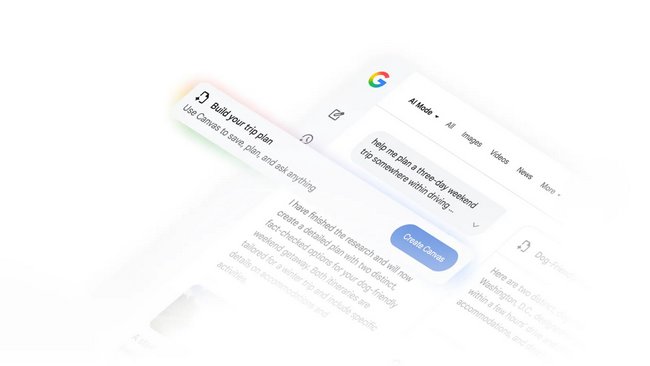
But the big question posed by AI concerns distribution above all. Following in the footsteps of Booking or Expedia, could Google, OpenAI, Perplexity or Anthropic become adversaries of hotel groups, partners or both? Until we find out, the industry is not tackling them head-on, in a game of mutual discovery. For example, the Marriott, Choice Hotels and Wyndham groups have been working since November 2025 to integrate their hotel offerings into Google AI Mode, the new search experience powered by Gemini that is already available in a large number of countries. This integration, announced by Marriott in the coming months and already planned for the second quarter by the Wyndham group, will enable travellers to carry out their searches in natural language, compare hotels and then book directly in the Google interface.
More and more partnerships
Among other initiatives, Marriott is also taking part in OpenAI's Ad Pilot programme, to experiment with new advertising formats in ChatGPT. American franchisor Wyndham, which is investing nearly 425 million dollars in innovation linked to artificial intelligence, has just connected to Claude, Anthropic's AI, and plans to launch an application integrated into ChatGPT in the second quarter, following Accor's example.
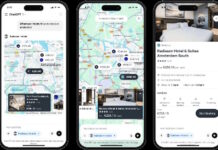
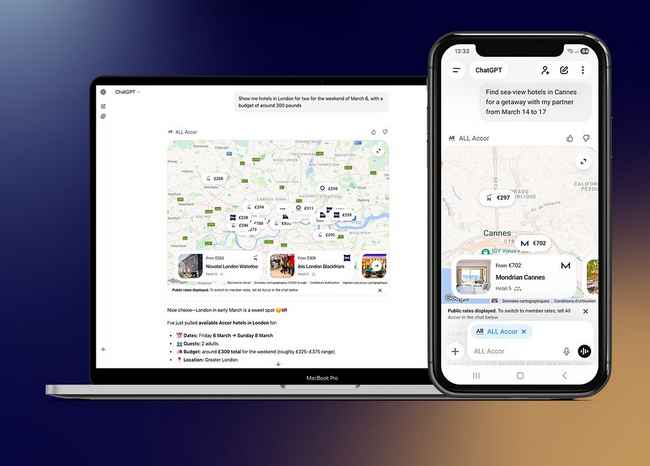
The French group has already teamed up with OpenAI to launch an application for its ALL Accor loyalty programme integrated with ChatGPT at the end of January. Developed specifically for the platform, this solution, which is currently in the test phase, enables travellers to search for the group's hotels in natural language - in around twenty languages -, access information about the establishments, then compare both public rates and rates for members of the ALL programme, before being redirected to the Accor site to finalise the booking.
" We are the only hotel company in the world to have signed an agreement to test an AI-based conversational travel agent "(Editor's note: Wyndham unveiled its plans with ChatGPT a few hours later). Saying that he is also working with Google and Mistral AI, the CEO of the French group believes that his group is far from being behind the curve: " I even think that we're ahead of the game and that we're positioning ourselves at the right time to take advantage of all these new tools for customer relations, search and booking, and much more besides. ".
Keeping on top of things
Shaken up in the early 2000s by the rise of Expedia and Booking, which turned the rules of the game on their head by allowing travellers to compare hotels and book them in just a few clicks, often at the best price, hotel groups are approaching this new revolution hoping this time to keep control of their sales channels. And they are doing so on the strength of having already had to fight back against the OTAs by investing massively in digitisation and developing loyalty strategies that support direct bookings.
While Booking and Expedia are still major distribution channels, could the situation change with this new generation of intermediaries supported by a technology with as yet unfathomable potential? One thing's for sure: users, and generation Z in particular, haven't waited for the current partnerships to come into being to try out ChatGPT and its ilk when organising their trips. According to the Travel & Hospitality - Agentic AI from the Converteo consultancy, one in two travellers say they are ready to entrust the organisation of their holidays to an AI assistant.
" Unlike traditional conversational tools, artificial intelligence makes it possible not only to make recommendations, but also to orchestrate complex journeys from start to finish, taking into account context, constraints and unforeseen events. "An influencer as well as a travel agent, so to speak. As a result, the traditional traveller's journey - inspiration on social networks, research on Google, comparison on OTAs, then booking on that same OTA or the hotelier's website - is compressed into a single conversation. A unity of place, time and, potentially, of action if the booking and final transaction go through this channel.
Challenges and uncertainties
In this new ecosystem that is taking shape, who will manage the booking and the transaction? And through which interface, the AI, the OTA or the hotel group? And what are the strategies for becoming a key intermediary? These are the uncertainties and challenges of tomorrow. While Google is taking a defensive stance by improving its search tool so as not to lose traffic to its competitors, the Mountain View company also seems to want to go much further than its initial role as a prescriber.
You want something done right, do it yourself. When asked about Google in the world of travel, its agent IA Gemini describes the year 2026 as " a tipping point : "From a simple search engine, Google has become an AI-assisted transaction interface. Its position is that of an "obligatory partner" for hoteliers and a formidable competitor for OTAs (Booking, Expedia), while remaining their main supplier of traffic. "And to underline that, for hoteliers, Google offers them the chance to regain control over the OTAs and bypass their commissions. Provided, however, that " invest heavily in their Google ecosystem "For the OTAs, on the other hand, its verdict is not one of nuance: " it's an existential threat "Gemini saw them reclassified as simple "stock suppliers "rather than travel advisors.
For its part, OpenAI has a different strategy, more inspired by the App Store, with the aim of becoming a key interface by bringing together applications from different players. These include Accor and Wyndham, as well as Expedia and Booking, which have been among ChatGPT's first partners since October 2025. Earlier last year, OpenAI also launched Operator, an AI agent capable of browsing the web and finalising bookings autonomously, with Booking, Tripadvisor and Priceline as its launch partners.
And what does ChatGPT have to say about OpenAI's strategy? " OpenAI has invested in the development of AI agents capable of autonomously planning and booking journeys, far beyond a simple text chatbot. Its Operator project is a case in point. "But its parent company does not appear "It's more like a technology provider that is transforming the way travel is planned and booked. At the same time, the travel ecosystem needs to adapt to conversational interfaces and autonomous agents - which could transform current access and distribution monopolies. "Not without pointing out in passing that " if autonomous AI agents like Operator become popular, they could bypass traditional OTA interfaces, reducing travellers' dependence on these platforms ".
Finally, Perplexity is positioned, according to its response, " as a search AI and travel agent layer that aggregates content and inventory, rather than a traditional OTA, with a very partnership-based strategy vis-à-vis OTAs and hotel groups ". In March 2025, Perplexity integrated hotel reservations directly into its search engine, in partnership with TripAdvisor and Selfbook. In the autumn, the Comet browser, launched by Expedia in partnership with Perplexity, is also part of this strategy. " Perplexity's Comet browser makes it easy by combining natural language search with agentic AI, allowing travellers to type in what they're looking for while Comet crawls Expedia, presents options and helps them finalise their booking "Clayton Nelson, VP in charge of strategic partnerships for the Expedia group.

Whatever their strategy, AI raises the issue, as it did with OTAs, of positioning establishments through algorithms and monetising their visibility. Recently, both Marriott and Hilton added to the regulatory documents intended for stock market investors - the SEC Filings - a mention of the risks concerning generative AI, which could modify travellers' search behaviour and potentially short-circuit their reservation sites. These groups may have been burned by the fall in OTA shares in response to the emergence of AI in the world of travel, with Booking's share price down 20% over one year, while Expedia's share price recently lost 6% on the very day it announced better-than-expected results.
Optimistic in spite of everything
However, unlike the OTAs, who may fear for their position as key intermediaries, hoteliers seem to be less worried for the time being. When asked about this during the question-and-answer session following the announcement of his group's results, Christopher Nassetta, CEO of Hilton, was optimistic: "I'm not worried about the future. There are always risks, of course, and I don't have my head buried in the sand. But I think that, for our sector, the opportunities are far greater than the risks. My vision is simple: our loyalty programme is very relevant, our customers want to find our hotels and they're going to be able to find them more easily in a more competitive environment than ever before. ".
Specifying that he was testing his group's connectivity with all the players, the head of Hilton did not fail to point out that AI platforms, to be present in the world of travel, " need our products, while we have control over our inventory, prices and availability. ". And vice versa". so that we appear in searches, we want to work with them "said Christopher Nassetta.
Hence the importance of having sites ready for the expected changes. Taking part in a round table discussion at the Les Tendances de l'Hôtellerie event organised by In Extenso & Deloitte, Olivier Cohn, General Manager of Best Western France, talked about SEO, or search engine optimisation on Google. that we've all heard about for years " : "Today, we hear about GEO. We're investing in our SEO to ensure that our websites are made to be read by ChatGPT and others. This requires different techniques because these are not the same technologies. "The corollary is that other questions arise, such as how to push up prices and availability and, ultimately, conclude the deal.
But won't travellers be the main referees in this upcoming match? Anthony Capuano, Marriott's CEO, feels protected by his group's position as world leader, with 260 million loyal customers and 1.7 million rooms worldwide. " AI offers the opportunity to potentially redefine the customer acquisition paradigm that has governed our sector for several decades.he described. We are optimistic about the potential of AI to attract new consumers to the Marriott Bonvoy ecosystem and help effectively strengthen our direct booking channels. "More than one hotel group would sign up to this solution straight away.