How did your relationship with Eurostar begin?
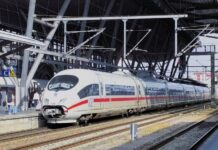
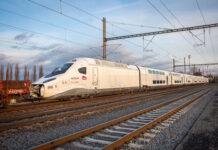
Raymond Blanc : I remember it clearly: it was in 1994, when I saw that first train arrive in Paris. It was extraordinary! It had everything: speed, light, elegance and aesthetics! We'd never seen a train like it. It's like when you see Jaguar's first E Type, it's a different aesthetic, a different world. There was also, and above all, this connection between France and Great Britain, two countries whose cultures and peoples had always been divided by the English Channel. Suddenly, everything was travelling, and that opened up all kinds of horizons for business people and tourists alike. It's marvellous to be able to travel from one city centre to another, without the constraints of air travel. From that first encounter with Eurostar in 1994, I remember deciding that one day I would work with them. That moment is one of my favourites.
Your exile in England made you the right man for the job...
R. B. : That's right: I was exiled to England at a very early age. After various experiences in watchmaking, drawing, the factory and as a nurse, I knew what I really wanted to do. It's a real stroke of luck: 90% people never find their passion. I fell in love with it in Besançon, one evening when I saw these maîtres d'hôtel cutting their meat into tails, and I was struck by this beauty that belongs to the 19th century. I started cleaning, putting all my heart into polishing those huge mirrors with vinegar. Then came the dishwashing - a promotion - and finally the dining room. When I became a waiter, I was finally able to touch the food. Above all, I realised straight away that the success of a great restaurant depends not just on the food, far from it, but on the welcome and friendliness. You have to create an environment of celebration, giving the guest something extraordinary. But a bad experience with the restaurant's chef forced me to leave. So I chose England, largely because of the rock'n'roll. It was the heyday of Led Zeppelin, The Animals, Mick Jagger... I loved this country because I could feel the energy, the youth, the liberal spirit.
What was your introduction to English cuisine like?
R. B. : Incredible... I wanted to try it straight away, on an English boat. I went into what looked more like a refectory than a restaurant. I ordered fish and chips, which was served to me in thirty seconds. That's when the nightmare began... The chips were incredibly grey, and above all it was the first time in my life that I had seen a square fish... That's when I realised that England had lost a lot, particularly by importing this system of intensive agriculture. It's a mistake that France should be very careful about. When I see certain products on the markets, I get very scared. We have a treasure to guard, a treasure listed as a World Heritage Site by UNESCO.
Is English gastronomy undergoing a renaissance?
R. B. : Yes, in a different way. English gastronomy is based on the richness of multiculturalism. In France, gastronomy was built on history and politics: the French Revolution, for example, was a major event for gastronomy, making it accessible to everyone, unlike in England where it was exclusive. In fact, that was one of the first things I did in England: I killed protocol, got rid of the jackets and ties, and created a joie de vivre around gastronomy. I was one of the first to welcome children. It wasn't easy, we had to fight against the chefs, the hotel managers didn't want these little 'hooligans'. Many of them saw the restaurant as a temple. I hate temples! The important thing is to create a convivial setting where you feel good and can share a good moment with your loved ones in a way that is certainly elegant, but above all warm. The modern customer, the business traveller, is tired of always having to give more, of not seeing his family any more because of work, and this is especially true in England. They are under constant stress, and restaurants and hotels in general are becoming therapeutic places where they can escape from these pressures.

Is this approach compatible with the atmosphere of a train?
R. B. : Completely. We're more limited when it comes to creating this atmosphere, but I'm incredibly lucky to be working with a partner like Eurostar, which understands sustainable development, creates responsible luxury and shares it with its employees. We're still in the early stages, but I want to bring in rusticity, simplicity: two or three elements maximum. We don't want to and can't compete with a gourmet restaurant. That's not our aim. There are major logistical constraints in terms of preparing the food, reheating it, complying with hygiene regulations... And you have to bear in mind that it's only 2.5 hours away! Our customers are sophisticated people who travel everywhere. I believe that the modern customer wants food that is healthy, good, simple and light. That's why we work with three local cuisines, why we've turned to Kent - one of the most beautiful gardens in England - or Burgundy for France, with its sensational land and wines, a heritage of bourgeois cuisine rather than haute cuisine.
Were you able to enjoy the Eurostar kitchen despite these constraints?
R. B. : Yes, of course. I had to get myself accepted in the kitchen, and adapt to the logistical and budgetary constraints. But it's a wonderful challenge. I'd already worked with Virgin for seven years, and we won everything back then: best business, best economy. With Eurostar, we work with small family-run businesses and small kitchens, so we have their full attention. We've worked a lot on seasonality, even though it's more difficult. Generally speaking, people don't change their menu because it's an operational and financial nightmare. My team and I have worked like crazy to put in place four cycles, based around two seasons: spring-summer and autumn-winter, with a constant rotation every week. I've now got a year to develop, taste and rethink the whole thing. We've also involved our guests by inviting the most frequent travellers to come and taste, and around twenty Cartes blanche members have come to taste. We have also, and above all, involved all the young people who make up the Eurostar service in the change, with ongoing training for young people and recognition for their work. I've also emphasised traceability: within five months, all our suppliers will be required to give us the specifications for each of their products. All these steps require a lot of work, but I can count on a wonderful team.
As a frequent traveller on the Eurostar network, you must have drawn on your own experience...
R. B. : Yes, but I especially like talking to people. Rather than talking about my intelligence, I like to listen to the intelligence of others. I'm always listening, to English travellers, to the French - who often don't know me, which is great. We don't pretend to be a great restaurant, but to give pleasure through simple, good food.