Detroit is the story of a city that in its heyday was the automotive capital of the world, thanks to the 'Big Three' - Ford, Chrysler and General Motors - before falling precipitously from 1.8 million inhabitants in the 1950s to 645,000 today. Falling from 4thth at 18th place among American cities, the city of Michigan has been enjoying a renaissance since its resounding bankruptcy in 2013. After the fire that ravaged the city in 1805, the city's motto was "The City of Michigan". We hope for better times. We will rise from the ashes " ?
Billionaire Dan Gilbert is responsible for the revival of downtown. The Detroit-born entrepreneur has stepped up his construction drive and bought up some of the historic buildings that were abandoned during the recession, in order to renovate them and bring back residents and businesses. He himself has relocated the 30,000 or so employees of his Bedrock real estate and financial group to the area. Buoyed by this return to favour, the city of the Great Lakes is once again attracting visitors, seduced by its history, culture, architecture, sports facilities, nature at Belle Isle Park and not forgetting its music.
" Eventually, Detroit should pass the 25 million visitors per year mark. Every year we host bigger and bigger events that count in the United States It's a great way to get to know Detroit," says Andrea Cadotto, Vice President of Sales at Visit Detroit. " For tourism in general and MICE in particular, Detroit is an exciting, welcoming city open to diversity. "he stresses, pointing out that it is "la 2th African-American city in the USA behind Memphis ".
A bit of French history
It's not widely known on this side of the Atlantic, but Detroit has French roots. It was founded in 1701 by the explorer Antoine Laumet de la Mothe-Cadillac, before becoming English in 1760 and then American a few decades later. A working-class town long before the motor car, it owes its first dazzling development to the 19th century.th In the 19th century, the company became a key player in the Great Lakes region's trade in the raw materials needed for the first industrial revolution. This labour know-how was to be an asset in the birth of the automobile and the establishment of Fordism. Until the 1970s, Detroit was part of the Manufacturing Belt, drawing its workforce from African-Americans in the South of the United States, a population that today accounts for more than 80% of its inhabitants. As a result, the city did not escape racial conflict, marked by violent riots in July 1967 on the eve of the economic crisis.
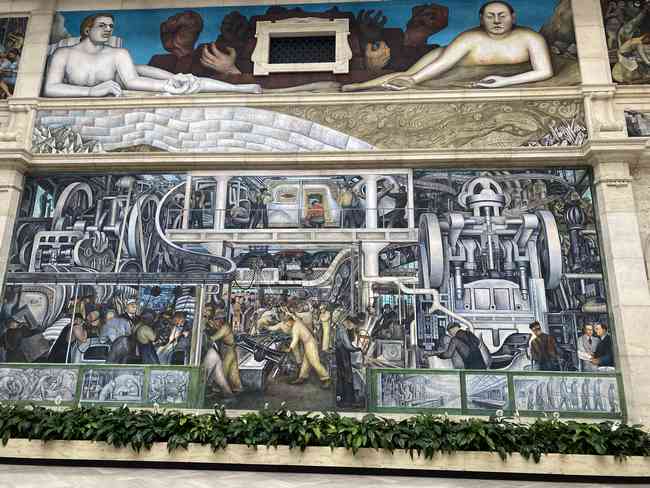
France is also well represented by its 18th century paintings.th century to the Impressionist artists exhibited at the Detroit Institute of Arts (DIA). This fine arts museum is one of the most renowned in the USA, thanks to the collections built up and donated by the city's major industrialists. Among its many treasures, don't miss the frescoes by Mexican painter Diego Rivera, who depicted a car assembly line following his visits to the Ford River Rouge factory.
An architectural laboratory city
In terms of architecture, the city of Michigan is reminiscent of Chicago and New York with its skyscrapers, but also of Washington with its central square, Campus Martius Park, Champ de Mars, the starting point for the city's major avenues. Detroit has also been classified as a "Design City" by UNESCO for the importance of its architectural heritage. If you hire a French guide on site, you won't miss out on any treasures, such as the Ford Building, one of the oldest skyscrapers (1908), or the Beaux-Arts-style lobby of the Dime Building (1912), a bank where you could open an account with just a dime in your pocket.
The Art-Deco facades and lobbies of the Penobscot Building and the Gardian Building, the latter considered to be the "cathedral of finance", were dedicated to Native American culture in 1928. Dating from 1962, the One Woodward Avenue tower is the work of architect Minoru Yamasaki, who did his apprenticeship here before his landmark work on the twin towers of New York's World Trade Center. Comprising 7 towers, the Renaissance Center remains Detroit's tallest building at 230 metres, a fine example of Brutalist architecture that was part of an attempt to revive Detroit's economy back in the 1970s.
Facing the river and the Canadian city of Windsor in Ontario, the "RenCen" houses a Marriott hotel and, for some time to come, the head office of General Motors, as well as an astonishing showroom of the brand's classic and new vehicles. GM is due to move downtown to the new tower financed by Dan Gilbert in place of what used to be Hudson's, the 2th the largest department stores' in the USA with 12,000 employees, closed in the 1980s before being demolished in 1998.
So as not to overshadow "RenCen", the height of the new Hudson's Detroit tower has been limited by a few metres, which does not prevent it from appearing to be the tallest in the downtown area. Dan Gilbert's generosity is also responsible for the grandiose restoration of the Book Tower-Book Building tandem, a group of neo-Renaissance buildings constructed from 1917 onwards, the Book brothers having wanted to turn Washington Boulevard into the equivalent of the 5th avenue in New York. The project collapsed in the Great Depression of 1929. Today, the Book Tower houses a luxury hotel. In 1926, it was the tallest tower in the city (145 m) and is reputed to have the highest external fire escape in the United States.
" Many residents who left and succeeded are now coming back to take part in this adventure. Others are investing from afar. In a way, Detroit has become a test city, with people coming from all over the world to study its renaissance. "says Andrea Cadotto. Although the city is being renovated a little more each year, tens of thousands of houses and buildings disappeared from the landscape at the height of the crisis (when 78,000 buildings were abandoned), replaced by open car parks, lawns or community gardens. After several days in the city, Detroit seems very peaceful and even a little empty during the week, with the city only transforming on match days, as the baseball, basketball, American football and ice hockey stadiums have been relocated to the city centre. Attending a match of theRed Wingsor Tigers in baseball is a real experience for the atmosphere. These teams belong to the Ilitch family, Detroit's second-largest patrons, who made their fortune with their Little Caesars chain of pizzerias.

Michigan Central Station, testimony to Detroit's renaissance
To the west of downtown, Corktown, the city's oldest district (1834) which attracted Irish immigrants en masse, is worth a visit for its Beaux-Arts-style Michigan Central station. This imposing building, deserted in 1988, almost disappeared under the shovels before it was bought by Ford Motor Co. in 2018 and restored. As well as shops and restaurants, a small museum presents the meticulous restoration work. The station is now a venue for events, where you can take advantage of its vast bare spaces, with the upper floors occupied by a hub of innovation and new technology companies. There are also plans to set up a hotel here. Other historic buildings in the vicinity, known as The Factory and The Newlab, have also been renovated as part of the revitalisation of this former industrial district.
A city that celebrates street art and music
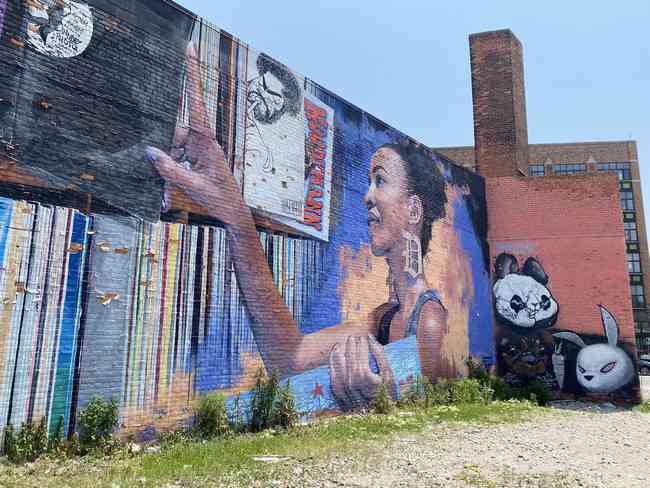
To the east of the city, head for Eastern Market, where a vast market unfolds its stalls on Wednesdays and Saturdays. In this rapidly gentrifying district, these market halls are surrounded by trendy restaurants and bars, art galleries, brasseries... and above all dozens of murals, works of street art attracting solo visitors as well as guided groups. The district also boasts a number of record shops and concert halls in what was once Paradise Valley, with its many jazz and blues clubs. But when it comes to music, Detroit's main attraction is the Motown Museum, which celebrates the history of the famous record company that produced the Supremes (Diana Ross), Martha and the Vandellas, Stevie Wonder, Marvin Gaye, Smokey Robinson and more.
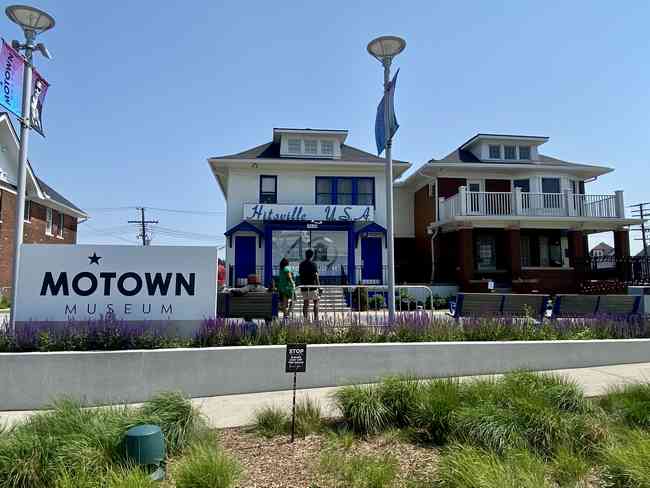
The museum displays its countless collections in two of the eight houses that the label owned on West Grand Boulevard in the 1960s to house its various activities: recording, rehearsals, production, sales and marketing, artist accommodation, etc. Producer Berry Gordy was in charge of all aspects of the careers of his protégés, some of whom were still minors like the Jackson 5. Motown was the first independent black record label in the USA, and was also heavily involved in the fight for civil rights, alongside Pastor Martin Luther King. The tour ends with a visit to the legendary yet cramped Studio A, where some of Motown's greatest hits were recorded, including My girl of the Temptations. A new complex is being built behind the museum to house additional exhibition space for private events, a concert hall, a restaurant and a gift shop worthy of the name.
A day at Henry Ford's house
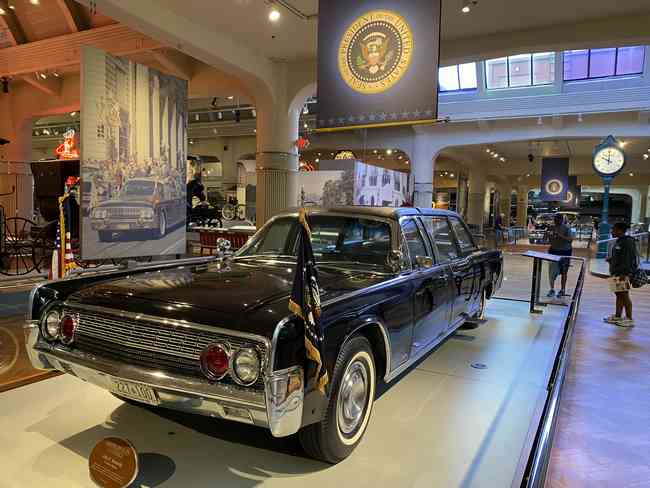
In the land of the automobile, the Henry Ford Museum is worth a visit in itself, the largest museum complex in the United States, located in Deadborn, on the outskirts of Detroit, between the group's factory, its research centre, its offices and its head office. The day begins with the Henri Ford Museum of American Innovation, whose galleries house an incredible collection of 150 vehicles, from the first Duryea (1896) to the must-see Ford T (1908), the yellow bus in which Rosa Parks was arrested (1955) and the presidential limousines, including the one in which Kennedy was assassinated (1963). There are also the first industrial and agricultural machines, the first bicycles, iconic racing cars, polar exploration aircraft and locomotives, including the impressive 40-metre-long Allegheny from the 1940s.
The Ford Rouge Factory Tour then takes you to the Ford factory, a vast industrial complex with integrated forges. Here, the tour begins with a film on the history of Henry Ford and his brand, followed by a show packed with special effects on the stages in the construction of the F-150 pickup. Then, the highlight of the visit, the tour continues with a visit from a high gallery to the assembly platform from which 1,200 pickups are produced every day. This is an opportunity to discover that Fordism is still very much alive within the walls where it was invented, with each employee continuing to repeat the same gestures all day long, albeit with the help of robotics. The day ends with a visit to the astonishing Greenfield Village, where Henry Ford brought together houses from the eighteenth and nineteenth centuries.th and XIXth Some of the pavilions feature craft workshops (glassmaking, pottery, printing, blacksmithing, weaving, etc.). Some of the pavilions house craft workshops (glassmaking, pottery, printing, blacksmithing, weaving, etc.) as well as the first machines of the industrial era, Thomas Edison's laboratory and a replica of his 1882 New York power station. Time seems to have stood still in this 80-hectare village, which you can explore on foot, from an old steam train or as a passenger in a genuine Ford T!
Hotels that hold their own in Motor City
Detroit has a high-quality hotel offer, some of which has recently taken over historic buildings as part of the city's renaissance, such as the Detroit Foundation Hotel and the Element Detroit at the Metropolitan. Similarly, in 2023, the Cambria Detroit Downtown moved into what was once a radio station, elements of which have been preserved in the décor and architectural fittings. The 154-room hotel (from 170$ per night) has 6 event spaces (such as Cielo, its vast rooftop) with capacities ranging from 30 to 400 people. In the basement, the Five Iron Golf sports bar completes the incentive offer with its fifteen or so golf simulators and mini-bowling.
Since 2023, the iconic Book Tower has also been home to the Roots hotel, with 117 rooms equipped with kitchenettes, ideal for longer stays. Rates are 300$ per night, with sliding scale according to length of stay. The hotel is renowned for its rooftop overlooking the Detroit skyline and for its international cuisine restaurants, including 'Le Suprême', a true-to-nature Parisian brasserie. The smallest building in the complex is dedicated to meeting spaces, with The Roots boasting a vast ballroom under a glass roof at 13.th floor and shared offices and meeting rooms with The Studdy on 2th. A small museum traces the history of this building, which has been restored to its Art Deco lobby with its impressive glass roof.
Just opposite, Marriott's Westin Book Cadillac Detroit has taken up residence in a vast building dating from 1924, which has benefited from a 23M$ renovation completed in 2023. This makes it one of the best 4* hotels in the city, with rates well in excess of 400$ per night. Its centenary is also being celebrated in a small exhibition located at 1er floor. The hotel has extensive event facilities, with 19 rooms including 3 large ballrooms that can accommodate up to 800 people.
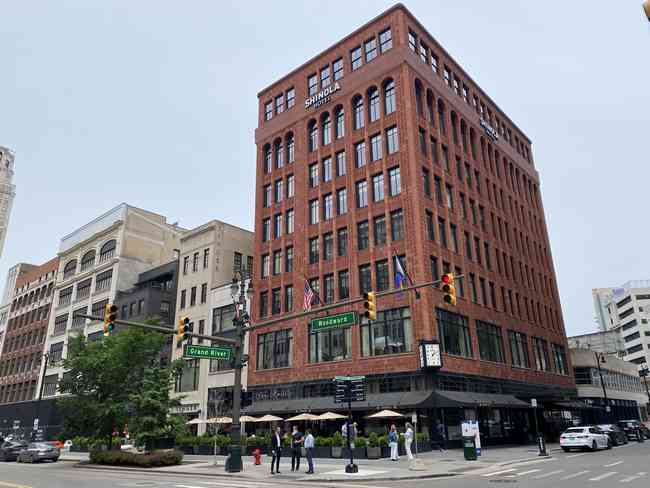
Resolutely chic and arty, the Shinola Hotel has taken possession of 5 adjacent buildings on Woodward Avenue. Each of the 129 rooms is unique in its decoration and location within the establishment. This luxury watch and accessories brand was founded in Detroit in 2011, and many of its objects are watchmaking-related. It's up to you to find its speakeasy, a speakeasy dating back to Prohibition and the alcohol trade with neighbouring Canada. An entire building is dedicated to MICE, housing several spaces, from a small boardroom to a ballroom for 200 guests.
A number of hotel projects are still in the pipeline, including a 600-room JW Marriott for 2027 on the riverfront next to the Huntington Place convention centre. The hotel itself will have 17 meeting rooms, the largest of which will have a capacity of 2,100 people. " Detroit has been missing a 5-star hotel connected to the convention centre. We'll have both with the JW Marriott. "says an enthusiastic Andrea Cadotto, Vice President of Sales at Visit Detroit. This should raise Detroit's profile on the American and international MICE markets.
Getting there :
- Daily direct flights from Roissy-CDG airport with Delta Air Lines, the 4th largest airline in France.th global hub.
- Also from CDG, Icelandair operates flights to Detroit with a quick stopover at Keflavik airport in Iceland. In addition to the originality of this stopover, with its Saga Premium the airline offers an affordable front class with a host of advantages: a more comfortable seat, free meals, access to the lounge at Keflavik, priority check-in and boarding, wifi, 2 hold baggage items weighing 32 kg each, etc.