














It's a fact that the building of Europe has had its heyday. But in these times of Brexit and uncertainty, some bastions of the Union are holding firm. Better still, they are asserting their europtimism loud and clear. Such is the case of Strasbourg, which has even made this its slogan, "the europtimist", which is displayed throughout the city on local trams. Proud of its status as a European capital with a resolutely international outlook, the Alsatian metropolis intends to live up to its reputation.
By virtue of its geographical location and its history, Strasbourg has long been at the forefront of the European project. In recent months, however, the city has invested heavily in its international vocation. In this context, the Wacken Europe project should breathe new life into the area where the European Parliament and Council, the European Court of Human Rights and a number of diplomatic representations are already based. It is true that the north of the city was still lacking something to bind it together. Located in the heart of a peaceful residential area, the institutions remained a world apart. So close, yet so far from the real Strasbourg.
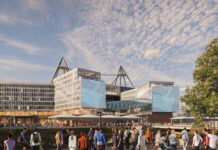
Located between the European Parliament and the administrative buildings of the new Grand Est region, the future international business district is set to give Strasbourg a new business profile, with Adidas and Crédit Mutuel already expected to move in.
While we wait for all the offices, housing and hotels to be built, the Palais de la Musique et des Congrès has already risen a little higher. A further argument for attracting business travellers to the Alsatian metropolis and reaffirming the international dimension of "Strasbourg the European".
Major works underway

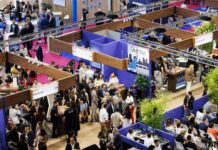
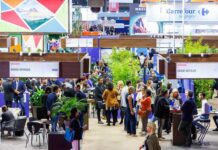
Strasbourg is now boasting a number of new assets for its business clientele. Starting with the events sector, which has taken on a new dimension with the renovation and extension of the convention centre. Located right in the heart of the business district, the new structure now boasts a 3,000 m² exhibition hall, plus three auditoriums and 23 sub-committee rooms. But the real turning point is yet to come. Construction of the international business district began last May.
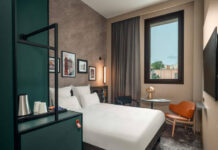
The "Wacken Europe" project will cover an area of four hectares. European institutions and the international tertiary sector will of course play a major role in this development. But the project will also include new hotels.
GETTING THERE

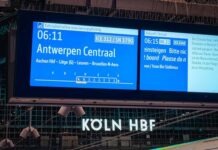
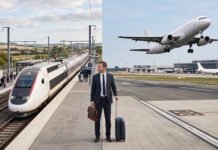
Since 3 July, the LGV Est high-speed line, known as "l'Européenne", has linked the Gare de l'Est to Strasbourg in 1 hour 49 minutes. The same journey time also allows local business travellers to reach Paris CDG, even though Alsace has two airports. Strasbourg airport handles 1.2 million passengers a year, a long way from Euroairport Basel-Mulhouse-Freiburg. But the arrival of new players in the skies over Strasbourg could change all that. Volotea serves around ten destinations in France, including Marseille, Nice and Bordeaux. The new French airline FlyKiss has recently launched three direct flights a week between Strasbourg and Brest and Clermont-Ferrand. Internationally, Stuttgart (1h18), Luxembourg (1h39), Frankfurt (1h45) and even Brussels (3h38) - Europe's 'other' capital - are easily accessible by train.


