














What a family the Borgias were! A dynasty that, according to the memoirists, spent its time plotting, ordering murders, using daggers and poisons, and indulging in a more than sulphurous sexuality against all the odds... During the Renaissance, Pope Alexander VI and his children, the famous Caesar and Lucrezia, made headlines for their escapades, which were considered decadent. However, historians now remember that the Borgias were also learned and astute patrons of the arts and that, thanks to them, the kingdom of Valencia enjoyed a very prosperous period.
We sometimes forget that the lineage is of Spanish origin and that its real name, Borja, comes from a village in Aragon before being passed down to posterity in its Italianised form, obliged by the Papacy. Indeed, the history of the family and that of the Vatican are closely linked. This illustrious clan has given the Church no less than two popes, Calixtus III (Alfonso de Borja, 1378-1458), Alexander VI (his nephew, Rodrigo de Borja, 1431-1503), and also a saint, Francisco de Borja (great-grandson of Alexander VI and King Ferdinand II the Catholic, 1510-1572). Not to mention a dozen cardinals and a host of bishops...
To walk in their footsteps, in the heart of Valencia's old town, is to plunge into the magnificence of the 15th century, and at the same time to understand the influence of this prestigious house on the political and commercial life of the time.
An ever-present imprint


In Valencia itself, all these monuments are scattered around the old town, making them easily accessible on foot. Start with Santa Maria Cathedral, where the Borgias were bishops and archbishops. Although predominantly Gothic, the church combines different styles and includes a chapel dedicated to Saint Francisco de Borja, designed by another famous Francisco, a certain Goya... Also of great beauty are the Renaissance frescoes of angel musicians, discovered in 2004 under the dome of the nave, which is currently being restored.
Chapel and cloister available for private hire

 Now transformed into a cultural centre, its chapel can be used for chamber music concerts, and its simple cloister for cocktail parties. The chapter house, with its walls illustrated with portraits of the men who made it famous, is ideal for award ceremonies.
Contemporary interlude
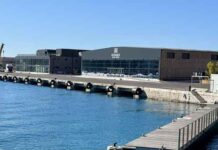
 Today, Valencia remains an important Mediterranean port. But it's a port that's evolving into a real tourist magnet. Ana Merelo, from Valencia Guias, adds: "As a very contemporary counterpoint to a visit followed by lunch in the old town, we never fail to take groups to visit the City of Arts and Sciences."This complex designed by architects Santiago Calatrava and Félix Candela includes the Science Museum, the Palace of Arts - an avant-garde opera house - , the Hemisfèric - an IMAX cinema - and the Oceanogràfic, Europe's largest aquarium... Futuristic buildings with curves of steel, concrete and glass offering a new cultural stopover before moving on to more festive things. "After that, we're going to take a trip out to sea, our catamarans holding eighty people, says Ana MereloAlternatively, we can organise a fun regatta in eight-person boats, under the command of a captain, culminating in a picnic on the beach".

 After a little rest, it's time to head further south to continue the Borgia route. The town of Gandía, the epicentre of a dukedom purchased by Alexander VI from Ferdinand II the Catholic in 1485, is only around sixty kilometres from Valencia. Groups visit the ducal palace and its imposing square Gothic courtyard, ideal for a cool cocktail. This fifteenth-century residence is the birthplace of Saint Francisco de Borja, restored and transformed into a sanctuary by the Jesuits in honour of the man who was their Superior General.
 What remains is a sumptuous white and gilded baroque gallery, which brings light and cheerfulness to this rather severe palace. The town, once inward-looking, has gradually blossomed along one of Spain's most beautiful beaches. It's a great opportunity for groups to take a seaside break in one of the large hotels along the coast and take part in some team-building sessions on the sand, which here is truly extra-fine.
Jealous Italians
 From this beach, Xàtiva, the birthplace of the Borja family, is just 30 kilometres away. Dominated by impressive walls originally erected by the Arabs and a 19th-century castle where groups can enjoy lunch on the terrace, the town of Xàtiva is a maze of narrow streets lined with colourful facades. You can organise a treasure hunt to discover the charm of the arcades of the market square, the Borja house where Alexander VI was born, the church of St Peter where he was baptised, the museum housed in the old corn exchange and the great collegiate church, which was never recognised as a cathedral.