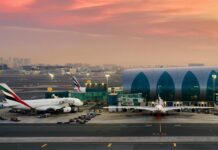















The West wing was opened in 2000, mainly for flights to the Schengen area (except France). The East wing will be inaugurated in December 2021 for intercontinental and non-Schengen flights. Airside, Geneva's terminal offers the same reception and comfort conditions as Europe's major international airports.
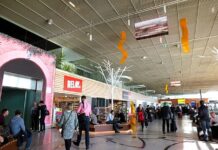
It's on the city side that the problem lies. The departure hall in particular, dark and low-ceilinged, has hardly changed since the modernised Geneva terminal was inaugurated in 1968.... Vintage may be fashionable, but for a city as prestigious as Geneva, a departure from Terminal 1 is hardly in keeping with its status as a UN city.

Traffic to resume in 2022
In fact, the terminal seems to be running out of steam. Even if the Covid crisis has given the terminal some breathing space, with passenger traffic expected to decline in 2020 and 2021.
Last year, Geneva Cointrin welcomed 14,085,280 passengersits 2012 level. This represents an increase of 137.8% compared with 2021but 21.4% less than in 2019.
However, the resumption of traffic should quickly result in congestion in the departures hall. By 2030, the airport authorities expect traffic to fluctuate between 18 and 20 million passengers, rising to between 21.5 and 24.5 million by 2040..
Gold terminal 1 is designed for a theoretical capacity of 7 million passengers. The problem that Geneva-Cointrin has always faced is the density of the built-up area around the airport. Wedged between the French border and the city itself, the airport has few resources with which to develop.

A multimodal structure by 2030 between the terminal and the station
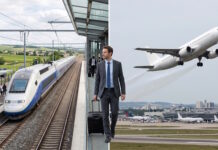
However, with the CAP2030 project, the airport wants to create a link between Terminal 1 and the nearby SBB railway station. And gain more space. This near-merger of the two structures would give rise to a a multimodal hub where passengers can switch from ground to air transport and vice versa. With a target of 58% passengers using public transport to the airport.
The creation of the new multimodal area will bring together all the transport functions with improved visibility, comfort and safety. It would also contribute to to increase the capacity and comfort of public transport facilities with spaces for buses, shuttles, taxis and VTCs, as well as the integration of a cycle path connected to the city and a bike-sharing station.
The CAP2030 project, with the extension of terminal T1, will at the same time create surfaces that will guarantee the terminal's operability between 2030 and 2040. And to provide new levels of comfort with from spaces additional and flexible hoses tocreate new registration areas and create new retail space (+40% according to the project). The authorities estimate the investment at over 570 million euros.

What about the French sector at Geneva Cointrin?
All in all, some 45,000 m2 will be added on the city side. This will make it possible to accommodate all the platform's check-in activity after 2032.. Because, in In 2030, the decision will be taken as to whether to completely rebuild the oldest parts of terminal 1 still in use. Or simply renovate them. Either way, there will be another major project.
The question is the problem of rebuilding the French sector of the terminal, currently sector F. Unfortunately, this is the most neglected part of the current terminal. Passengers are confronted with a narrow check-in hall, two security checkpoints with interminable queues and a gloomy boarding lounge...
Ultimately, the future multimodal hub will provide what Terminal 1 lacks most today: light, conviviality and the desire to linger.