After the overhaul of uniformsDoes Eurostar still have plans for the merger with Thalys?
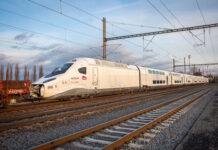
Gwendoline Cazenave - We completed the process after the merger teams between the two companies, the creation of a new logo, the introduction of new travel classes across our entire network and of menus prepared by renowned Business Premier chefs. Our priority now is to growing Eurostar. We are finalising negotiations on the new fleet, which provides for a maximum order of 50 high-speed trains that Eurostar will start to receive from the beginning of 2030. We have a lot of work ahead of us to define the design of these future trains so that they meet our passengers' expectations in terms of experience and comfort.
Are you confident that you can grow despite the expected arrival of competitors?
Gwendoline Cazenave - We're not worried about these issues. competitors potential. Moreover, we have always had competitors on our routes with air travel. These future trains, which will be interoperable on our two networks, cross-Channel and continental, should enable Eurostar to face up to the market growth envisaged. Eurostar has big plans with the opening of three new routes: London-Frankfurt, London-Geneva and Amsterdam-Geneva via Brussels.. This represents a major challenge in terms of satisfying our customers and those looking for sustainable travel solutions between our destinations. With our sights set on achieving the 30 million passengers by 2030. As far as these future operators are concerned, all we want is for them to do their job in the best possible way. respect for a legal framework. This is an essential point.
How do you intend to stand out from these new entrants?
Gwendoline Cazenave - Firstly, by the choice of services, which continues to grow. In September, Eurostar increased the number of daily return trips between London and Amsterdam to 4. And soon to 5 per day from 15 December. We also want to increase frequencies on Paris-London in order to increase traffic on this route by 2 million passengers a year. As well as increasing frequencies, our ambition is obviously to offer our customers the excellent service they expect. We do a lot of work for business customers, making it as easy as possible for them to travel.. For business and leisure passengers alike, Eurostar has undertaken to make the range exchangeable and refundable, whatever the class of service. This is working very well. Eurostar has also renovated the lounges of its continental network to Paris and BrusselsThe latter has been enlarged for the occasion.

Is Eurostar ready for the new Schengen entry-exit system (ESS)?
Gwendoline Cazenave - For Eurostar, the issue is to ensure a smooth journey through the station, including border crossings. To achieve this, we work closely with the authorities in each country. Brought into service on 12 October, this entry/exit system is an automated device designed to electronically check non-Schengen passengers for stays of less than three months. Pre-registration kiosks have been installed before the border police access gates: 49 in London at St Pancras International station, and around twenty at Paris-Nord on our mezzanine floor. The passengers concerned, including the British, will have to scan their passports and fingerprints and take a photo of their face. However, we have not changed the check-in times and would remind passengers to respect the recommended arrival time at the departure station indicated on their ticket.
What are Eurostar's traffic forecasts for 2025?
Gwendoline Cazenave - Trends are excellent, with record revenues recorded in June and July. And record traffic on the London-Amsterdam route last August. Our terminal atAmsterdam Centraal is now operating at full capacity and Eurostar has become the 1er operator between Amsterdam and the British capital, with a journey time of around 4 hours. All routes are performing very well, as there is strong demand for sustainable travel, particularly from corporate customers. Eurostar is expected to carry 20 million passengers in 2025, representing growth of almost 5% compared with 2024.