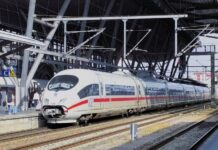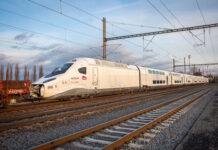
















It was originally due to open in 2026, but in just 90 minutes from Kuala Lumpur to Singaporecompared with more than 4 hours by car. Formally signed by the prime ministers of the Malaysia and Singapore in 2013, the link "MyHSR ("Malaysia High Speed Rail") of 350 km should have largely replaced the air links.
The Kuala Lumpur-Singapore route remains one of the most important in Asia.. Before Covid, it attracted over 5.5 million passengers. At 2022once again recorded 2.5 million passengers.
Last year, it remained Singapore airport's leading airline with 4.9 million seatss. This also gives him the title of the world's leading international airline in terms of seating capacityaccording to consultant OAG.
A totally private project
But the figures did nothing to help. Former Prime Minister Mohammad Mahathir deemed the cost prohibitive ($17 billion), and in 2018 the project was postponed until 2031. Finally, it was completely abandoned in 2020.
But now the current government of Prime Minister Anwar Abrahim is taking up the MyHSR idea. The launch of the call for tenders has already attracted seven initial proposals from the private sector.
This is in fact the big difference with previous projects. The Malaysian government is heavily in debt and does not want to get involved in the financing. It is encouraging the private sector to carry out the project. It is estimated that it will now cost around 25 billion dollars.
The first interested parties are international consortiums. These include China Railway Construction, Korea's Hyundai Rotem - a unit of Hyundai Motor specialising in railways and defence - and local conglomerates such as MMC, Gamuda, YTL, WCT Holdings and Berjaya.
MyHSR, the public entity leading the project, must now shortlist 3 or 4 consortia for the next phase. The procedure adopted will then be a presentation to the Prime Minister's office, which will in turn present it to Singapore. It is now up to the city-state to decide whether or not to participate in the future line.
A boon for Johor Bahru, a frontier city
Nothing is less certain about Singapore's involvement. Malaysia's procrastination on the project has somewhat scalded the city-state. The Singaporean government announced last year that it was willing to study the new project. But if Singapore does not want to be part of the adventure, the line will stop in Johor Bahru. This metropolis of 500,000 inhabitants is only separated from Singapore by a 1.05 km bridge spanning an inlet of the sea.
Johor Bahru has the wind in its sails. Firstly, because the new King of Malaysia is also the Sultan of this southern state. And as soon as he took office, he announced his intention to relaunch the project.
Johor Bahru asserts itself as a strategic economic zone for Malaysia who wishes to promote the city and surrounding area as a regional destination for investors. On the Singaporean side, Johor Bahru is increasingly seen as a natural extension to the city-state, whose territory is not infinitely expandable. Last January, the Malaysian and Singaporean governments signed a memorandum of understanding to jointly develop a special economic zone in Johor Bahru as a new engine for growth.
" We want to finalise [the proposal] as quickly as possible, hopefully in the next three or four months." a Malaysian official told the Asian magazine Nikkei Asia. The soap opera continues...