












How would you sum up the Intercontinental Marseille Hôtel Dieu hotel in three words?
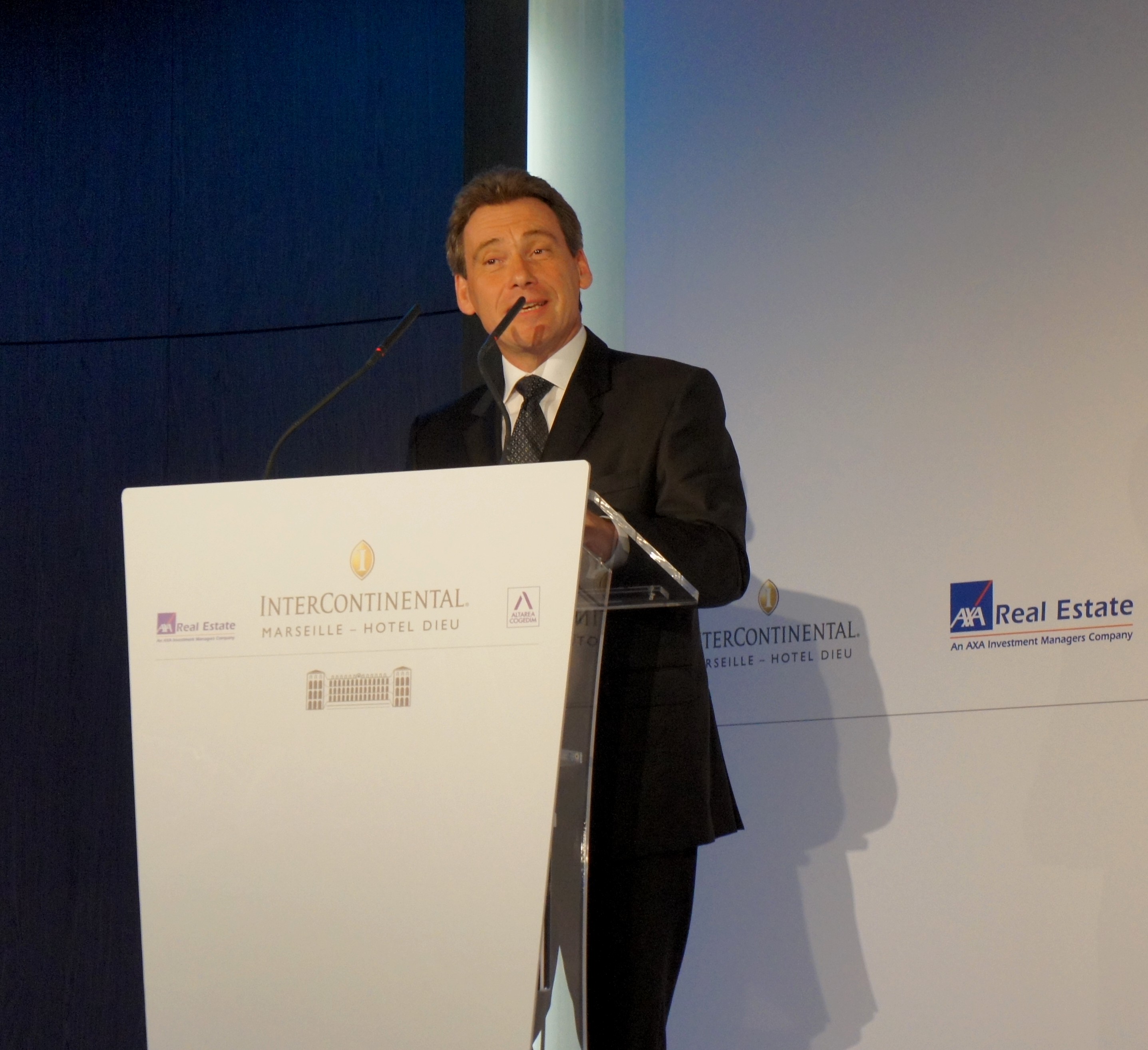
Didier Boidin : It's magical, it's prestigious, and above all it's Marseille! The location is fantastic: we're right in the heart of the city, it's quiet, it's beautiful, there's that minerality... It's prestigious in that it has both this historic dimension and this architecture. It's not 'bling bling', it's not flashy: it's beautiful prestige. I'm convinced that this is what the city of Marseille was lacking to take it to the next level by being able to host major business or political conferences. This inauguration will be good for everyone: the existing hotel industry and the tourist office. It would have been a difficult challenge if we had built a new, modern hotel in Marseille. We had to stand out from the crowd, and we couldn't have wished for anything better. For us, it was out of the question not to be on the Vieux Port, in the heart of Marseille.
What are your customer targets?
D. B. : I think the hotel will attract an equal proportion of business and leisure travellers. We hope to quickly achieve an occupancy rate of around 65%. As for the average price, that may take a little longer. We won't be able to meet our financial targets until the city is full enough for us to sell well. Our targets are reasonable, and are based on a good balance of customers, a convention business, and I think we'll have some pleasant surprises in the restaurant business.
Do you feel you are playing a pioneering role in this rapidly changing city?
D. B. : I experienced the same thing when I arrived in Cannes in 1994: we needed new parameters to take us to the next level. Our role today is to bring something extra that will enable the city to be more internationally oriented. We've been looking at Marseille for a long time. As have Lyon and Nice, where I'm still looking for a hotel. We won't be positioning Intercontinental hotels in dozens of cities in France. We are practically where we wanted to be, even if we could have more establishments in Paris.
So the negative image of Marseille in the news hasn't held you back?
D. B. : No. Let's remember what Barcelona was like before the Olympic Games. It's one of the biggest destinations in Europe. A huge amount of work has already been done in Marseille, and there are still things to be finalised. It's also our role, all the partners in the project, to improve the situation and highlight all the assets of Marseille, the beauty of the Vieux Port, Notre Dame de la Garde, the calanques... Everything else will be resolved gradually.
What are your objectives for the French market?
D. B. : We've always been very clear: Intercontinental's penetration of the French market is through Paris, Lyon, Marseille, Cannes and Nice. We may look at cities like Lille and Toulouse at a later stage, but for the moment we're focusing on these five destinations. We already have two establishments in Paris, and we could consider a hotel at La Défense, or on the Left Bank, why not? There's plenty of room in Paris. I think eight Intercontinental hotels in France would be a good number. We have other brands for other types of destinations, and we position them where they need to be.
What are your priority markets in Europe?
D. B. : The UK, as always, but also Eastern Europe, with Russia where there is a huge amount to be done, and Turkey, which is also a very big market. These are our priorities, all brands included. As far as Intercontinental is concerned, we are still pursuing a 'key cities' strategy, where there is still room. We are looking at Lisbon, for example, or at destinations in North Africa: we can expand in Morocco, Algeria and Tunisia - there is still room.
Are you confident about the years ahead?
D. B. : Yes, that's the advantage of the luxury hotel business: there's always one market that's doing better than another... That said, it's not easy. Customers are becoming increasingly demanding. We have to be able to respond better and better to these increasingly specific expectations. So we have to be vigilant about value for money, and offer more than just a room, so that travellers remember an exceptional travel experience.