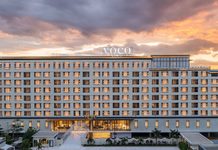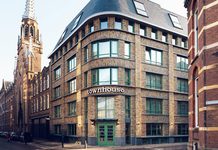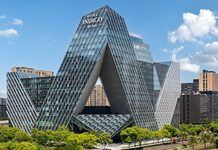



















"Will South Africa have enough beds to accommodate all the people travelling to the World Cup?" we asked ourselves three years before the tournament kicked off. Since then, a succession of hotels has opened in the country's major cities, with several international chains even setting up shop there for the first time.
One & Only and Taj Hotels & Resorts have chosen Cape Town to take their first steps in the country of Nelson Mandela. The Indian chain has taken up residence in two buildings in the city's historic centre, to which it has added a brand new tower. The 122 neo-classically decorated rooms overlook either Table Mountain or the Atlantic Ocean. Rooms at One & Only, which has opted for the Albert & Victoria Waterfront, also offer breathtaking views of the ocean or the emblematic mountain. Radisson Blue opened its doors a little further away a few months ago, while Missoni, Rezidor's lyfestyle brand, is due to welcome its first guests after the sporting event, in early 2011. The Scandinavian group's African ambitions don't stop there. It has also opened Radisson Blu hotels in Sandton, near Johannesburg, Durban and Port Elizabeth. "The World Cup was not, in fact, the factor that triggered the interest of international hotel chains, even though we are counting on the event to put the spotlight on what is happening in South Africa in particular, and much more widely across much of the continent. Like a large number of emerging countries, African countries have continued to experience strong growth, even since the onset of the global economic recession", points out Martina Boettcher, Africa-Indian Ocean Communications Director at Starwood Hotels & Resorts.
Over the last five years, several sub-Saharan African countries have seen unprecedented growth in their GDP (gross domestic product). Since the onset of the global economic recession, this trend has stalled but not reversed, underpinned by significant natural resources and relative political stability. Growth is still flirting with 5 % or 6 % in some of these countries, which are home to large strategic mineral and energy reserves. Westerners, Chinese, Indians and Israelis are vying for uranium, oil, gas, cobalt, coltan (used in cutting-edge industry, including mobile telephony)... not to mention gold, diamonds, copper, coal and agri-food products.
Another important development in attracting investors is that getting around the region is becoming easier every year. "It's become easier to get to sub-Saharan Africa and to travel within the continent itself. It's no longer necessary to travel via Europe to get from one African country to another," confirms Deepak Seth, Vice President, Southern Europe and Africa, Hilton Group. The Gulf companies have started to cover this part of the continent. Dar-es-Dalam, Accra, Entebbe, Luanda, Abidjan, Lagos, Nairobi, Cape Town, Durban... are accessible from Europe, China and India via Dubai, Abu Dhabi or Doha. Not to mention the hubs of Royal Air Maroc and Ethiopian Airlines. An important aspect in a region where air safety often leaves much to be desired: the vast majority of airlines on the European Union's blacklist are African. "The vast majority of the airlines on the European Union's blacklist are African. To win a contract in Africa, you have to meet the people, and several times. Video-conferencing is out of the question", explains Serge Hattier, Accor's head of development in Africa. This is enough to convince investors to develop a new range of hotels to cater for this influx of international customers. Of course, Accor, notably with Novotel and Sofitel, as well as Le Méridien (the French brand of the American group Starwood Hotels & Resorts) have been present in more than a dozen countries since the 1970s. France and Africa have a long history together.
Exploring sub-Saharan Africa
Hilton also laid its first bricks on the continent some forty years ago and is preparing a dozen projects in Namibia, Ghana, Tanzania and Cape Verde. "Most of them will open this year under the group's parent brand", explains Deepak Seth. But on the whole, international chains are only just beginning to explore sub-Saharan Africa, attracted by its economic dynamism. In two years' time, Rezidor will have 37 hotels, compared with just eight last year. This year alone, the Scandinavian company will open Radisson Blue hotels in Addis Ababa (Ethiopia), Maputo (Mozambique), Lagos (Nigeria) and Lusaka (Zambia). For its part, Marriott is arriving in sub-Saharan Africa via Accra, the capital of Ghana. This country, one of the most stable on the continent, has also attracted Kempinski, which has signed up to a 35-hectare property development, including a conference centre and offices.
Faced with growing competition, the chains are giving a facelift to the establishments they already own in Africa. The Crowne Plaza in Johannesburg, for example, has been given a facelift, while Sheraton has embarked on a vast renovation plan for its hotels in Dakar, Douala, Libreville and Maputo.
Pushing the entry-level market
International groups are no longer limiting themselves to opening five-star hotels. On the contrary, they are also pushing ahead with their more modest brands. True to its development policy, IHG is promoting Holiday Inn and Holiday Inn Express, which has become the spearhead of its African expansion. The two brands are already present in South Africa in Johannesburg, Pretoria, Durban and Cape Town, in Zimbabwe - Harare, Beitbridge, Bulawayo and Mutare - as well as in the capitals of Kenya, Tanzania, Ghana and Zambia. In the latter, Holiday Inn is even the only representative of the IHG group. Starwood Hotels & Resorts opened its first Four Points in Lagos this year, while Hilton Group recently inaugurated two DoubleTree hotels in Zanzibar.
Welcoming local customers
After expanding its Formula 1 business in South Africa, Accor is now focusing on Ibis. Eleven establishments are planned in Cameroon, Ethiopia, Guinea, Gabon, Nigeria and Senegal. "Africa is witnessing the emergence of a middle class that travels in its own country and in neighbouring countries, both for business and leisure. Ibis responds perfectly to the demands of this clientele, with an average price per night of €60," explains Serge Hattier. These establishments should also appeal to Western executives and engineers who, with the recession, have often seen their standing taken down a notch when they travel; and who may well maintain their new habits once the economic crisis is over.
For the time being, the chains are focusing mainly on business customers, deliberately locating their hotels in economic centres and offering all the facilities required by this clientele. In Kigali, the Radisson Blu, due to open in 2012, will be backed by a 32,000 m2 convention centre with a multi-purpose hall for up to 2,600 people, seven meeting rooms and ten sub-committee rooms. "As with any of our establishments, we must of course offer state-of-the-art high-tech facilities. But in Africa, this is all the more essential because in some cities, this infrastructure still leaves something to be desired," continues Martina Boettcher of Starwood. Restaurants are also very important. They are often the only places in African cities where you can invite your guests. But unlike in Europe, the United States or China, it is not necessary to rely on the talent of Michelin-starred chefs. At least for the moment.
The chains are already thinking of expanding into a segment targeting leisure and Mice. "There is room for beach resorts in Kenya, Tanzania, Malaysia, Mozambique, etc.", says Andrew McLachlan, Rezidor's vice-president of development in Africa and the Indian Ocean. For its part, Kempinski has just taken over the Mokuti Lodge in Namibia: 90 rooms, eight chalets, eight bungalows and 25 luxury tents. But until now, lodges and safaris have remained the preserve of local groups, often South African. And they are mainly small, intimate properties. But for how long?