










Less distance, less time, less money... In this year of the Olympics, but also of economic crisis, the motto coined by Baron de Coubertin could perfectly define the prevailing mood in the seminar hotel industry. And this has been the case practically since the end of the last Olympiad, in Beijing in 2008, just a few days before the collapse of Lehman Brothers. The ensuing financial storm led to sharp cuts in budgets. Although hoteliers saw the beginnings of a recovery in 2011, it remains fragile. "2012 will not be without its challenges, but overall it should remain stable at global level".says Cédric Gobilliard, Accor's Director of Global Sales.
 In the wake of years that were not conducive to lavish spending, companies have developed habits. Multinationals and SMEs are organising their business meetings in a carefully managed way, saving an overnight stay here, cutting back on leisure time there, and always limiting superfluous services. "Evenings out are becoming increasingly rare. And, even if they stay on site, companies prefer a glass of white wine to a glass of champagne as an aperitif; they also often stop at the basic menu".says Michel Stalport, Vice President Western Europe, North and West Africa at Rezidor.
It's a sign of the times that buyers are working hard to cut costs, bringing back to the surface that old sea snake, the integration of MICE (Meetings, Incentives, Congresses, Events) expenditure into travel purchasing policies. But this time with the intention of keeping its head above water for the long term... "This is a real development. Companies want to consolidate their corporate purchasing, both individual and group".confirms Cédric Gobilliard.
Other underlying trends have continued to mark the events business for several years, starting with a desire to avoid ostentation, which is ill-advised in a period of austerity, and also the practice of last-minute bookings to gain flexibility in the face of economic uncertainties. A habit of always putting things off until tomorrow, from which companies do not necessarily come out the winners. "If you can't make it at the last minute, cancellation costs can amount to as much as 90 % of the service. American companies have understood this and are booking further in advance. On the other hand, they negotiate the cancellation conditions".says Emmanuel Schott, general manager of the Tiara Mont Royal hotel in Chantilly.
Short meetings
 owever, and of all things, there is one thing that is particularly characteristic of business seminars at the moment: the shortest events are the best. As highlighted in the annual business tourism barometer produced by Bedouk and Coach Omnium, one-day or even half-day events are taking precedence over events lasting two or three days. "Thanks to the rail network linking Marseille to Paris in just three hours, there are more and more one-day seminars without accommodation".confirms Laura Matteï, Marketing Manager France for the IHG Group.
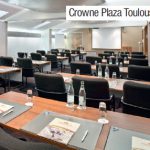
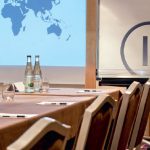 To reduce transport costs, city-centre hotels close to head offices are favoured by companies. And when they decide to put their teams to work to strengthen cohesion without the risk of dispersal in the evening, it is the direct proximity of the major air and rail hubs that guides their choice. The many hotels in the Paris region will be happy to oblige, whether they are located in the capital, such as the Marriott Rive Gauche Conference, or in the Roissy airport area, with Sheraton, Pullman, Hilton and Best Western topping the list. The same applies to establishments close to major provincial cities, such as the Crowne Plaza Montauban or the Dolce Frégate, not far from Toulouse and Marseille.
Strong themes
Casino and musical
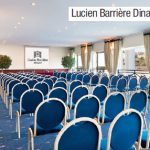
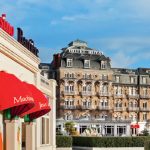 Organisers expect their meetings to be accompanied by particularly memorable moments. While urban hotels are obviously not fortunate enough to offer a bucolic setting, they know how to play to their strengths. The Lucien Barrière group, which is only a hundred years old, bases its appeal on its top-of-the-range hotels, but also on its other area of expertise, casinos. "You can organise evenings with real croupiers. Another advantage is that these casinos offer the chance to have a drink late at night. That's important, especially in a small town like Ribeauvillé, where we're opening a hotel this year.explains Pascal Visintainer. In Lille, we also have a theatre adjacent to our hotel which lends itself to the organisation of musical comedy-type shows, especially as we have an artistic director within the group who can take charge of designing the event".
Among other original incentives, such as breakfasts in the mountains under teepees or buggy treks through the town, the Hilton Evian offers a real zip line right inside the hotel. "Participants set off from the sixth floor, with a magnificent view over Lake Geneva, and arrive directly at the foot of the meeting room where a cocktail awaits them. As time is often short, this is a relatively short activity that always surprises", says Dominique Dmytryszyn, the school's managing director.
But what remains of these events once the participants have returned to their daily tasks? Even more than a casino night or a sports team-building event, it seems that it is the quality of the catering that counts. At least, that's what emerges from a survey of meeting organisers carried out for the Accor group. Of course, following the example of certain Relais & Châteaux, not all establishments can boast of offering breaks concocted by Michelin-starred chefs. But this probably explains why hoteliers are actively looking into the subject. Novotel, for example, is working on a new offer capable of creating "a wow effectaccording to Christine Ravanat, the company's worldwide marketing director. Pullman, for its part, is developing activities - such as relaxation, tai chi or yoga - to be organised around breaks.
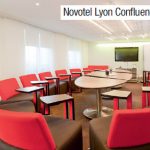
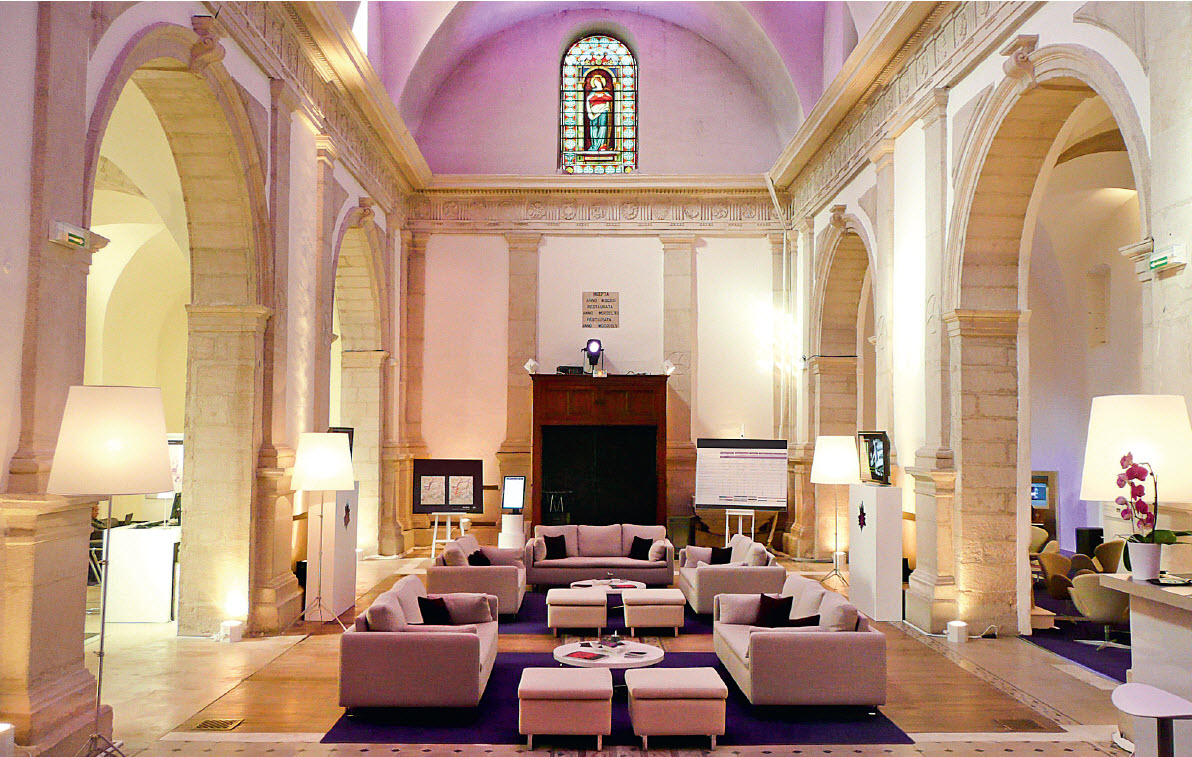
However, catering is not the only area in which hotel groups are working to improve their Meetings offering. At the root of this is a rethink of both the content and the form of their meeting rooms. Novotel offers the Euréka concept, recently deployed in Lyon and Avignon, and is working on a new generation of meeting rooms. These include modular lighting and optimum acoustics, as well as furniture offering better seating and larger tables for computers. "We look after the little details which, if not thought through beforehand, can increase the level of fatigue among participants. We're also thinking about the comfort of the presenter, with a multi-function stool from which he can control the event and, thanks to a remote control, send the presentations without having to run right and left".explains Christine Ravanat.
Creative atmosphere