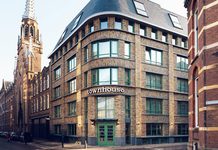
Of course, there's China. And India too. But alongside these two giants, who are mobilising much of their energy, the dazzling vitality of the countries of South-East Asia is not failing to seduce the big names in the global hotel industry. Sublime beaches and private islands, UNESCO-listed sites and business districts buoyed by flamboyant economies: these are just some of the reasons for the increasing number of hotel openings.
For example, according to research firm STR, Manila and Jakarta are set to see a 20 % increase in their offer, while recently Hanoi and Ho Chi Minh City were showing the same dynamic. Meanwhile, well-established business destinations such as Singapore and Bangkok continue to attract interest. "Economic growth is obviously playing a driving role, but the development of new airport and tourist infrastructures is also playing its part. For example, a mature city like Singapore has invested heavily in the creation of a casino complex on Sentosa Island. This is generating new demand", explains Markus Müller, Mövenpick Group Vice President Sales and Marketing for Asia.
Asserted ambitions
Chinese, Japanese, Koreans and even Russians: intra-regional tourism in the broadest sense is booming. This is why Mövenpick has clearly set its sights on this promising part of the Orient. This includes Kuala Lumpur, with a brand new hotel backed by a convention centre close to the airport, as well as Bangkok, Manila, Chiang Mai, Bali, the Philippines and Qhy Nhon in Vietnam... An ambitious roadmap for a player that until now has only been present in Hanoi, Ho Chi Minh City and Phuket, but one that clearly shows the region's potential.
For already well-established groups, the irresistible rise of these new beacons of the global economy offers an opportunity to at least double their presence. And to open up their range of brands, from the most economical - Ibis, Holiday Inn Express - to the great classics of business hotels - Marriott, Sheraton, Novotel - not forgetting the very luxurious or the resolutely arty such as Sofitel So or W. "In Malaysia, Vietnam and Indonesia, there is considerable demand for hotels with international brands. This paves the way for us to expand our collection of lifestyle brands", enthuses Matthew Fry, senior vice-president of development for Asia Pacific at Starwood Hotels.
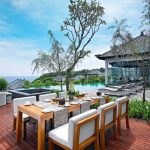
The major global groups are in fact the real leaders in hotel development in the region. Local groups such as Centara in Thailand, Victoria in Vietnam and Swiss Belhotel in Indonesia have already covered a large part of their national territory. Others even seem in a hurry to get out. The future of Dusit, Banyan Tree, Anantara and Aman Resorts is now being played out outside their original borders, spreading their innate sense of service and a style that is all natural delicacy and soothing luxury.
To do this, they are following Marco Polo's route backwards, via China, India and the Middle East, to reach the gates of Europe. A little like Mandarin Oriental or Shangri La, which have set out to conquer the world after having made their mark on all the destinations in the region. Newly arrived in Paris, these two groups have taken a prominent place in each of South Asia's major metropolises. Starting with Bangkok, where the Mandarin Oriental's 'writers' wing' preserves the memory of the legendary Oriental, which opened over 130 years ago. This is a palace where tea is still served in colonial-style rooms, where the images of Somerset Maugham and Joseph Conrad, who once haunted the premises, emerge from the teapots of scented earl grey and oolong.
Shangri La also has a strong presence in Southeast Asia, with nine hotels in Malaysia and six in the Philippines. A seventh establishment is even expected in Manila at the end of 2014, a large business hotel located in Global City, the new 'Central Business District'.

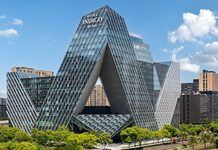
With its 577 rooms housed in a 60-storey tower, the future Shangri-La is just like the top-of-the-range establishments that are springing up all over the region: the Fairmont Makati and Jakarta, the Pullman and Ritz-Carlton Ho Chi Minh City, the InterContinental Hanoi. Because these cities are all getting taller. The hotel industry is following suit and moving into futuristic skyscrapers, allowing their customers to be immersed in the heart of business, but also of local life.
Bridge between two worlds
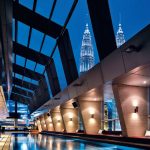
This upward trend is evident from Manila to Bangkok. But more than that, the current trends in the Thai capital are all about luxury and design. From palaces such as the St Regis, Park Hyatt, Waldorf Astoria and Jumeirah to MGallery VIE and MUSE, Sofitel So and W for a contemporary touch, Bangkok's hotels are becoming increasingly diverse, with establishments aimed at a chic and creative clientele. "With the introduction of the W brand at the end of 2012, Bangkok will be the first city in Asia Pacific to have eight Starwood brands represented," points out Matthew Fry.

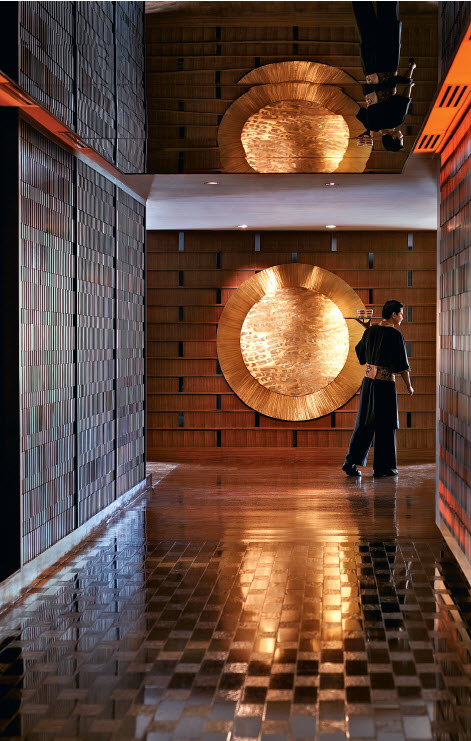
Contemporary works of art, bold colours, exotic furniture and local touches: these new addresses play on the mix of styles, creating a bridge between two worlds. With some success, Sofitel So is expected to open in Singapore in 2013. So is W, which will also be opening in Jakarta and Kuala Lumpur, accompanied by an Aloft, a younger, trendier version of W. But alongside these global brands, more intimate, more exclusive boutique hotels are also flourishing. In Singapore, for example, the industrial glamour of Wanderlust and the futuristic inventiveness of Klapsons stand in stark contrast to the old-fashioned pomp of the Raffles.
In June, Bangkok welcomed The Siam, a 39-room urban retreat built around a building directly inspired by the Musée d'Orsay. The project was the brainchild of local rock star Krissada Sukosol Clapp, who inherited a plot of land on the banks of the Chao Praya river and had four traditional houses rebuilt alongside her central wing. Exactly like Jim Thompson, the Asian art enthusiast who has reinstalled one of Bangkok's most bewitching spots in this way, by amalgamating old buildings all in teak.
Waterfront design
This design spirit has made Alila, GHM and the ultra-luxury Aman Resorts famous. Here too, in the leisure segment, international groups will be adding new competition. If not in terms of exclusivity, then at least in terms of numbers. In parallel with their urban developments, international hoteliers have a host of establishments in the pipeline, some in Bali, some in the Philippines or Malaysia, and some in Thailand. The region has many natural locations that are ideal for resorts", emphasised Jan Smits, IHG's Managing Director for Asia, when announcing the opening of the InterContinental Samui Baan Taling Ngam.
Starting by opening resort hotels in the region is part of our strategy for entering this market," explains Markus Müller. People are more likely to talk about a hotel they have enjoyed on holiday than a business hotel. This will in turn benefit our urban establishments. Mövenpick is thus capitalizing on the boom in intra-regional and domestic tourism. But corporate events are also expected to make up a significant proportion of the clientele, with the local market again predominating. "The hotel we are building in Jimbaran, on the island of Bali, relies on annual conventions and product launches organised from Australia, Singapore and Jakarta. On the other hand, the resort we are opening in Huma, in the Philippines, is more geared towards exclusive meetings, with just a dozen participants", adds Markus Müller. On this private island in the archipelago of Palawan province, the hotel, accessible by seaplane or boat, offers a more intimate setting with 80 bungalows on stilts.
In Phuket or Hua Hin in Thailand, as in Bali, the range of leisure and seminar hotels is constantly expanding. In this respect, the Vietnamese city of Danang has a lot to offer to make it one of the best tourist destinations in South-East Asia: an international airport, a superb beach, and also, very close by, the remains of the former imperial capital of Hué and the old town of Hoi An, both listed by UNESCO. The destination has its pioneers, such as the Nam Hai, a Design Hotel that has won numerous awards for its contemporary aesthetic. But the international hotel industry is also taking an interest in Danang, and following in the footsteps of Crowne Plaza, Hyatt and Mercure, the city is soon to welcome a Pullman. Another newcomer is InterContinental, with a resort tucked away in the lush greenery of the Son Tra peninsula, designed by Bill Bensley, creator of some of the finest resorts in the region, including the St Regis and Four Seasons.
The Bangkok-based designer is currently working on the transformation of the Hôtel de la Paix in Siem Reap. Built forty years ago and scarred by war, the establishment had already been restored to its former glory in 2011, along with a touch of arty with its contemporary Khmer art gallery. However, it is still undergoing a few adjustments before joining the Park Hyatt fold in 2013. It will then join the long list of luxury hotels - Raffles, Sofitel, Méridien, Aman Resorts, the latter housed in the former residence reserved for the distinguished guests of King Sihanouk - that benefit from the proximity of the temples of Angkor. But after Angkor, Chiang Mai, Hué and Hoi An, hoteliers are now turning their attention to Burma. There, everything remains to be done to ensure the country's tourism and economic transition. A promising project. If, of course, the country confirms its desire to open up.